This article was co-authored by wikiHow Staff. Our trained team of editors and researchers validate articles for accuracy and comprehensiveness. wikiHow's Content Management Team carefully monitors the work from our editorial staff to ensure that each article is backed by trusted research and meets our high quality standards.
There are 8 references cited in this article, which can be found at the bottom of the page.
This article has been viewed 13,715 times.
Learn more...
An injury to the tailbone, or coccyx, can happen from a fall, direct blow, repeated strain and friction, or childbirth. After visiting your doctor to diagnose a tailbone injury, you can treat it with a variety of home remedies. You can also alleviate the pain associated with a tailbone injury with medication.
Steps
Method 1
Method 1 of 3:Getting Medical Attention
-
1Make an appointment with your doctor. While tailbone injuries rarely require a visit to the emergency room, it is important that you visit a medical professional to get your tailbone injury accurately diagnosed.
-
2Get your spine examined. When you visit your doctor, make sure that they perform an examination of your entire vertebral column, also known as your spine. Your doctor may perform a neurologic exam or a rectal exam as part of the spinal examination. This will help the doctor determine if there is a dislocation or fracture of your tailbone.[1]
-
3



Method 2
Method 2 of 3:Treating a Tailbone Injury with Home Remedies
-
1Don’t sit for lengthy periods of time. Sitting down for an extended period of time can cause extreme pain if you are suffering from a tailbone injury. If possible, avoid situations where you will be required to sit for a long time. If you must sit for work or other activities, be sure to take breaks.
-
2Avoid sitting on hard surfaces. Taking a seat on a hard surface can complicate a tailbone injury and cause additional pain. When possible sit on cushioned surfaces like couches and padded chairs. Avoid sitting on furniture that does not have padding in the seating area.[4]
- If you must sit on a hard surface, alternate sitting between the left and right sides of the buttocks.
- Lean forward when sitting on a hard surface which will shift weight away from your tailbone.
-
3Sit on a doughnut pillow or cushion. You can purchase a doughnut cushion that has a hole in the middle that prevents your tailbone from making contact with the surface upon which you are sitting. You can use the cushion at work, while driving, and at home to alleviate some of the pain associated with a tailbone injury.[5]
-
4Apply ice four times daily. If the cause of your tailbone pain is a traumatic injury, such as getting hurt during a contact sport, apply ice to the tailbone area for fifteen to twenty minutes at a time. Repeat this four times per day during the first several days after the injury occurs.
-
5Avoid constipation. A tailbone injury is often accompanied with pain during bowel movements. Eating foods high in fiber like fruits, vegetables, and whole grains can soften stools and make bowel movements more comfortable.
- Try natural over-the-counter stool softeners, such as powders made from psyllium.
- Stay hydrated and drink plenty of water.


Method 3
Method 3 of 3:Treating a Tailbone Injury with Medication
-
1
-
2Use an over-the-counter stool softener. The pain from a tailbone injury can be complicated by constipation and difficult bowel movements. Your doctor can recommend a stool softener to alleviate these gastrointestinal symptoms and make bowel movements more comfortable.[8]
-
3Get a steroid injection.[9] Sometimes your doctor will suggest a steroid injection in the tailbone region to provide temporary relief from the pain and inflammation resulting from a tailbone injury. Your doctor will decide if this is a good treatment option for you. Steroid injections are usually administered at your medical provider’s office.
-
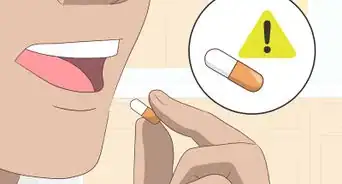
4Only take prescribed pain medication in serious cases. While your doctor can prescribe narcotic pain medication to alleviate tailbone pain, it is important that you only take these medications if you are experiencing severe pain that is not alleviated with an over the counter NSAID. Narcotic pain medications are highly addictive and should be avoided unless absolutely necessary.[10]


References
- ↑ https://health.clevelandclinic.org/2016/05/fact-fiction-can-really-break-tailbone/
- ↑ Kevin Stone, MD. Board Certified Orthopaedic Surgeon. Expert Interview. 19 November 2020.
- ↑ https://radiopaedia.org/articles/coccydynia
- ↑ http://www.mayoclinic.org/tailbone-pain/expert-answers/faq-20058211
- ↑ http://www.mayoclinic.org/tailbone-pain/expert-answers/faq-20058211
- ↑ Kevin Stone, MD. Board Certified Orthopaedic Surgeon. Expert Interview. 19 November 2020.
- ↑ http://www.webmd.com/fitness-exercise/tailbone-coccyx-injury#2
- ↑ http://www.mountsinai.org/patient-care/health-library/diseases-and-conditions/coccyx-fracture
- ↑ Kevin Stone, MD. Board Certified Orthopaedic Surgeon. Expert Interview. 19 November 2020.












































Medical Disclaimer
The content of this article is not intended to be a substitute for professional medical advice, examination, diagnosis, or treatment. You should always contact your doctor or other qualified healthcare professional before starting, changing, or stopping any kind of health treatment.
Read More...