This article was co-authored by wikiHow staff writer, Eric McClure. Eric McClure is an editing fellow at wikiHow where he has been editing, researching, and creating content since 2019. A former educator and poet, his work has appeared in Carcinogenic Poetry, Shot Glass Journal, Prairie Margins, and The Rusty Nail. His digital chapbook, The Internet, was also published in TL;DR Magazine. He was the winner of the Paul Carroll award for outstanding achievement in creative writing in 2014, and he was a featured reader at the Poetry Foundation’s Open Door Reading Series in 2015. Eric holds a BA in English from the University of Illinois at Chicago, and an MEd in secondary education from DePaul University.
There are 12 references cited in this article, which can be found at the bottom of the page.
The wikiHow Culinary Team also followed the article's instructions and verified that they work.
This article has been viewed 236,578 times.
Learn more...
Whether you’re harvesting your herb garden or you accidentally bought more basil than you needed for a recipe, you may find yourself wondering how to preserve this aromatic herb. If you’ve ever made the mistake of throwing some fresh basil in the fridge, you know that it wilts super quickly. Luckily, there are a few tricks and tips when it comes to storing basil, and you have surprising number of options here.
Steps
Question 1
Question 1 of 7:What’s the best way to store basil at room temperature?
-
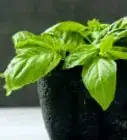
1You can store it like a flower bouquet on the counter for 2-3 weeks. The easiest way to store some basil for a few weeks is to grab a jar or small vase. Remove any rubber bands and clip the excess stems off, leaving enough of the stem to stand the leaves up in your container. Pour a little bit of water into the container and set your basil inside. Stand the stalks up so the leaves stick out of the top like a flower vase and leave your leaves near sunny window![1]
- Some folks take it one small step further by gently placing a clear plastic bag over the leaves once they’ve put them in the container. This should theoretically help trap some moisture to keep your basil leaves fresher for longer.[2]
-
2You can skip the water and container if you’ll use the basil in 2-3 days. If you store it dry and just leave the basil out on the counter, it should last for 7-10 days before it starts to go bad.[3] This is not the most popular way to store basil since some of the leaves can start to wilt sooner depending on the temperature and humidity in your home.[4]
- While the basil may not start to go completely bad in 7-10 days, it might lose some of its texture and aroma. You’ll probably want to use the basil in the next 2-3 days for the freshest and most flavorful results.[5]


Question 2
Question 2 of 7:How do you know if basil is bad?
-
1Look for leaf spots, discoloration, or foul odors. It’s typically pretty easy to determine if basil has gone bad, especially since the scent of fresh basil is super easy to identify. If you see spots on the leaves, the basil isn’t green, or the herb has become soft and mushy, it’s no longer edible and you should discard your leaves. If it smells and looks fresh though, you’re all good to go![6]

Question 3
Question 3 of 7:How do I freeze fresh basil?
-
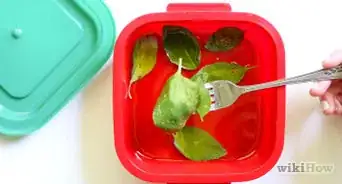
1Start by blanching the leaves for the best results. Pick the leaves off of the stems and drop them in a pot of boiling water for a few seconds. This will remove dirt and microorganisms, which keep your basil tasting fresh in the future.[7] Then, use a strainer to empty the pot and immediately transfer the basil to a bowl of ice water. Pick your leaves out and dry them thoroughly by hand with paper towels.
-
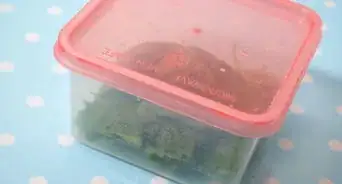
2Store the leaves in freezer-safe container for 4-6 months. Place your basil in an airtight, freezer-safe container or plastic bag. Lay a small sheet of parchment paper in between each layer of leaves. Place the basil inside of your freezer.[8]
Question 4
Question 4 of 7:How do you freeze basil without blanching?
-
1Dice or puree your basil to make aromatic ice cubes. Some people like to make basil ice cubes since they’re easier to use and store. Remove the leaves from the stems and dice your basil up. You can also puree the basil leaves by tossing them in a food processor and blending them into a paste-like texture.[11]
-
2Fill an ice tray with your basil, water, and oil. Grab a clean ice cube trap and sprinkle a pinch of basil into each cube, followed by a spoonful or two of water. Then, slowly pour a thin layer over of oil over each section of the tray to protect the water from absorbing unwanted odors. Set the tray in your freezer and call it a day![12]
- To use the cubes in the future, simply place them directly in whatever soup, stew, or pasta you’re cooking while the pot or pan is on the stove. The water will melt into the dish and infuse your recipe with a wonderful note of basil!
- You can even toss the cubes in any refreshing cocktail you mix so long as the basil will play nice with the other ingredients.
Question 5
Question 5 of 7:How do you dry basil?
-
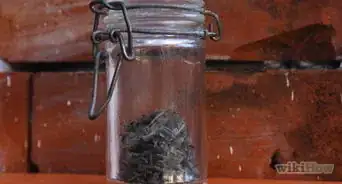
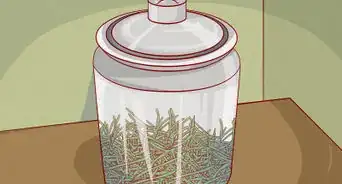
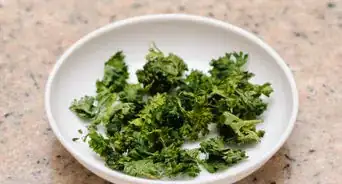
1Bake it in the oven for a few hours using the lowest heat. Wash and dry your basil leaves. Preheat your oven to the lowest available temperature and line a baking sheet with parchment paper. Remove the leaves from the stem and spread them out on the baking sheet. Place it in the oven on the upper rack and let the leaves bake for 2-4 hours until they turn stiff and crumbly. Let the basil cool before crumbling it up (it should fall apart super easy) and store the basil in an airtight container in your pantry.[13]
- Dried basil leaves should be good for roughly 2-3 years. They won’t actually go bad after this time, but the basil won’t have much potency or flavor.[14]
Question 6
Question 6 of 7:Is it better to dry or freeze basil?
-
1It totally depends on what you want the basil for. Defrosted basil leaves will have more flavor and aroma, but dried basil is ideal if you only plan on using it as a spice or garnish. One is isn’t necessarily better than the other, although it’s probably better to dry the leaves in the oven if you don’t want to put a ton of effort into it and you want the longest shelf life possible.[15]

Question 7
Question 7 of 7:What can I do with extra basil?
-
1You could always make a recipe that requires a lot of basil! There are dozens upon dozens of basil-based recipes out there. If you’ve got a lot of leftover basil and you don’t want the hassle of storing it, just use it! There are tons of soups and salads that call for a large amounts of basil, so if you feel like getting creative in the kitchen, this is a pretty good excuse.[16]

Community Q&A
-
QuestionHow do you dehydrate basil to preserve it for later use?
 wikiHow Staff EditorThis answer was written by one of our trained team of researchers who validated it for accuracy and comprehensiveness.
Staff AnswerwikiHow Staff EditorStaff AnswerIf you're using a dehydrator, spread the leaves out on a tray and set the dehydrator to 100-105 F. It may take 3-5 hours to dry the leaves out this way. You can also dehydrate the basil in the oven by setting the leaves out on a baking sheet and heating them on the lowest setting for 2-4 hours. Once you've heated and dried the basil, let it cool and crumble it up by hand. Your result should be roughly the same with the oven or dehydrator. -
QuestionHow do I keep basil from turning brown after I cut it in strips?
 Community AnswerKeep it in an airtight container and try not to use a steel knife or any metal knife because it makes your food go brown. Try to use a ceramic knife, you can get one at www.kitchencollection.com.
 -
QuestionWhen my basil plant starts to have those little flower bunches in early August, do I snip them off?Community AnswerYes, otherwise the plant will focus all of its energy on flowering, rather than producing the leaves.
-
QuestionCan I keep pesto in canning jars?
 gunarubban balachantharCommunity AnswerPesto is an uncooked seasoning mixture of herbs, usually including fresh basil, and some oil. It may be frozen for long term storage; there are no home canning recommendations. From this I'd say the only long term storage solution would be to freeze it.
References
- ↑ https://food52.com/blog/22732-i-tested-basil-storage-methods
- ↑ https://www.bonappetit.com/test-kitchen/inside-our-kitchen/article/our-best-trick-for-storing-basil
- ↑ https://www.stilltasty.com/fooditems/index/16458
- ↑ https://food52.com/blog/22732-i-tested-basil-storage-methods
- ↑ https://food52.com/blog/22732-i-tested-basil-storage-methods
- ↑ https://www.stilltasty.com/fooditems/index/16458
- ↑ https://www.clemson.edu/extension/food/canning/canning-tips/43why-blanch.html
- ↑ https://www.thekitchn.com/3-tips-for-preserving-fresh-basil-all-year-long-tips-from-the-kitchn-207032
- ↑ https://www.stilltasty.com/fooditems/index/16458
- ↑ https://www.fda.gov/consumers/consumer-updates/are-you-storing-food-safely
- ↑ https://www.freep.com/story/life/food/recipes/2016/08/24/test-kitchen-basil-recipes/89225362/
- ↑ https://www.epicurious.com/expert-advice/how-to-freeze-herbs-for-long-term-storage-article
- ↑ https://www.thekitchn.com/3-tips-for-preserving-fresh-basil-all-year-long-tips-from-the-kitchn-207032
- ↑ https://www.stilltasty.com/fooditems/index/16459
- ↑ https://thecookful.com/fresh-v-dried-basil/
- ↑ https://www.foodnetwork.com/healthyeats/recipes/2013/07/10-ways-to-use-up-fresh-basil
- ↑ http://shelflifeadvice.com/content/pesto-ingredients-uses-shelf-life-contamination-and-more
- ↑ https://www.freep.com/story/life/food/recipes/2016/08/24/test-kitchen-basil-recipes/89225362/
About This Article

To preserve basil, put it in a sealable plastic bag and store it in the fridge if you plan on using it within a short period of time. For longer-term storage, you can preserve basil in the freezer. To freeze basil, start by spreading it out on a tray and then freezing it for 1-2 hours. Then, transfer the basil to an airtight container or bag and store it in the freezer until you're ready to use it. To learn how to preserve basil using oil or salt, as well as how to dry basil, scroll down!