This article was co-authored by wikiHow Staff. Our trained team of editors and researchers validate articles for accuracy and comprehensiveness. wikiHow's Content Management Team carefully monitors the work from our editorial staff to ensure that each article is backed by trusted research and meets our high quality standards.
The wikiHow Culinary Team also followed the article's instructions and verified that they work.
This article has been viewed 142,499 times.
Learn more...
What to do with all that basil at the end of summer? Homemade pesto is versatile and simple, yet tastes very gourmet and will add kick to many of your favorite dishes! "Pesto" literally means to pound or crush, a reference to the original way pesto was prepared. This article will teach you how to make the classic pesto genovese as well as some other variants
Ingredients
- 3 cups packed fresh basil
- 1/4 cup pine nuts
- 1/2 cup extra virgin olive oil
- 1/2 cup Italian cheese (Parmesan, Romano, etc.)
- 2 cloves of garlic (depending on taste)
- Salt and pepper to taste
Steps
Part 1
Part 1 of 2:Pesto Genovese
-
1Spread pine nuts on a baking sheet and toast until golden brown. Place the pine nuts underneath a broiler until golden brown or simply bake in a 400 degree Fahrenheit oven for 5-10 minutes, checking often.
- Alternately, toast the pine nuts in a pan over low or medium-low heat on a burner. Stir often.
- Pine nuts burn very easily, making them somewhat finicky to work with. When toasting pine nuts, pay attention closely and move them around often. The difference between perfectly toasted pine nuts and burnt pine nuts is often a matter of seconds.
-
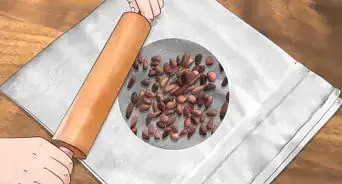
2Chop garlic, cheese, and nuts (optional). Chopping before they are put into the food processor makes a finer ground pesto in the end.Advertisement
-
3Add the chopped ingredients and basil into a food processor. Add the extra virgin olive oil in the spout gradually as the food is being processed.
- If you don't have a food processor, you can also use a blender in a pinch. (Pesto will turn out finer and less grainy when using a food processor.)
-
4Add salt and pepper to taste. Give the food processor one or two more pulses.
-
5Serve.Advertisement
Part 2
Part 2 of 2:Variations
-
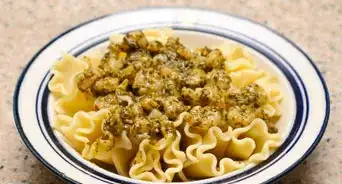
1Make pistou. Pistou is a french (Provence) variation of pesto made in a similar fashion, except without pine nuts. It consists of basil, garlic, olive oil, and sometimes cheese. Pistou is generally used in vegetable soup.
-
2Add mint leaves and almonds. To the original pesto genovese recipe, add a bit of fresh mint leaves and substitute almonds for pine nuts. The almonds may or may not be toasted.
-
3Make pesto alla siciliana, or red pesto. Red pesto is like traditional pesto, except it has tomato, much less basil, and substitutes almonds again for pine nuts.
-
4Make pesto alla calabrese. This pesto incorporates grilled red bell pepper, black pepper, and sometimes eggplant and ricotta cheese to go along with the basil and tomatoes. It has a distinctly spicy taste to it.
-
5Make pesto with sun-dried tomatoes instead of basil. For a very rich, sweeter pesto, combine sun-dried tomatoes along with pine nuts, garlic, and olive oil.
-
6Substitute other green herbs for basil. Although basil is the traditional ingredient in Italian pesto — and almost religiously used in authentic Italian recipes — you can experiment a bit with the green herbs you put into the food processor. As a substitute for basil, try:
- Arugula. Makes a very nutty pesto.
- Cilantro. Makes a light, fresh, and clean-tasting pesto.
- Ramson leaves. This makes for a German variety of pesto.
- Parsley. Makes a light, clean pesto.
-
7Substitute other nuts for pine nuts. Because of the cost of pine nuts, many people have taken to substituting other nuts into the original recipe in lieu of pine nuts. Substitutes often include:
- Walnuts.
- Cashews.
- Chinese pine nuts.
- Almonds.
Advertisement
Community Q&A
-
QuestionHow long can I keep it?
 Community AnswerUsually if you freeze the pesto it will keep for 4-6 months in the freezer. Be sure to keep it in a sealed container.
 -
QuestionHow do I prevent the pesto from changing from fresh green to a grey, dark green?Community AnswerYou can take some plastic wrap, put it on top of the pesto, and then place it in the fridge. This should prevent any color changes.
-
QuestionMy pesto gets grayish almost immediately after using the processor. What can I do to preserve the light-green color?
 Becca AtwoodCommunity AnswerUse fresh basil, and use about a teaspoon or two of pine nuts at most for each generous handful of basil.
 -
QuestionIs there a recipe for pesto made with sun-dried tomatoes instead of basil?Becca AtwoodCommunity AnswerSimply use sun-dried tomatoes instead of basil leaves. Omit the pine nuts.
-
QuestionCan I add oregano to the Genovese pesto?Community AnswerOregano is not traditional and it won't taste the same, but you certainly can. If you want to do this, start with just a tablespoon of oregano to the three cups of basil, as it will be a matter of personal taste.
-
QuestionCan I use manual food processor?
 Community AnswerYes. Any kind of food processor will work for this recipe. A manual food processor may be more work though.
Things You'll Need
- Food processor







References
About This Article

To make pesto, bake 1/4 cup of pine nuts in the oven until they’re golden brown. Then, chop up the nuts, half a cup of Italian cheese, two cloves of garlic, and 3 cups of fresh basil. Put the ingredients in a food processor and gradually add 1/2 cup of olive oil through the spout as you process the mixture. Before serving, add salt and pepper to taste. Alternatively, leave out the pine nuts from the recipe to make pistou, a French variation of pesto. For other pesto variations, including what to do if you don't have basil or pine nuts, keep reading!