This article was co-authored by wikiHow staff writer, Eric McClure. Eric McClure is an editing fellow at wikiHow where he has been editing, researching, and creating content since 2019. A former educator and poet, his work has appeared in Carcinogenic Poetry, Shot Glass Journal, Prairie Margins, and The Rusty Nail. His digital chapbook, The Internet, was also published in TL;DR Magazine. He was the winner of the Paul Carroll award for outstanding achievement in creative writing in 2014, and he was a featured reader at the Poetry Foundation’s Open Door Reading Series in 2015. Eric holds a BA in English from the University of Illinois at Chicago, and an MEd in secondary education from DePaul University.
There are 19 references cited in this article, which can be found at the bottom of the page.
Learn more...
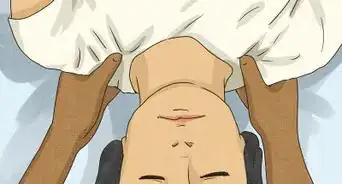
Medically speaking, yawning is considered "excessive" if you're doing it more than once a minute. If you’re just yawning more than usual, there's probably a simple explanation and you can even do things to stop it if it's bothering you. If you really are yawning more than once a minute, though, there may be something else going on. In this piece, we’ll walk you through the most common (and uncommon) reasons behind frequent yawning. Just keep in mind that it’s rare for yawning to have any medical significance; if you don’t have any other symptoms, you’re probably just fine!
Steps
Method 1
Method 1 of 13:Sleepiness
-
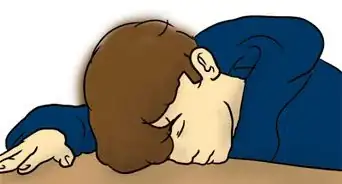
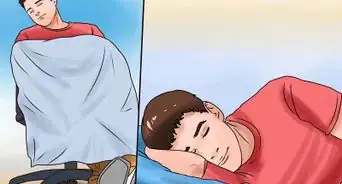
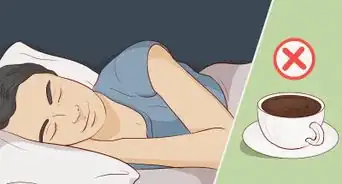
1It’s an obvious answer, but the odds are good you’re just tired. We don’t have any solid understanding of why we yawn when we’re sleepy, but it’s a pretty well-documented phenomenon. If you haven’t been sleeping well, you’re probably yawning a lot because your body is tired—even if your mind is wide awake at the moment. Get some sleep. If the yawning goes away when you wake up, you were just sleepy.[1]
- Insomnia can cause excessive yawning. When you don’t get enough sleep, you have to catch up on the hours you miss later. Over time, that can add up to a lot of yawning as you get progressively more tired.[2]

Method 2
Method 2 of 13:Fatigue
-
1If you’ve been pushed to your physical limits, you may start yawning. If you started your yawning fit after you just finished lifting weights or running, yawning may be your body’s way of communicating that it needs some rest. Any kind of strenuous activity can trigger this, so take it easy for a while. If the yawning stops, it’s nothing to worry about.[3]
- There’s a theory that yawning cools the brain. Since your body temperature rises when you work out, you may start yawning in the middle of a workout as well.[4]

Method 3
Method 3 of 13:Boredom
-
1We aren’t sure why, but boredom often makes people yawn. If you aren’t particularly inspired and you don’t have anything going on at the moment, you may start yawning reflexively.[5] There’s a theory among certain researchers that yawning is a way to trigger neural activity, so this may be your body’s way of telling itself to “stay alert.”[6]
- Try doing something interesting right now. If you stop yawning, your brain was just trying to keep itself awake.

Method 4
Method 4 of 13:Stress
-
1Some people yawn a lot when they’re under pressure. This is a particularly well-documented phenomenon with Olympic runners, but any kind of stress can trigger a string of yawns.[7] If you’re in a particularly tense situation or you’re under a lot of pressure, wait to see if the yawning goes away when you’re in a more relaxed state.[8]
- This goes back to the theory about cooling the brain. Stress can raise your body temperature, and yawning may help you get more oxygen, which can calm you down.[9]

Method 5
Method 5 of 13:Social Mirroring
-
1This is why it’s contagious—you intuitively yawn when you see yawning. Human beings naturally communicate through body language and behavior. This is why you might get itchy when you see someone scratch, or start laughing when you hear someone else laugh—even if nobody told a joke or it wasn’t funny. It’s the same thing with yawning![10]
- You’ve got a roughly 50% chance of yawning if you see someone else yawn.[11] If you find yourself yawning a lot as you read this article, this is why!

Method 6
Method 6 of 13:Headaches
-
1If you’re experiencing a migraine, you may yawn repeatedly. In a study on 154 patients suffering from migraine attacks, 45% of them exhibited repetitive yawning.[12] The working theory here is that headaches occur when there’s a disruption in the flow of oxygen to the brain, and yawning might be your body’s way of trying to get more air with each breath.[13]
- If you don’t have a headache now but you get one an hour or two after reading this article, the headache is still probably to blame. Yawning is one of the six predictors of an upcoming migraine![14]

Method 7
Method 7 of 13:Sore Facial Muscles
-
1Yawning is an easy and intuitive way to stretch your face. If you’ve been doing a lot of talking, chewing, or shouting, you may have irritated the muscles around your mouth or neck. Yawning is a reflexive way to stretch these muscles. The yawning should go away if you relax for a bit and don’t talk.[15]
- This is why it’s super unsatisfying to stifle a yawn. When you keep yourself from yawning, you may feel a tenseness in your jaw. That tenseness is your muscle’s way of saying, “I need to stretch!” Let it out and take a few big yawns. You’ll feel better.

Method 8
Method 8 of 13:Elevation
-
1High altitudes cause pressure to build up in your ear. Yawning releases that pressure. If you’re on an airplane or you’re hiking in the mountains and you suddenly find yourself yawning a lot, it’s probably your body’s natural reaction to a change in the altitude.[16]

Method 9
Method 9 of 13:Medication Side Effects
-
1There are a bunch of medications that list yawning as a side effect. This is particularly common among serotonin reuptake inhibitors (SSRIs), which are a type of antidepressant used to treat depression and several other conditions.[19] Beyond that, yawning is also a side effect of taking levodopa, dopamine agonists, morphine, methadone, lidocaine, and others.[20]
- If you’re taking any kind of medication (prescribed or OTC), read the labels to see if yawning or tiredness are listed as potential side effects.
- If it is your medication causing the yawning, talk to your doctor. They may be able to offer you alternatives that don’t make you tired (or trigger the yawns directly).

Method 10
Method 10 of 13:Sleep Apnea
-
1Most sleep disorders cause yawning, but it’s really common with sleep apnea. It’s probably due to the fact that sleep apnea makes it difficult to get enough rest, but it’s not totally clear.[21] In either case, keep in mind that the odds are extremely low (and will be from here on out) that an underlying medical condition is causing your yawning. See your doctor to look into sleep apnea if you also suffer from any of the following:[22]
- Loud snoring
- Headaches in the morning
- Dry mouth upon waking up
- Difficulty staying asleep
- Periods of delayed breathing in your sleep

Method 11
Method 11 of 13:Narcolepsy
-
1People with narcolepsy yawn frequently because they’re tired. Narcolepsy’s biggest symptom is daytime sleepiness, and yawning is an annoying side effect of that. As such, every narcoleptic is likely to find themselves yawning a lot.[23] See your doctor and ask about narcolepsy if you yawn excessively and experience:[24]
- Cataplexy (sudden muscle weakness or loss of control)
- Sleep paralysis
- Hallucinations
- Headaches, or restless sleep
- Problems recalling your behavior

Method 12
Method 12 of 13:Neurological Issues
-
1See your doctor if you have other neurological symptoms alongside yawning. It is extremely unlikely that your yawning is a symptom of a neurological condition, but it’s possible. Yawning is usually involuntary, meaning that you don’t make a conscious decision to do it. All of this happens in the brain stem.[25] If something else is interfering with your brain’s neurons, wires can get crossed and you may start yawning. This is why yawning is frequently seen in people suffering from strokes, multiple sclerosis, Parkinson’s, and brain tumors.[26]
- See a doctor as soon as possible if you’ve noticed any other kind of involuntary or compulsive behavior alongside your excessive yawning.

Method 13
Method 13 of 13:Cardiovascular Issues
-
1The nerve that controls your jaw is runs down near your heart. This is the vagus nerve, and a vasovagal reaction (stimulation of this nerve) can trigger yawning. To put it plainly, a sudden cardiovascular event, like a heart attack or aortic dissection, can cause you to start yawning excessively.[27]
- If you suspect that you’re having a heart attack call emergency services immediately and get medical help.
- Symptoms of a heart attack include pressure, tightness, or pain in your chest and arms, nausea, shortness of breath, cold sweat, fatigue, and lightheadedness or sudden dizziness.[28]






References
- ↑ https://www.scientificamerican.com/article/why-do-we-yawn-when-we-ar/
- ↑ https://www.cdc.gov/niosh/emres/longhourstraining/debt.html
- ↑ https://www.scielo.br/j/anp/a/QbpPTHrsjfns4HTSVxhzHJt/?format=pdf&lang=en
- ↑ https://www.health.harvard.edu/newsletter_article/by_the_way_doctor_why_do_i_yawn_when_i_exercise
- ↑ https://www.loc.gov/everyday-mysteries/biology-and-human-anatomy/item/why-do-we-yawn/
- ↑ https://www.bbc.com/future/article/20140811-warning-this-may-make-you-yawn
- ↑ https://www.bbc.com/future/article/20140811-warning-this-may-make-you-yawn
- ↑ https://www.health.harvard.edu/newsletter_article/by_the_way_doctor_why_do_i_yawn_when_i_exercise
- ↑ https://www.health.harvard.edu/newsletter_article/by_the_way_doctor_why_do_i_yawn_when_i_exercise
- ↑ https://www.pbs.org/newshour/science/why-are-yawns-contagious-we-asked-a-scientist
- ↑ https://www.bbc.com/future/article/20140811-warning-this-may-make-you-yawn
- ↑ https://pubmed.ncbi.nlm.nih.gov/28960327/
- ↑ https://www.scielo.br/j/anp/a/QbpPTHrsjfns4HTSVxhzHJt/?format=pdf&lang=en
- ↑ https://www.bostontrials.com/warning-signs-of-a-migraine/
- ↑ https://www.scientificamerican.com/article/why-do-we-yawn-when-we-ar/
- ↑ https://www.loc.gov/everyday-mysteries/biology-and-human-anatomy/item/why-do-we-yawn/
- ↑ https://my.clevelandclinic.org/health/diseases/17929-airplane-ear
- ↑ https://my.clevelandclinic.org/health/diseases/17929-airplane-ear
- ↑ https://www.mayoclinic.org/diseases-conditions/depression/in-depth/ssris/art-20044825
- ↑ https://pubmed.ncbi.nlm.nih.gov/17201870/
- ↑ https://pubmed.ncbi.nlm.nih.gov/25261103/
- ↑ https://www.mayoclinic.org/diseases-conditions/sleep-apnea/symptoms-causes/syc-20377631
- ↑ https://www.uptodate.com/contents/approach-to-the-patient-with-excessive-daytime-sleepiness
- ↑ https://www.nhs.uk/conditions/narcolepsy/symptoms/
- ↑ https://www.britannica.com/video/81386/brainstem-actions-control-centre-body-blood-pressure
- ↑ https://www.scielo.br/j/anp/a/QbpPTHrsjfns4HTSVxhzHJt/?format=pdf&lang=en
- ↑ https://medlineplus.gov/ency/article/003096.htm
- ↑ https://www.mayoclinic.org/diseases-conditions/heart-attack/symptoms-causes/syc-20373106
- ↑ https://www.scielo.br/j/anp/a/QbpPTHrsjfns4HTSVxhzHJt/?format=pdf&lang=en














































Medical Disclaimer
The content of this article is not intended to be a substitute for professional medical advice, examination, diagnosis, or treatment. You should always contact your doctor or other qualified healthcare professional before starting, changing, or stopping any kind of health treatment.
Read More...