This article was co-authored by wikiHow staff writer, Hannah Madden. Hannah Madden is a writer, editor, and artist currently living in Portland, Oregon. In 2018, she graduated from Portland State University with a B.S. in Environmental Studies. Hannah enjoys writing articles about conservation, sustainability, and eco-friendly products. When she isn’t writing, you can find Hannah working on hand embroidery projects and listening to music.
There are 7 references cited in this article, which can be found at the bottom of the page.
This article has been viewed 2,265 times.
Learn more...
If you’ve ever seen a squishy silicone cup with a strap at the bottom, you’ve probably checked out a cervical cap before. The cervical cap is a non-hormonal method of birth control that helps lower your risk of pregnancy by covering your cervix so sperm can’t enter. By following the instructions on inserting it correctly and taking care of it afterwards, you can use your cervical cap multiple times to protect against pregnancy when you have sex.
Steps
Question 1
Question 1 of 9:How effective is a cervical cap?
-
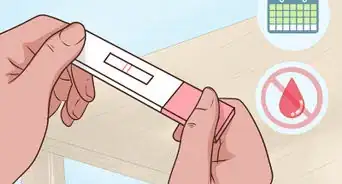
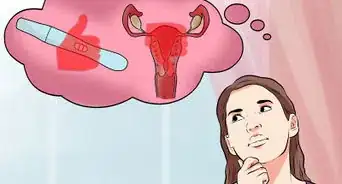
1It’s 71-86% effective against pregnancy. If you’ve never given birth before, it’s 86% effective. If you have given birth before, it’s only 71% effective, because your cervix may be slightly wider from childbirth.[1]
- You can use another form of birth control, like condoms, to decrease your risk of pregnancy.

Question 2
Question 2 of 9:Does a cervical cap need to be fitted?
-
1Yes, you’ll need to get fitted by an OB/GYN. Cervical caps come in different sizes, and your doctor can help you pick out the one that’s right for you. Once you’ve gotten fitted, you can buy the right size at most drug stores or online.[2]
- Make sure you get a cervical cap that’s approved by the FDA. FemCap is the only brand right now that has been approved, and you can get it online or through a pharmacy once you have a prescription.[3]
- If you’ve been pregnant before, you may need a larger cervical cap. If you haven’t, a smaller cervical cap is probably right for you.

Question 3
Question 3 of 9:How do you insert a cervical cap?
-
1Reach your fingers inside yourself to find your cervix. The cervix is at the very top of your vagina, and it acts like a door that leads into your uterus. It might feel hard but slightly squishy, kind of like the tip of your nose. Generally, you can feel it by positioning your fingers up and slightly backwards, but it can change depending on where you are in your menstrual cycle.[4]
- Figuring out where your cervix is will make using your cervical cap much easier.
-
2Add spermicide to the cup, the brim, and the groove of the cervical cap. Cervical caps are small silicone dishes with a slight dip in the middle. Use about 1⁄4 tsp (1.2 mL) of spermicide in the cup, then spread it around so it reaches the brim, too. Then, add another 1⁄2 tsp (2.5 mL) of spermicide to the small groove in between the brim and the dome.[5]
- You can use any kind of cream or gel spermicide you’d like. You can get spermicide at most pharmacies or drug stores.
- Spermicide adds an extra layer of protection to prevent getting pregnant, since it kills the sperm before it can enter through the cervix.
-
3Push the cap into your vagina. Holding the cap with the strap down, get into a comfortable position, like squatting or putting one foot up on the toilet. Part your vulva with your free hand and use your fingers to push the cap up inside of yourself. Make sure the cap covers your cervix by feeling around with your fingers; if you can feel your cervix, move the cap until you can’t anymore.[6]
- Always check the position of your cervical cap before you have sex to make sure it hasn’t shifted around.
- You might feel a little uncomfortable when you put the cap in for the first time. Give your body a chance to get used to it for a few minutes before you start having sex.


Question 4
Question 4 of 9:How long should I leave my cervical cap in?
-
1Put the cap in up to 6 hours before you have sex. You can also wait until right before you have sex to insert your cervical cap. You should always check the position of your cervical cap before you have sex to make sure it hasn’t shifted off of your cervix.[7]
-
2Leave your cervical cap in for at least 6 hours after you have sex. This will give the spermicide time to work if any semen got inside of your vagina. However, you should never leave your cap inside yourself for longer than 2 days.[8]
- If you have sex multiple times, you can remove the cap and apply a new layer of spermicide before inserting it again to stay protected.


Question 5
Question 5 of 9:How do I remove the cervical cap?
-
1Squat down and push your fingers against the cap to break the seal. A squatting position will give you better access to the cap. Use your fingers to push up and inside yourself, then press hard against the squishy center of the cap to break the suction.[9]
-
2Pull down on the strap to remove the cap. Use your fingers to grab onto the small strap at the bottom of the cap. Gently pull the cap out of your vagina and set it aside.[10]
- Go slowly so you don’t scratch your vagina.


Question 6
Question 6 of 9:Does a cervical cap protect against STDs and STIs?
-
1No, a cervical cap only helps to prevent pregnancy. If you want to protect against STDs and STIs, you’ll need to use condoms as well as a cervical cap. You can also ask your sexual partner or partners to get tested before having sex with them.[11]
- It’s always a good idea to get checked for STDs and STIs regularly, even if you are using condoms.

Question 7
Question 7 of 9:Can I use a cervical cap while I’m on my period?
-
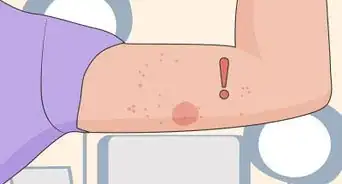
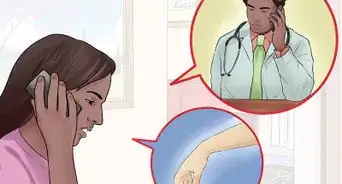
1No, you can’t use the cervical cap while you’re on your period. In fact, using a cervical cap while you’re experiencing vaginal bleeding can, in rare cases, lead to toxic shock syndrome, a condition that can be fatal.[12]
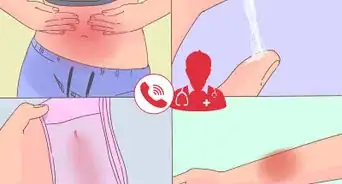
- If you ever experience dizziness, nausea, a high fever, vomiting, fainting, or a rash while using the cervical cap, get to an emergency room right away, as these could be symptoms of toxic shock syndrome.[13]

Question 8
Question 8 of 9:Can I reuse my cervical cap?
-
1Yes, if you wash it after every use. Use soap and warm water to gently scrub your cervical cap. Set it out to air dry, then store it in a cool, dry place away from harsh sunlight.[14]
- Don’t put any powder or creams on your cervical cap, as that can lead to infections.
-
2Get a new cervical cap if you notice holes or weak spots. Hold your cervical cap up to the light to check for areas that look broken or weakened. Fill it up with water to check for any leaks, too. If anything seems wrong, talk to your doctor or go to the drug store to get a new one.[15]
- Holes, leaks, and tears greatly lower the effectiveness of a cervical cap, so it’s important to check it before you have sex.


Question 9
Question 9 of 9:Are there any side effects to a cervical cap?
-
1You might experience irritation from the spermicide on the cervical cap. Urinary tract infections, vaginal infections, and vaginal irritation can happen if the spermicide gets on the inside of your vaginal walls. Spermicide can also put you at a higher risk of STIs, so it’s important to get tested regularly.[16]
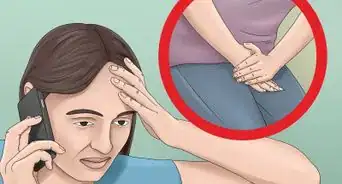
- If you notice a strange smell when you take the cap out or you have pain during sex while using the cap, call your doctor.

Warnings






References
- ↑ https://www.plannedparenthood.org/learn/birth-control/cervical-cap/how-effective-are-cervical-caps
- ↑ https://kidshealth.org/en/teens/contraception-cap.html
- ↑ https://www.mayoclinic.org/tests-procedures/cervical-cap/about/pac-20393416
- ↑ https://www.mayoclinic.org/tests-procedures/cervical-cap/about/pac-20393416
- ↑ https://www.plannedparenthood.org/learn/birth-control/cervical-cap/how-do-i-use-cervical-cap
- ↑ https://www.plannedparenthood.org/learn/birth-control/cervical-cap/how-do-i-use-cervical-cap
- ↑ https://myhealth.alberta.ca/Health/aftercareinformation/pages/conditions.aspx?hwid=ug6561
- ↑ https://medlineplus.gov/ency/article/001946.htm
- ↑ https://www.plannedparenthood.org/learn/birth-control/cervical-cap/how-do-i-use-cervical-cap
- ↑ https://www.plannedparenthood.org/learn/birth-control/cervical-cap/how-do-i-use-cervical-cap
- ↑ https://kidshealth.org/en/teens/contraception-cap.html
- ↑ https://www.nhs.uk/conditions/contraception/contraceptive-diaphragm-or-cap/
- ↑ https://www.mayoclinic.org/tests-procedures/cervical-cap/about/pac-20393416
- ↑ https://www.plannedparenthood.org/learn/birth-control/cervical-cap/how-do-i-use-cervical-cap
- ↑ https://www.nhs.uk/conditions/contraception/contraceptive-diaphragm-or-cap/
- ↑ https://www.mayoclinic.org/tests-procedures/cervical-cap/about/pac-20393416
- ↑ https://www.mayoclinic.org/tests-procedures/cervical-cap/about/pac-20393416
- ↑ https://www.mayoclinic.org/tests-procedures/cervical-cap/about/pac-20393416













































Medical Disclaimer
The content of this article is not intended to be a substitute for professional medical advice, examination, diagnosis, or treatment. You should always contact your doctor or other qualified healthcare professional before starting, changing, or stopping any kind of health treatment.
Read More...