This article was co-authored by wikiHow staff writer, Janice Tieperman. Janice is a professional and creative writer who has worked at wikiHow since 2019. With both a B.A. and M.A. in English from East Stroudsburg University, she has a passion for writing a wide variety of content for anyone and everyone. In her free time, you can find her working on a new crochet pattern, listening to true crime podcasts, or tackling a new creative writing project.
There are 12 references cited in this article, which can be found at the bottom of the page.
This article has been viewed 6,752 times.
Learn more...
Birth control sponges are a great way to protect yourself from an unwanted pregnancy, but they might be a little hard to get used to. Don’t worry! These sponges are really simple and easy to use; plus, you can find them at most pharmacies and drugstores. By reviewing the basic information, you can decide if a birth control sponge is the best option for you.
Steps
Question 1
Question 1 of 10:How does the birth control sponge work?
-
1The sponge covers your cervix and blocks out sperm. A birth control sponge is made with spermicide, a special chemical that kills sperm or paralyzes sperm and helps protect you from an unwanted pregnancy.[1] You don’t need to worry about the sponge shifting or moving around while you’re intimate—your vaginal muscles will keep it secure.[2]Advertisement

Question 2
Question 2 of 10:Where can I buy birth control sponges?
-
1You can buy it at a pharmacy, supermarket, or drugstore. You can also pick up a birth control sponge from certain family planning clinics and health centers.[3]
- In the United States, the only birth control sponge available in stores in the Today Sponge brand. You can find these sponges on the official Today Sponge website: http://www.todaysponge.com/purchase.html.

Question 3
Question 3 of 10:How do you insert a birth control sponge?
-
1Soak the sponge with water and give it a couple good squeezes. Rinse the sponge off under some clean tap water, which will kickstart the spermicide. Squeeze the sponge a few times to wring out a little bit of the extra water, so it isn’t dripping wet.[4]
- The sponge will look sudsy after you’ve squeezed it a couple times. This is totally normal!
- Don’t squeeze out all the water—the sponge should still be damp when you’re putting it in.
-
2Fold the sponge in half and slide it into your vagina. Check that the fabric loop is dangling along the bottom of the sponge, and that the indented sections are facing upward. Pretend you’re sliding in a tampon, and insert the sponge as far as you can into your vagina. Don’t worry—the sponge will unfold on its own and cover your cervix.[5]
-
3Double-check that the sponge is in place. Insert your finger and feel along the bottom of the sponge, making sure that it’s flat and secure. Try to find the fabric loop with your finger—this is what you’ll use to pull out the sponge later on.[6]Advertisement


Question 4
Question 4 of 10:How do you remove the sponge?
-
1Pull on the fabric loop to remove the sponge. It’s very similar to pulling out a tampon. Insert a finger and search for the fabric loop Give this loop a little tug, and the sponge will come right out.[7]
- Birth control sponges are only meant to be used once, so throw it out as soon as you remove it.

Question 5
Question 5 of 10:When should I use the sponge?
-
1You can use the sponge up to 24 hours before you have sex. Like the name suggests, birth control sponges are designed to keep you protected. You can insert the sponge right before you get intimate, or put it in up to 24 hours ahead of time. The spermicide will do its job as long as you soak the sponge ahead of time.[8]Advertisement

Question 6
Question 6 of 10:How long should I keep the sponge in?
-
1Keep it in place for at least 6 hours after you have sex. Don’t pull out the sponge right away—instead, give it a few hours to block and kill off the sperm. After 6 hours pass, you can safely remove and toss out the sponge.[9]
-
2Don’t leave it in for longer than 30 hours. Birth control sponges aren’t meant for long-term use or protection.[10] If you leave the sponge in for too long, you might be at risk for Toxic Shock Syndrome.[11]
- Toxic Shock Syndrome is a dangerous infection that can lead to a fever, change in blood pressure, and other symptoms. Some people develop this condition from using a tampon or birth control sponge for too long.[12]
Advertisement


Question 7
Question 7 of 10:Can I reuse the sponge?
-
1No, you can’t. Birth control sponges are only meant to be used once, and shouldn’t be used for more than 30 hours at a time. Once you’re finished using the sponge, throw it out in the trash. If you plan on getting intimate in the future, use a brand new sponge.[13]

Question 8
Question 8 of 10:Is the sponge effective birth control?
-
1The sponge is mostly 91% effective if you’ve never had kids. If you put the sponge in place correctly, there’s a 91% chance that you won’t get pregnant. If the sponge is a little off-kilter, your odds decrease slightly to 88%.[14]
-
2The sponge is only 80% effective if you’ve delivered a baby before. If you insert the sponge correctly, there’s an 80% chance that you won’t get pregnant. If the sponge isn’t quite used properly, those odds lower slightly to 76%.[15]
-
3Use a traditional condom along with the sponge for extra protection. Using a condom is the best way to protect yourself from an unwanted pregnancy, even if you’re using the birth control sponge already. While the sponge is mostly effective, a condom adds an extra layer of security and protection.[16]Advertisement


Question 9
Question 9 of 10:Can my partner feel the sponge?
-
1Your partner shouldn’t feel it. If you put the sponge in correctly, you and your partner won’t even notice that it’s there. However, if the sponge is a bit off-kilter, it might feel a bit uncomfortable. If this should happen, lightly adjust the sponge with your fingertip until it feels flat and secure.[17]

Question 10
Question 10 of 10:What are the risks to using a sponge?
-
1It can have some unpleasant side effects. Birth control sponges are made with Nonoxynol-9, which can feel uncomfortable or irritating.[18] Some people experience vaginal dryness, urinary tract infections, and Toxic Shock Syndrome after using the sponge. It also increases your risk of catching an STD.[19]
-
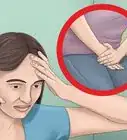
2It can feel uncomfortable. Unfortunately, spermicides can lead to a bit of pain and discomfort. If you’re sensitive or allergic to spermicides, sulfites, or polyurethane, you might feel a burning sensation.[20]
-
3It doesn’t protect you from STDs or STIs. Birth control sponges are designed to prevent pregnancy, but don’t offer much more protection besides that.[21] If you want to stay completely protected, ask your partner to use a condom before getting intimate.[22]
- The spermicide on the sponge can cause a bit of irritation, which can raise the risk of transmitting STDs.[23]
Advertisement


Warnings
- Don’t use a birth control sponge if you’re menstruating, or you could develop Toxic Shock Syndrome.[25]Thanks!
- Medical experts don’t recommend using the sponge if you recently went through a miscarriage or abortion.[26]Thanks!
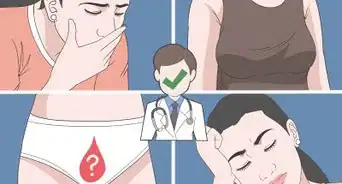
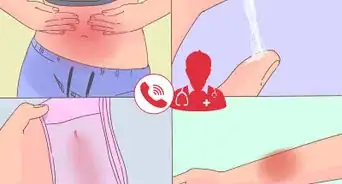
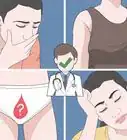
- Stop using the sponge if you develop symptoms of Toxic Shock Syndrome, like a high fever, dizziness, nausea, or a red rash.[27]Thanks!

References
- ↑ https://www.mayoclinic.org/tests-procedures/spermicide/about/pac-20384550
- ↑ https://www.mayoclinic.org/tests-procedures/contraceptive-sponge/about/pac-20384547
- ↑ https://www.plannedparenthood.org/learn/birth-control/birth-control-sponge/how-do-i-get-sponge
- ↑ https://www.plannedparenthood.org/learn/birth-control/birth-control-sponge/how-do-i-use-sponge
- ↑ https://www.plannedparenthood.org/learn/birth-control/birth-control-sponge/how-do-i-use-sponge
- ↑ https://www.plannedparenthood.org/learn/birth-control/birth-control-sponge/how-do-i-use-sponge
- ↑ https://www.plannedparenthood.org/learn/birth-control/birth-control-sponge/how-do-i-use-sponge
- ↑ https://www.plannedparenthood.org/learn/birth-control/birth-control-sponge/how-do-i-use-sponge
- ↑ https://youngwomenshealth.org/2013/08/22/contraceptive-sponge/
- ↑ https://myhealth.alberta.ca/Health/aftercareinformation/pages/conditions.aspx?hwid=ug6472
- ↑ https://www.cdc.gov/mmwr/preview/mmwrhtml/00000273.htm
- ↑ https://kidshealth.org/en/teens/tss.html
- ↑ https://www.mayoclinic.org/tests-procedures/contraceptive-sponge/about/pac-20384547
- ↑ https://myhealth.alberta.ca/Health/aftercareinformation/pages/conditions.aspx?hwid=ug6472
- ↑ https://myhealth.alberta.ca/Health/aftercareinformation/pages/conditions.aspx?hwid=ug6472
- ↑ https://youngwomenshealth.org/2013/08/22/contraceptive-sponge/
- ↑ https://youngwomenshealth.org/2013/08/22/contraceptive-sponge/
- ↑ https://www.plannedparenthood.org/learn/birth-control/birth-control-sponge/what-are-disadvantages-using-sponge
- ↑ https://www.mayoclinic.org/tests-procedures/contraceptive-sponge/about/pac-20384547
- ↑ https://www.acog.org/womens-health/faqs/barrier-methods-of-birth-control-spermicide-condom-sponge-diaphragm-and-cervical-cap
- ↑ https://www.acog.org/womens-health/faqs/barrier-methods-of-birth-control-spermicide-condom-sponge-diaphragm-and-cervical-cap
- ↑ https://youngwomenshealth.org/2013/08/22/contraceptive-sponge/
- ↑ https://www.plannedparenthood.org/learn/birth-control/birth-control-sponge/what-are-disadvantages-using-sponge
- ↑ https://www.plannedparenthood.org/learn/birth-control/birth-control-sponge/how-do-i-use-sponge
- ↑ https://www.acog.org/womens-health/faqs/barrier-methods-of-birth-control-spermicide-condom-sponge-diaphragm-and-cervical-cap
- ↑ https://medlineplus.gov/ency/article/004003.htm
- ↑ https://www.mayoclinic.org/tests-procedures/contraceptive-sponge/about/pac-20384547











































Medical Disclaimer
The content of this article is not intended to be a substitute for professional medical advice, examination, diagnosis, or treatment. You should always contact your doctor or other qualified healthcare professional before starting, changing, or stopping any kind of health treatment.
Read More...