This article was co-authored by Tracy Zollinger Dipl. OM, L.Ac., FABORM. Tracy Zollinger (she/her) is a Licensed Acupuncturist, Herbalist, and the Founder of Island Acupuncture in the San Francisco Bay Area. With over 15 years of experience, Tracy specializes in a holistic approach to reproductive health, fertility, and pre and post-natal care. Tracy creates comprehensive treatment plans using acupuncture, herbs, nutrition, and western labs. She holds a Master of Science in Traditional Chinese Medicine from the Academy of Chinese Culture and Health Sciences and is board certified in integrative reproductive medicine, with a focus on LGBTQIA specific needs.
This article has been viewed 26,188 times.
Everyone experiences the common cold at some point in their lives. Colds usually affect many people during the winter season. Although many people rely on home remedies to manage the symptoms brought about by the common cold, there are additional treatment plans that can be helpful. Home remedies, such as getting adequate rest and drinking lots of fluid, only go so far, but traditional Chinese medicine can provide immediate and lasting results.
Steps
Method 1
Method 1 of 4:Treating a Cold Caused by Wind Cold
-
1Identify if your cold is due to wind cold. According to traditional Chinese medicine, the common cold can fall under several designations, but the most common type experienced is the wind cold. The goal of treatment for wind cold is to shorten the duration of the disease and to provide immediate relief from the symptoms.
- Some signs of a cold caused by wind cold are: cold intolerance, mild fever, absence of sweat, chest tightness or congestion, and runny nose with clear mucus.
-
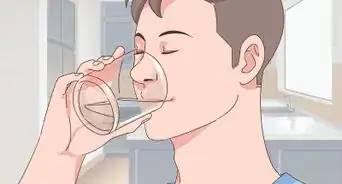
2Drink ginger tea. Ginger tea is thought to help expel the ‘evil’, or pathogens that cause cold. The ginger is also said to promote a healthy appetite which is needed for speedy recovery.
- Prepare ginger tea by shredding about 15 grams of fresh ginger.
- Put the ginger in a pot of 200 milliliters of boiling water, and then add brown sugar to taste.
- This tea should be served warm twice a day.
- After taking the ginger tea, you should go to bed and make it a point to cover your body in warm blankets to ensure perspiration.
Advertisement -
3Take expellin extract (Chuan Xiong Cha Tiao Wan). Expellin extract is thought to rid the body of wind cold. It also serves to relieve headaches caused by the invasion of exogenous wind, the type of headache that is experienced during rhinitis and sinusitis. This remedy is usually used to treat the early stages of common cold caused by wind cold.
- This extract contains Japanese honeysuckle, burdock, forsythia, isatis, and lophantherum.
- These ingredients are thought to expel heat and clear toxins.
-
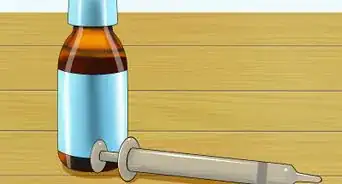
4Look into ginseng and menthol extract (Ren shen bai du wan). Ginseng and menthol extract is used to expel or eradicate pathogens coming from the wind. This can also help alleviate the stress of cold and damp conditions due to the imbalance of qi.
-
5Try blue dragon extract (Xiao Qing Long Tang Wan). Blue dragon extract is used to repel harmful fluid from an external cold. It is used to treat fever and the chills through sweating, which can help expel diffused phlegm. The use of this concoction can expel or eradicate exogenous pathogen patterns by allowing the body to release cold through sweating.
-
6Use additional herbs to alleviate symptoms. Treatment of this type is centered on the release of the pathogen through sweating, so other sweat-inducing herbs can be beneficial. Chinese medicine experts recommend cinnamon decoction, and cnidium and tea formula, as well as the minor blue dragon decoction to treat colds caused by wind cold.
- It can also help to consume foods rich in onion, garlic, ginger and coriander, all of which can better expel the pathogen causing your cold.
Advertisement


Method 2
Method 2 of 4:Treating a Cold Caused by Wind Heat
-
1Determine if your cold is caused by wind heat. Although most colds are cause by wind cold, sometimes wind heat proves to be the culprit. In this case, the treatment aims to help the body return to its balanced state, which means that heat inside the body should be expelled. Treatment options include the use of cold and flu formula, wind heat clearing, and lung heat clearing.
- Some signs of a cold caused by wind heat are: speedy pulse (above 60 beats per minute), headache, dry, non-productive cough expectorating yellow mucus, irritability, sore and swollen throat, and fever.
-
2Drink chrysanthemum and peppermint tea. Prepare a chrysanthemum and peppermint tea to relieve headache, fever, nasal congestion, and sore throat. This tea works to cool down the body and expel the wind heat.
- Boil 6 grams of chrysanthemum in a pot of 400 ml of boiling water.
- Upon boiling, add 3 grams of peppermint and white sugar.
- Continue to boil about 2 to 3 minutes.
- Take this tea twice daily.
-
3Take Ganmao Ling. Ganmao Ling can dispel or reduce the symptoms caused of cold caused by wind heat. The use of this decoction is can also reduce the risk of inflammation. Additionally, it can get rid of fever caused by wind heat and provide heat clearing by expelling the presence of the pathogens caused by fire toxin.[1]
- Gunman Ling is made up of three herbs: isatis root and leaf, as well as andrographis.
- These herbs are endowed with antibiotic properties that can clear or expel heat and also expel the presence of fire toxin.
- It's okay to continue taking this throughout the course of your cold.[2]
-
4Try Yin Chiao Chieh Tu Pien (Yin Qiao Jie Du). This decoction can dispel or eliminate symptoms of the common cold caused by wind heat occurring in the spring or summer. It can also be used to treat the early stages of fever.
- It contains Japanese honeysuckle, platycodon, burdock, isatis, forsythia, and lophantherum, which can expel heat and even eradicate fire toxin.
- Platycodon can soothe throat itchiness by coating the throat. It also has properties that can diffuse the lungs, resulting in better expulsion of phlegm.
- Lophantherum, on the other hand, relieves thirst and encourages salivation.
- Yin Qiao San can also help, but you should stop taking it once the initial symptoms of your cold go away.[3]
- It contains Japanese honeysuckle, platycodon, burdock, isatis, forsythia, and lophantherum, which can expel heat and even eradicate fire toxin.
-
5Try isatis root granule (Ban lan gen). Isatis root granule is able to expel toxic heat by lessening its presence in the blood. It has antibiotic properties, and is able to relieve sore throats and reduce swelling.Advertisement





Method 3
Method 3 of 4:Alleviating a Cold with Acupuncture and Other Remedies
-
1Get acupuncture. Acupuncture is another means of treating the common cold using traditional Chinese medicine. In this method of healing, certain points are stimulated with needles in order to encourage blood flow to the head, neck, chest, and shoulder areas. Acupuncture works by releasing endorphins and natural steroids like cortisol, to manage the pain and discomfort caused by the common cold.
-
2Massage yourself. If you cannot get acupuncture treatment from a specialist, there are some massage techniques you can apply to yourself at home. These techniques trigger some of the same pressure points as acupuncture, albeit less effectively. At home you can do the following:
- Rub your forehead from the middle to the sides (10 times).
- Knead the area on the side of your eyes (10 times).
- Rub your temples (10 times).
- Knead your nape or the back of your head (10 times).
- Grasp the back of your neck (10 times).
- Rub your shoulders (10 times).
- The area between your thumb and index finger should be nipped and kneaded (10 times).
-
3Try involving a Qi Gong master. This person is capable of conveying energy throughout the body of an afflicted individual by means of meridians, by patting the patient, or by his own bare palms. They can transmit Qi energy to non-living objects and solutions which can be touched or taken by the patient in order for them to absorb the Qi energy and restore balance within the body system.
-
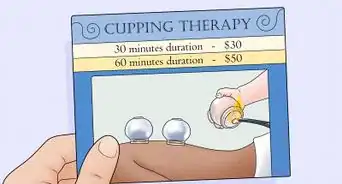
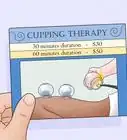
4Investigate other remedies with the help of a traditional Chinese medicine practitioner. Expert practitioners of Chinese medicine can employ a variety of other methods to help alleviate your cold. Other methods used to treat common cold include moxibustion or the burning of mugwort, and applying the remains to the skin to promote healing.
- Additionally, massaging, cupping, or drawing blood towards the exterior of the skin with the use of oxygen depleted suction cups can provide relief from a cold.
Advertisement


Method 4
Method 4 of 4:Using Lifestyle Changes to Alleviate Colds
-
1Use diet to help treat colds. Dietary treatment for colds should first start with determining whether the cold is caused by wind heat or wind cold. To determine the source of your cold, eat ginger.
- If you experience excessive thirst, dry mouth, sore throat, and sweating after eating, then your cold is caused by wind heat.
- To alleviate this type of cold, eat foods that have cooling properties such as cucumber and watermelon.
- In case you are experiencing cold intolerance, the only way to counter that is by eating warm foods like garlic and curry.
- Do not overeat. Chinese traditional medicine maintains that proper diet can restore balance to the body and boost your immune system.
- If you experience excessive thirst, dry mouth, sore throat, and sweating after eating, then your cold is caused by wind heat.
-
2Avoid negative emotions to heal. Your emotions play a key role in your overall health. Traditional Chinese medicine indicates that there are seven types of emotions that must be monitored and reduced, because they are factors that can aggravate an illness. These emotions include: anxiety, anger, fear, fright, overjoy, overthinking, and sadness.
- Do a self-check every time you feel a surge of these emotions, because they can harm several organs in the body.
- You can regulate your emotions by thinking positive, being optimistic, meditating, and listening to calming and soothing music.
-
3Exercise to increase health. The type of exercise beneficial to reducing colds is mostly centered on doing slow, rhythmic exercises that require you to be mindful of your breathing. Exercise should focus on incorporating all the parts of the body.
- A good exercise found in Chinese culture for this type of workout is tai-chi.
Advertisement


Expert Q&A
Did you know you can get expert answers for this article?
Unlock expert answers by supporting wikiHow
-
QuestionIs Astragalus a diuretic?
 Claudia Carberry, RD, MSClaudia Carberry is a Registered Dietitian specializing in kidney transplants and counseling patients for weight loss at the University of Arkansas for Medical Sciences. She is a member of the Arkansas Academy of Nutrition and Dietetics. Claudia received her MS in Nutrition from the University of Tennessee Knoxville in 2010.
Master's Degree, Nutrition, University of Tennessee KnoxvilleMaster's Degree, Nutrition, University of Tennessee KnoxvilleExpert AnswerAstragalus may have mild diuretic effects but is not marketed as a diuretic.
Support wikiHow by unlocking this expert answer.
-
QuestionWhat are the side effects of Astragalus?Claudia Carberry, RD, MSClaudia Carberry is a Registered Dietitian specializing in kidney transplants and counseling patients for weight loss at the University of Arkansas for Medical Sciences. She is a member of the Arkansas Academy of Nutrition and Dietetics. Claudia received her MS in Nutrition from the University of Tennessee Knoxville in 2010.
Master's Degree, Nutrition, University of Tennessee KnoxvilleMaster's Degree, Nutrition, University of Tennessee KnoxvilleExpert AnswerThere are no major side effects but there may be interactions with other supplements or medications. Talk to your doctor before taking astragalus.Support wikiHow by unlocking this expert answer.
-
QuestionWhat are the benefits of taking astragalus?Claudia Carberry, RD, MSClaudia Carberry is a Registered Dietitian specializing in kidney transplants and counseling patients for weight loss at the University of Arkansas for Medical Sciences. She is a member of the Arkansas Academy of Nutrition and Dietetics. Claudia received her MS in Nutrition from the University of Tennessee Knoxville in 2010.
Master's Degree, Nutrition, University of Tennessee KnoxvilleMaster's Degree, Nutrition, University of Tennessee KnoxvilleExpert AnswerAstragalus is a traditional Chinese medicine. It is thought to be anti-inflammatory and has antibacterial properties.Support wikiHow by unlocking this expert answer.
-
QuestionWhat is Qi Gong?
 Frank BlaneyFrank Blaney is a Certified Qigong and Tai Chi Instructor with over 15 years of teaching experience. Passionate about making Qigong more accessible to people, Frank is the author of "Qigong: The Quick & Easy Start-Up Guide." He also holds a 2nd Degree Black Belt in Jujitsu and trains executives and staff of corporations, NGOs, and communities in self-care, personal performance and conflict resolution. He holds an MA in Negotiation, Conflict Resolution, and Peacebuilding from California State University Dominguez Hills.
Certified Tai Chi & Qigong InstructorQi Gong is an ancient Chinese health practice that focuses on cultivating and growing your life energy. It can be practiced through deep breathing, movement, and meditation.Support wikiHow by unlocking this expert answer.
-
QuestionWhat formula should I take for my cold?
 Tracy Zollinger Dipl. OM, L.Ac., FABORMTracy Zollinger (she/her) is a Licensed Acupuncturist, Herbalist, and the Founder of Island Acupuncture in the San Francisco Bay Area. With over 15 years of experience, Tracy specializes in a holistic approach to reproductive health, fertility, and pre and post-natal care. Tracy creates comprehensive treatment plans using acupuncture, herbs, nutrition, and western labs. She holds a Master of Science in Traditional Chinese Medicine from the Academy of Chinese Culture and Health Sciences and is board certified in integrative reproductive medicine, with a focus on LGBTQIA specific needs.
Licensed Herbalist & AcupuncturistIf the onset of your symptoms include sore throat, swollen glands, and red or irritated eyes, take Yin Qiao San, but discontinue it once these symptoms go away. If the onset is more towards an achy body, runny nose, and fatigue, take Gan Mao Ling. This is okay to take throughout your illness.Support wikiHow by unlocking this expert answer.
References and Citations
- http://www.tcmpage.com/hpcoldflu.html
- http://www.healthcommunities.com/common-cold/alternative-medicine/tcm-treatments-colds-and-flu.shtml
- http://spiritualityhealth.com/articles/how-chinese-medicine-cures-colds
- http://www.shen-nong.com/eng/lifestyles/tcmrole_cold_flu_folk.html
- ↑ Tracy Zollinger Dipl. OM, L.Ac., FABORM. Licensed Herbalist & Acupuncturist. Expert Interview. 6 October 2020.
- ↑ Tracy Zollinger Dipl. OM, L.Ac., FABORM. Licensed Herbalist & Acupuncturist. Expert Interview. 6 October 2020.
- ↑ Tracy Zollinger Dipl. OM, L.Ac., FABORM. Licensed Herbalist & Acupuncturist. Expert Interview. 6 October 2020.









































Medical Disclaimer
The content of this article is not intended to be a substitute for professional medical advice, examination, diagnosis, or treatment. You should always contact your doctor or other qualified healthcare professional before starting, changing, or stopping any kind of health treatment.
Read More...