This article was co-authored by Eric Christensen, DPT. Eric Christensen is a Physical Therapist based in Chandler, Arizona. With over a decade of experience, Eric works in both orthopedic and neurological fields and specializes in custom orthotic prescription and casting, vestibular reprogramming, and manual therapy. He holds a Bachelor’s degree in Exercise Science with a focus in Sports Medicine from Colorado State University and a Doctor of Physical Therapy from Regis University. In practice, Eric takes a developmental approach to rehabilitation utilizing the Selective Functional Movement Assessment. He uses functional movement patterning and manual therapy to return patients to prior levels of function.
There are 10 references cited in this article, which can be found at the bottom of the page.
wikiHow marks an article as reader-approved once it receives enough positive feedback. This article has 12 testimonials from our readers, earning it our reader-approved status.
This article has been viewed 440,922 times.
Cupping is an alternative medicine technique that involves placing heated cups on the skin to draw blood toward the surface.[1] If you've seen photos of Olympic swimmer Michael Phelps with round bruises on his body, you've seen the after-effects of cupping.[2] While there aren't necessarily a lot of clinical studies proving its efficacy, there are plenty of people who swear by this relatively risk-free treatment. If you're curious, we've put together answers to some of the most common questions about cupping so you can decide if you want to give it a try.

Steps
Question 1
Question 1 of 9:What is cupping?
-
1Cupping is an ancient Chinese practice using cups to create suction on the skin. There are many different forms of cupping, including heated cupping, where the cups are heated to produce suction.[3] Wet cupping, where the practitioner punctures the skin with a needle before placing the cups, is the most studied form.[4]
- The points selected for cupping typically follow the same patterns used in acupuncture treatment. Many acupuncture practitioners also offer cupping treatments.[5]
- Most commonly, practitioners place cups on your back, neck, shoulders, and thighs. Where they place the cups typically depends on your specific reasons for getting the treatment.[6]

Question 2
Question 2 of 9:What conditions does cupping treat?
-
1Cupping has been studied as a treatment for 56 different conditions. Cupping's primary benefit seems to lie in treating pain conditions and respiratory problems, at least from what clinical studies have determined.[7] However, practitioners may recommend cupping for a variety of different symptoms and diseases.
- Cupping is typically offered as a complementary therapy in addition to other treatments. It can help people dealing with chronic pain, such as that caused by arthritis, gout, and fibromyalgia.[8]

Question 3
Question 3 of 9:How does cupping work?
-
1Scientists aren't exactly sure how cupping works, or even if it does. The nature of cupping makes double-blind studies difficult—unlike simply taking a pill that could be an active medication or a placebo, a patient would certainly know if they'd received a cupping treatment. For this reason, studies suffer from some bias due to the placebo effect.[9]
- Cupping is a relatively risk-free treatment, though, so if you're interested, give it a go. Typically, the worst that can happen is that it simply doesn't do anything for you.

Question 4
Question 4 of 9:What can you expect from a cupping treatment?
-
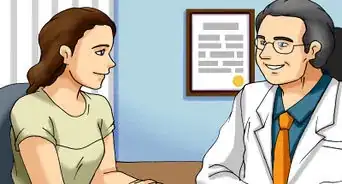
1Your practitioner will place several cups on your body. Depending on the part of your body being treated, you may need to partially undress. For heated cupping, your practitioner heats the cups, then places them on your skin. The cups will suck up your skin into the cup. Your practitioner will leave the cups there for a few minutes (the specific time varies depending on the practitioner and the treatment), then slide them off. A full session typically lasts 20-30 minutes.[10]
- Some practitioners use a pump, rather than heat, to produce suction. The rest of the process is basically the same as with heated cupping.
- With wet cupping, the practitioner punctures your skin with a thin needle (like an acupuncture needle) before placing the cups on. These punctures allow toxins to escape your skin.
- With gliding cupping, the practitioner may slide the cups around, which also produces a massage effect.[11]

Question 5
Question 5 of 9:Does cupping hurt?
-
1No, normally all you feel is a slight pressure from the suction. Pain tolerance varies, but most people who've experienced cupping don't report any pain associated with it. If you've ever held a vacuum cleaner hose over your arm, you know about what it feels like. It might be somewhat uncomfortable for you, but it usually isn't painful.[12]
- After treatment, you might find that the skin on and around the cupping points is tender, like it would feel if you had a bruise.[13]

Question 6
Question 6 of 9:What are the side effects of cupping?
-
1Expect round, bruise-like marks on the cupping points. These marks are exactly the same size as the cups your practitioner used and usually disappear on their own in a week or two. During that time they might change color, just like a bruise would.[14]
- If you get heated cupping, you might experience some minor burns on your skin from the cups. Your practitioner may give you an ointment to rub into your skin until it heals.
- Some people report fatigue, headaches, muscle soreness, and nausea after cupping.
- As the skin heals, you might find that it itches. Avoid scratching, which could lead to infection.

Question 7
Question 7 of 9:Are there any risks to cupping?
-
1Yes, there is a small risk of infection. Your practitioner may provide antibiotic ointment that you can rub into the cupping points to reduce this risk. Aside from this, cupping is relatively safe for most people.[15]
- Because of its effects on circulation, don't get cupping treatment if you have a bleeding disorder, blood-clotting problems, or a history of stroke.[16]
- If you have a skin condition, such as psoriasis or eczema, cupping might cause a flare-up.[17]
- It's also a good idea to avoid cupping if you're pregnant since researchers don't know much about the treatment's effects on pregnancy.[18]

Question 8
Question 8 of 9:Where can you find a cupping therapist?
-
1Check if local acupuncturists offer cupping therapy. Since acupuncture and cupping use the same point selection patterns and follow the same underlying philosophy, many acupuncturists do both.[19] Since acupuncture is relatively common, it's usually easiest to start there. You can also try searching Google with keywords like “cupping practitioner near me” or “cupping therapy near me.”[20]
- Many chiropractors, massage therapists, physical therapists, and even medical doctors also perform cupping.[21]

Question 9
Question 9 of 9:How much does cupping cost?
-
1A 30-minute session costs around $40 to $80 dollars. This is according to online estimates. Some cupping clinic websites state that a 30-minute session costs $45, or you can pay $125 upfront for 3 sessions. Prices may vary depending on where you live.[22]
- To give you a point of reference, acupuncture therapy typically costs $50 to $70 for a routine session.[23]

Expert Q&A
-
QuestionWhat is the point of cupping?
 Eric Christensen, DPTEric Christensen is a Physical Therapist based in Chandler, Arizona. With over a decade of experience, Eric works in both orthopedic and neurological fields and specializes in custom orthotic prescription and casting, vestibular reprogramming, and manual therapy. He holds a Bachelor’s degree in Exercise Science with a focus in Sports Medicine from Colorado State University and a Doctor of Physical Therapy from Regis University. In practice, Eric takes a developmental approach to rehabilitation utilizing the Selective Functional Movement Assessment. He uses functional movement patterning and manual therapy to return patients to prior levels of function.
Physical TherapistCupping is thought to help open up the lymph channels, which are connected to the lymph nodes. Lymph channels are responsible for flushing fluids that aren't in your cells into your arterial or venous systems. Essentially, cupping may help boost circulation and promote better recovery.




References
- ↑ Eric Christensen, DPT. Physical Therapist. Expert Interview. 29 April 2021.
- ↑ https://www.pri.org/stories/2016-08-08/heres-story-behind-those-purple-circles-michael-phelps-back
- ↑ http://www.itmonline.org/arts/cupping.htm
- ↑ https://www.ncbi.nlm.nih.gov/pmc/articles/PMC3289625/
- ↑ http://www.itmonline.org/arts/cupping.htm
- ↑ https://www.sciencedirect.com/science/article/pii/S2225411014000509?via%3Dihub
- ↑ https://www.ncbi.nlm.nih.gov/pmc/articles/PMC3289625/
- ↑ https://www.sciencedirect.com/science/article/pii/S2225411014000509?via%3Dihub
- ↑ https://www.ncbi.nlm.nih.gov/pmc/articles/PMC3289625/
- ↑ https://my.clevelandclinic.org/health/treatments/16554-cupping
- ↑ http://www.itmonline.org/arts/cupping.htm
- ↑ https://dailyburn.com/life/health/cupping-therapy-cupping-benefits/
- ↑ https://www.cedars-sinai.org/blog/cupping-therapy.html
- ↑ https://my.clevelandclinic.org/health/treatments/16554-cupping
- ↑ https://www.cedars-sinai.org/blog/cupping-therapy.html
- ↑ https://my.clevelandclinic.org/health/treatments/16554-cupping
- ↑ https://my.clevelandclinic.org/health/treatments/16554-cupping
- ↑ https://my.clevelandclinic.org/health/treatments/16554-cupping
- ↑ http://www.itmonline.org/arts/cupping.htm
- ↑ https://www.cedars-sinai.org/blog/cupping-therapy.html
- ↑ https://my.clevelandclinic.org/health/treatments/16554-cupping
- ↑ https://www.marketwatch.com/story/michael-phelps-does-cupping-is-it-something-worth-paying-for-2016-08-09
- ↑ https://blog.nuhs.edu/the-future-of-integrative-health/5-myths-about-acupuncture-treatmeants-and-their-effectiveness
About This Article
To do cupping, wash the affected area of your body with soap and water, then wash a glass cup with salty warm water. Next, saturate a cotton ball in rubbing alcohol, light the cotton on fire, and place it in the cup. After 5 seconds, remove the cotton, drop it into a fire resistant container, and apply the cup to your skin. Finally, allow the cup to cool on your skin for 10 minutes to create a vacuum, which will pull out the skin on the affected area and encourage blood flow. For tips on how to treat bruising or blisters that may form after cupping, read on!










































Medical Disclaimer
The content of this article is not intended to be a substitute for professional medical advice, examination, diagnosis, or treatment. You should always contact your doctor or other qualified healthcare professional before starting, changing, or stopping any kind of health treatment.
Read More...