This article was co-authored by wikiHow staff writer, Eric McClure. Eric McClure is an editing fellow at wikiHow where he has been editing, researching, and creating content since 2019. A former educator and poet, his work has appeared in Carcinogenic Poetry, Shot Glass Journal, Prairie Margins, and The Rusty Nail. His digital chapbook, The Internet, was also published in TL;DR Magazine. He was the winner of the Paul Carroll award for outstanding achievement in creative writing in 2014, and he was a featured reader at the Poetry Foundation’s Open Door Reading Series in 2015. Eric holds a BA in English from the University of Illinois at Chicago, and an MEd in secondary education from DePaul University.
There are 13 references cited in this article, which can be found at the bottom of the page.
This article has been viewed 33,604 times.
Learn more...
For most people, peppermint oil is going to be a refreshing way to soothe gastrointestinal discomfort. However, it’s extremely dangerous in high doses, and ingesting the oil alone may damage your esophagus. There’s a lot to consider here, so get the advice of a healthcare professional before you start ingesting peppermint oil, and only take it in a capsule form on a full stomach. It is important to note that peppermint oil is only proven as a potential treatment for stomach discomfort. There’s no evidence it will treat any other condition or problem.
Steps
Question 1
Question 1 of 5:How do you take peppermint oil orally?
-
1Enteric-coated peppermint oil capsules are the only safe option. Peppermint oil is too strong to drink on its own. The enteric coating on the capsules, however, prevents the oil from directly touching or damaging your esophagus. Most scientific research into the benefits of peppermint oil focus on taking the capsule form.[1]
- Purchase enteric-coated peppermint oil capsules online or at vitamin stores.
- Always follow the dosing directions on the label. Generally, you can take 180-400 mg (0.2-0.4 mL) of peppermint oil in a single dose. It's safe to take up to 3 doses daily.[2]
- There still may be potential health risks, though, so it's best to talk to your doctor before taking the capsules.[3]
-
2Don't drink peppermint oil since it can harm your throat. Peppermint oil is very powerful stuff. Consuming the oil directly relaxes your esophagus too much, which can lead to acid reflux and other gastrointestinal issues. While the oil can soothe your stomach, it’s going to cause irritation as it goes down. Taking enteric-coated capsules prevents these issues.[4]
- Even if you dilute peppermint oil in water, it still isn’t recommended. Essential oils aren’t regulated and there’s no way to know if what you’re consuming is safe.[5]


Question 2
Question 2 of 5:What are the benefits of taking peppermint capsules?
-
1It may reduce bloating, diarrhea, gas or abdominal pain. Peppermint oil soothes muscle cells, so your GI tract will relax as it breaks down the peppermint. This makes it a solid treatment if you have indigestion or abdominal pain that isn’t caused by a hernia or kidney stones.[6] The oil also has anti-inflammatory properties that can soothe an upset stomach caused by diarrhea or muscle spasms.[7]
- Some doctors even use peppermint oil capsules to reduce muscle spasms before an endoscopy or barium enema.[8]
- There’s some evidence that taking roughly 90 mg of peppermint oil in a capsule alongside a 50 mg dose of caraway oil can dramatically improve the benefits of the peppermint to reduce indigestion or constipation.[9]
-
2Peppermint oil has mixed, albeit promising, results as an IBS treatment. If you have irritable bowel syndrome, peppermint oil may help soothe your symptoms. Some studies suggest that the impact of peppermint isn’t going to be particularly meaningful, but some folks experience less bloating, abdominal pain, and gas. [10]
- If you have IBS, talk your doctor before you try peppermint oil.


Question 3
Question 3 of 5:What are the side effects of taking peppermint oil?
-
1Potential side effects include heartburn, nausea, pain, and dry mouth. For most people, side effects are temporary and mild. You may get a bit of heartburn or feel a little nauseous. Taking peppermint oil on an empty stomach seems to be the main cause for some of these side effects.[11]
- Avoid taking peppermint oil if you haven’t eaten anything recently.
-
2Exceeding the max dose can cause serious, life-threatening symptoms. If you consume more than 180-400 mg (0.2-0.4 mL) of peppermint oil in one dose, you may have trouble breathing or feel like your heartbeat is slowing down. You may also experience abdominal pain, diarrhea, dizziness, or vomiting. Some people have reported urinating blood. If you have any of these symptoms, call your doctor or go to the ER immediately.[12]


Question 4
Question 4 of 5:Is it safe to take peppermint oil daily?
-
1There are no studies on the daily consumption of peppermint oil. While it’s generally considered safe at low doses for most people, there aren’t any long-term studies on the daily use of peppermint oil. It seems like it’s probably going to be safe if you stick to dosage guidelines.[15] However, it could potentially interfere with the health of your kidneys over time. Talk to your doctor if you’re thinking about taking peppermint oil every day.[16]

Question 5
Question 5 of 5:Are there other safe ways to use peppermint oil?
-
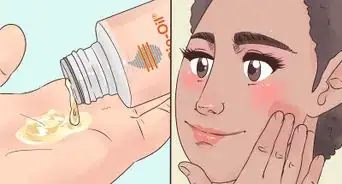
1Topical applications may reduce tension headaches. Mix a few drops of peppermint oil with a carrier oil, like avocado, coconut, or jojoba oil. Whenever you get a headache, rub a little bit of the peppermint solution into your temples. This should soothe your headache and give you some relief.[17]
- This should be safe so long as you aren’t allergic to peppermint. If you develop a rash, the headache gets worse, you feel shaky, or your heart rate changes, see a doctor immediately.[18]
-
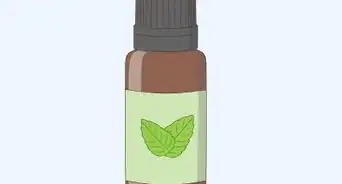
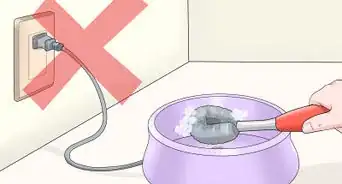
2You can try peppermint oil for aromatherapy. A lot of people enjoy aromatherapy and enjoy smelling the peppermint when they have a cold or cough, or they’re stressed. There’s some evidence it may make you more alert, as well.[19] You can either smell the peppermint directly out of the bottle, put it into a diffuser with some water, or boil some water and pour a few drops into the water to inhale the steam.[20]


Warnings
- Do not consume peppermint if have acid reflux, a hernia, or a history of kidney stones.[22]Thanks!
- Never exceed the daily recommended dosage of peppermint oil. It can be fatal if you take too much.[23]Thanks!
- Nobody knows if it’s dangerous or not, but you’re better off staying away from peppermint oil if you’re pregnant or breastfeeding.[24]Thanks!






References
- ↑ https://patient.info/medicine/peppermint-oil-capsules-apercap-colomint-colpermin-mintec-pepperminn
- ↑ https://www.drugs.com/npp/peppermint.html
- ↑ https://www.nccih.nih.gov/health/peppermint-oil
- ↑ https://www.health.harvard.edu/newsletter_article/By-the-way-doctor-What-can-you-tell-me-about-peppermint-oil
- ↑ https://www.takingcharge.csh.umn.edu/are-essential-oils-safe
- ↑ https://www.health.harvard.edu/newsletter_article/By-the-way-doctor-What-can-you-tell-me-about-peppermint-oil
- ↑ https://www.ncbi.nlm.nih.gov/pmc/articles/PMC5814329/
- ↑ https://www.nccih.nih.gov/health/peppermint-oil
- ↑ https://pubmed.ncbi.nlm.nih.gov/10641042/
- ↑ https://www.health.harvard.edu/newsletter_article/By-the-way-doctor-What-can-you-tell-me-about-peppermint-oil
- ↑ https://www.nccih.nih.gov/health/peppermint-oil
- ↑ https://www.mountsinai.org/health-library/poison/peppermint-oil-overdose
- ↑ https://www.mountsinai.org/health-library/poison/peppermint-oil-overdose
- ↑ https://www.ncbi.nlm.nih.gov/pmc/articles/PMC3546250/
- ↑ https://www.aafp.org/afp/2007/0401/p1027.html
- ↑ https://www.health.harvard.edu/newsletter_article/By-the-way-doctor-What-can-you-tell-me-about-peppermint-oil
- ↑ https://pubmed.ncbi.nlm.nih.gov/27106030/
- ↑ https://patient.info/medicine/peppermint-oil-capsules-apercap-colomint-colpermin-mintec-pepperminn
- ↑ https://www.nccih.nih.gov/health/peppermint-oil
- ↑ https://health.clevelandclinic.org/essential-oils-101-do-they-work-how-do-you-use-them/
- ↑ https://pubmed.ncbi.nlm.nih.gov/16767798/
- ↑ https://pubmed.ncbi.nlm.nih.gov/16767798/
- ↑ https://www.ncbi.nlm.nih.gov/pmc/articles/PMC3546250/
- ↑ https://www.nccih.nih.gov/health/peppermint-oil












































Medical Disclaimer
The content of this article is not intended to be a substitute for professional medical advice, examination, diagnosis, or treatment. You should always contact your doctor or other qualified healthcare professional before starting, changing, or stopping any kind of health treatment.
Read More...