This article was co-authored by wikiHow staff writer, Janice Tieperman. Janice is a professional and creative writer who has worked at wikiHow since 2019. With both a B.A. and M.A. in English from East Stroudsburg University, she has a passion for writing a wide variety of content for anyone and everyone. In her free time, you can find her working on a new crochet pattern, listening to true crime podcasts, or tackling a new creative writing project.
There are 23 references cited in this article, which can be found at the bottom of the page.
The wikiHow Video Team also followed the article's instructions and verified that they work.
This article has been viewed 94,364 times.
Learn more...
Aromatherapy oils can make your home smell nice, help you unwind after a long day, or even boost your mood. With a variety of oils on hand, you can concoct refreshing, invigorating scents for any occasion. Play around with different essential oils and accessories and see what you can come up with!
Steps
Question 1
Question 1 of 15:What are aromatherapy oils?
-
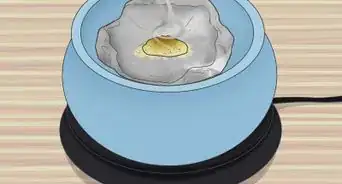
1Aromatherapy oils are typically just regular essential oils. When people talk about aromatherapy oils, they’re normally just referring to essential oils being used for aromatherapy.[1] In most cases, this means filling an oil diffuser with water and then adding a few drops of your favorite essential oils.[2]
- Technically, you don’t even need a diffuser to use oils for aromatherapy. If you’re inhaling the aroma of an essential oil to feel better, improve your mood, or just make your home smell nice, you’re doing aromatherapy!

Question 2
Question 2 of 15:Can I make my own essential oils?
-
1Yes, you can make your own essential oils if you plan on using them a lot. Real essential oils, like the ones you see online and in stores, are often made with “stills,” or large containers crafted from stainless steel. This equipment can be a bit pricey upfront, but may be worthwhile if you plan on making essential oils very frequently.[3]
- You can find still equipment on most all-purpose online marketplaces. These can be pricey and cost at least $100.
- There are essential oil-making kits you can buy with every piece of equipment you’ll need to make a variety of essential oils.

Question 3
Question 3 of 15:How do I make my own infused oils?
-
1Craft your own infused oils by soaking your favorite herb or plant in oil. Fill a clean glass bottle or jar halfway with the herb or plant of your choice. Add in a carrier oil over the herbs, like olive, grape seed, or coconut oil, so there’s around 1 in (2.5 cm) of oil on top of the herbs. Place a square of wax paper on top of the glass jar before securing the lid in place. Wrap the jar in a paper bag, leaving it in a sunny spot for 1-2 weeks. Strain the infused oil through a cheesecloth into a new, clean jar, giving the new oil a day to settle.[4]
- It helps to roll the jar around in your hands once every 1-3 days while the oil heats up in the sunlight. This helps the herbs infuse into the rest of the oil.
- Store your jar in a cool, dark place when you’re not using it. These oils should be good for roughly 1 month before the ingredients start to go bad.[5]
Question 4
Question 4 of 15:What is the best carrier oil for aromatherapy?
-
1You only need a carrier oil if you’re applying oils topically. Carrier oils, like jojoba oil, coconut oil, and olive oil, are mandatory if you’re putting oils on your skin. However, smelling an oil is much safer than putting it on your skin so you don’t need the carrier oil.[6]
- If you still want to use a carrier oil for aromatherapy, you can! Sweet almond oil, apricot kernel oil, grapeseed oil, jojoba oil, avocado oil, and fractionated coconut oil are all great options that won’t overwhelm the smell of the essential oil.[7]
-
2You use water instead of oil if you’re using a diffuser. Diffusing your oils is the most popular way to do some aromatherapy. With a diffuser, you fill the machine with water and then add a few drops of your preferred essential oil to the water and turn the machine on.[8]
- There are waterless diffusers out there. If you have one of those, you don’t dilute the oil at all.[9]

Question 5
Question 5 of 15:Which carrier oil has the lowest impact on scent?
-
1Many essential oil fans find fractionated coconut oil to be odorless. Fractionated coconut oil is commonly used in commercial essential oil products.[10] Unlike regular coconut oil, the fractionated stuff is made by extracting the active compounds that cause it to be volatile.[11] As a result, it’s much more stable than regular coconut oil, and many essential oil enthusiasts think it’s the ideal option if you only want to smell the oil.
- Fractionated coconut oil is a bit more expensive than standard coconut oil.

Question 6
Question 6 of 15:Do I need to make my own oils?
-
1No, you can always buy pre-made oils if you’d like to save time. Search online or in your local wellness store for bottles of essential oils. These oils can be a bit pricey—still, shopping for pre-made oils can save you time if you’re eager to start playing around with different scent combinations. Just make sure you purchase your oils from reputable manufacturers.[12]
- Manufactured oils are almost always going to be safer than homemade oils as well, since it can be hard to know if you’ve produced a safe concentration.
- Avoid “fragrance oils.” While they sound like they’d be great for aromatherapy, fragrance oils contain chemicals that may damage your diffuser.[13]
- Certain essential oils cost more than others. For instance, 10 mL (0.34 fl oz) of lavender might cost at least $16, while 10 mL (0.34 fl oz) of orange essential oil might cost under $6. Other scents, like rose and chamomile, tend to be more expensive as well.[14]

Question 7
Question 7 of 15:How can I do aromatherapy without a diffuser?
-
1Fill an oil-soaked cotton ball to inhale an oil on its own. Squeeze a few drops of your favorite essential oil (or oils) on a clean cotton ball. Smell this cotton ball to get a good whiff of these oils as you go about your day.[15]
- You can always just open the bottle and inhale the oils directly if you’d like.[16]
- You can also leave the cotton ball in your general workspace. This way, you can still get a mild whiff of your favorite aromatherapy oils.
-
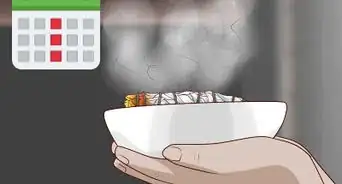
2Try steam inhalation if you’re stuffy or want to relax. Fill a bowl or container with hot water, then drip a few drops of your favorite oils on top. Breathe in the scented steam to enjoy your different essential oil scents. This is a great way to clear your sinuses if you’re feeling a little under the weather. It’s also just a great way to relax if you’re a little stressed![17]
-
3You could use a diffuser bracelet to do aromatherapy on the go. Shop online for a special bracelet designed specifically for aromatherapy. Pour a few drops of essential oils over the clay beads, which will soak into the bracelet. Wear this bracelet throughout the day and enjoy the subtle scent![18]
- Always add the oil to the outside of the accessory so it doesn’t touch your skin directly.
- You can also use other diffusing accessories with essential oils, like necklaces and keychains.[19]


Question 8
Question 8 of 15:Which oils are best for an energy boost?
-
1Pump up your energy with lavender, rosemary, lemongrass, and eucalyptus. Create a base for your refreshing mixture with 12 drops of lavender oil. Round out the scent with 8 drops of rosemary oil, along with 6 drops of lemongrass oil. As a finishing touch, stir in 4 drops of eucalyptus oil. This refreshing, energizing blend of oil can really kickstart your workouts.[20]
- This can be a great essential oil mixture for a diffuser in your bedroom. When you wake up each morning, you can enjoy a fresh boost of natural energy!
-
2Try combining bergamot mint, tangerine, and lavender to refresh yourself. Dilute your mixture with 2 fl oz (59 mL) of distilled water, which will make your essential oils a lot less potent. Add in 12 drops of bergamot mint oil, along with 10 drops of lavender oil and 8 drops of tangerine oil. This combination creates a soothing, refreshing scent that can really improve your mood.[21]
Question 9
Question 9 of 15:What’s a good oil combination if I like the smell of citrus?
-
1Mix lavender, ylang-ylang, and orange together for a citrusy aroma. Concoct a gentle citrus scent with 3 drops each of ylang-ylang oil, orange oil, and lavender oil. You can also try a different spin on this scent with 3 drops of bergamot, orange, and cypress oil. This creates a really soothing scent that’s great for relaxation and winding down.[22]
Question 10
Question 10 of 15:What’s a fun floral recipe?
-
1Recreate a flower garden with ylang-ylang and geranium. Create a simple floral mixture with 3 drops of ylang-ylang oil, along with 3 drops of geranium oil. This combination creates a wonderful floral scent that can really brighten up your home![23]
- You can always experiment with your favorite floral oils and see what kinds of combinations you can come up with.
Question 11
Question 11 of 15:Are there any seasonal aromas I could make?
-
1If you want holiday nostalgia, try orange, cinnamon, cardamom, and clove. Mix 3 drops of orange oil, along with 2 drops of cardamom oil, cinnamon oil, and clove oil. Add this mixture to your diffuser, inhaler, or other essential oil appliance whenever you need to get in the holiday spirit![24]
- This creates a spicy, nostalgic scent that will get your home ready for the holidays.

Question 12
Question 12 of 15:What’s a calming aroma?
-
1Whip up a refreshing but grounding scent with a basil base. Create the base of your aromatherapy fragrance with 10 drops of basil oil. Add in 4 drops of rosemary oil, along with 3 drops of vetiver oil. Finish off the mixture with 2 drops of pine oil and 1 drop of peppermint oil.[25]
- This is a fun blend—since there are so many different oils at play, the fragrance tends to change if you let it diffuse for an hour or so.

Question 13
Question 13 of 15:Can I make a homemade fragrance diffuser?
-
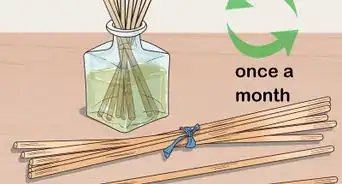
1Yes, all you need is a glass container and some reeds or bamboo skewers. Grab a glass container with a narrow mouth (a laboratory flask is perfect) and fill it with your essential and base oils. Aim for 70% of your carrier oil, and 30% of your essential oil. Then, place 5-10 reeds or bamboo skewers inside of the container. The oils will soak slowly through your reeds or skewers and release their lovely aromas into the air.[26]
- Every week or so, flip the skewers or reeds upside down or replace them. This will keep one end from drying out entirely.
- If you don’t have a glass container that will work for this, grab a ceramic container. So long as it’s glazed inside (so that it doesn’t leak), it should be fine.

Question 14
Question 14 of 15:Does aromatherapy work?
-
1Yes, it may improve your mood, help you relax, or give you an energy boost. There are definitely some meaningful signs that aromatherapy can improve the way you feel.[27] However, these oils are unlikely to cure any underlying medical conditions, and you’re better off using aromatherapy as a supplement to any medical treatments you’re completing.[28]

Question 15
Question 15 of 15:Is aromatherapy safe?
-
1Generally, yes, aromatherapy doesn’t carry any serious risk. If all you’re doing is smelling an essential oil, you’re probably not going to do any harm. Essential oils are not regulated by the government, so there are certain unique risks if you’re using it on your skin, but just running a diffuser or sniffing a cotton ball is extremely unlikely to carry any serious risk.[32]
- In extremely rare cases, excessive use of aromatherapy can cause skin dermatitis, breathing issues, and even death. If you have any negative reaction whatsoever, stop using the oils and seek out emergency medical care if necessary.[33]
-
2Everyone reacts to different oils in a unique way. Essential oils smell fairly strong, especially if you’re smelling them directly. Some people may not enjoy the way a given oil smells, and they could get a headache or become agitated. If a certain oil (or any oil) causes you or someone you live with to experience any negative side effect, don’t continue aromatherapy.[34]
- Children seem to respond negatively to essential oils more often than adults do, so be careful and turn that diffuser off if your child complains about the smell.
- Oregano, cinnamon bark, jasmine, lemongrass, ylang-ylang, chamomile, and bergamot oils seem to be uniquely irritating for some people.[35]
-
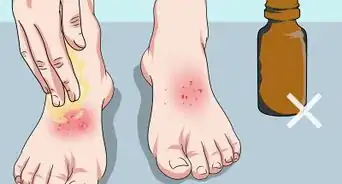
3Never put undiluted oils on your skin. Some people enjoy using essential oils topically, but be careful. You must dilute the essential oils with a carrier oil, like jojoba oil, coconut oil, or olive oil, so that the essential oil only makes up 1-5% of the solution.[36] Even then, there is a risk of an allergic reaction or skin irritation. Just be extremely careful and always spot test an oil before you slather it on your skin.[37]
- The effects of topical essential oil treatments on children, women who are breastfeeding, pregnant women are not well understood. It’s best not to use essential oils as a topical treatment if you fall into one of these categories.[38]


Warnings
- Never apply raw essential oils to your skin, as these oils are very strong. Always dilute essential oils with a carrier oil before using them as a massage oil.[40]Thanks!
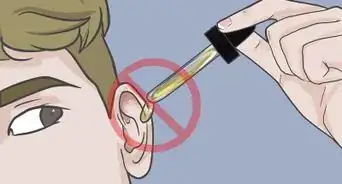
- Don’t eat your essential oils—although they smell great, they can be very bad for you when ingested.[41]Thanks!
- Double-check the safety instructions on your oils before using them. Certain oils shouldn’t be stored in direct sunlight.[42]Thanks!
- Essential oils are flammable and can start a fire when left next to a heat source.[43]Thanks!
References
- ↑ https://www.sciencedirect.com/science/article/pii/S2221169115001033
- ↑ https://www.nbcnews.com/shopping/wellness/how-use-essential-oil-diffuser-n1230801
- ↑ https://www.engineering.iastate.edu/brl/files/2011/10/brl_essentialoils.pdf
- ↑ https://theherbalacademy.com/herb-infused-oils/
- ↑ https://extension.umaine.edu/publications/4385e/
- ↑ https://achs.edu/blog/2017/08/15/aromatherapy-essential-oil-dangers-and-safety/
- ↑ https://achs.edu/blog/2017/08/15/aromatherapy-essential-oil-dangers-and-safety/
- ↑ https://wexnermedical.osu.edu/blog/essential-oils
- ↑ https://wexnermedical.osu.edu/blog/essential-oils
- ↑ https://achs.edu/blog/2014/01/07/essential-oil-quality/
- ↑ http://www.ifrj.upm.edu.my/26%20(03)%202019/5%20-%20IFRJ171029.R1-Final.pdf
- ↑ https://www.hopkinsmedicine.org/health/wellness-and-prevention/aromatherapy-do-essential-oils-really-work
- ↑ https://www.hopkinsmedicine.org/health/wellness-and-prevention/aromatherapy-do-essential-oils-really-work
- ↑ https://www.massagetoday.com/articles/14563/The-Business-Side-of-Adding-Aromatherapy-to-Your-Practice
- ↑ https://www.takingcharge.csh.umn.edu/how-do-i-choose-and-use-essential-oils
- ↑ https://health.clevelandclinic.org/essential-oils-101-do-they-work-how-do-you-use-them/
- ↑ https://www.ncbi.nlm.nih.gov/books/NBK65820/
- ↑ https://www.hopkinsmedicine.org/health/wellness-and-prevention/aromatherapy-do-essential-oils-really-work
- ↑ https://www.hopkinsmedicine.org/health/wellness-and-prevention/aromatherapy-do-essential-oils-really-work
- ↑ https://www.betternutrition.com/natural-living/diy-aromatherapy-blends
- ↑ https://www.betternutrition.com/natural-living/diy-aromatherapy-blends
- ↑ https://www.yogajournal.com/lifestyle/essential-oils-smell-candles#gid=ci02300b61300027dc&pid=smartchef_280_01_fnl
- ↑ https://www.yogajournal.com/lifestyle/essential-oils-smell-candles
- ↑ https://www.yogajournal.com/lifestyle/essential-oils-smell-candles
- ↑ https://info.achs.edu/blog/blending-101-the-art-of-pairing
- ↑ https://www.apartmenttherapy.com/homemade-reed-diffusers-147411
- ↑ https://www.sciencedirect.com/science/article/pii/S2221169115001033
- ↑ https://www.hopkinsmedicine.org/health/wellness-and-prevention/aromatherapy-do-essential-oils-really-work
- ↑ https://www.hopkinsmedicine.org/health/wellness-and-prevention/aromatherapy-do-essential-oils-really-work
- ↑ https://www.mayoclinic.org/healthy-lifestyle/stress-management/in-depth/why-aromatherapy-is-showing-up-in-hospital-surgical-units/art-20342126
- ↑ https://www.mayoclinic.org/healthy-lifestyle/stress-management/in-depth/why-aromatherapy-is-showing-up-in-hospital-surgical-units/art-20342126
- ↑ https://www.mayoclinic.org/healthy-lifestyle/consumer-health/expert-answers/aromatherapy/faq-20058566
- ↑ https://www.ncbi.nlm.nih.gov/books/NBK121511/
- ↑ https://www.hopkinsmedicine.org/health/wellness-and-prevention/aromatherapy-do-essential-oils-really-work
- ↑ https://www.hopkinsmedicine.org/health/wellness-and-prevention/aromatherapy-do-essential-oils-really-work
- ↑ https://www.takingcharge.csh.umn.edu/how-do-i-choose-and-use-essential-oils
- ↑ https://www.hopkinsmedicine.org/health/wellness-and-prevention/aromatherapy-do-essential-oils-really-work
- ↑ https://www.mayoclinic.org/healthy-lifestyle/consumer-health/expert-answers/aromatherapy/faq-20058566
- ↑ https://wexnermedical.osu.edu/blog/essential-oils
- ↑ https://www.hopkinsallchildrens.org/ACH-News/General-News/Are-Essential-Oils-Safe-for-Children
- ↑ https://www.hopkinsallchildrens.org/ACH-News/General-News/Are-Essential-Oils-Safe-for-Children
- ↑ https://www.hopkinsallchildrens.org/ACH-News/General-News/Are-Essential-Oils-Safe-for-Children
- ↑ https://www.hopkinsallchildrens.org/ACH-News/General-News/Are-Essential-Oils-Safe-for-Children
About This Article