This article was co-authored by wikiHow Staff. Our trained team of editors and researchers validate articles for accuracy and comprehensiveness. wikiHow's Content Management Team carefully monitors the work from our editorial staff to ensure that each article is backed by trusted research and meets our high quality standards.
There are 10 references cited in this article, which can be found at the bottom of the page.
wikiHow marks an article as reader-approved once it receives enough positive feedback. In this case, 88% of readers who voted found the article helpful, earning it our reader-approved status.
This article has been viewed 95,371 times.
Learn more...
Olive oil is a versatile oil that can be used in cooking and baking, and as a drizzle or garnish to finish foods. When stored properly, freshly harvested olive oil can last up to two years. To store oil properly, it’s important to keep it away from light, heat, and oxygen. Olive oil that isn't stored properly will go rancid and take on an unpleasant smell and odor.
Steps
Part 1
Part 1 of 3:Extending Shelf Life with Proper Storage
-
1Protect the oil from light. Sunlight and fluorescent lights will deteriorate the quality of the oil. Store your oil in a pantry, closet, cupboard, or other dark area with a door. Never leave the olive oil on your counter, in a window sill, or anywhere that it will be exposed to light for extended periods of time.[1]
-
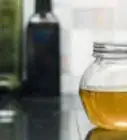
2Choose the right container. The ideal container for olive oil is a stainless-steel tin or dark glass bottle that will further protect the oil from light. Olive oil often comes in clear glass bottles, and if you don’t have another container to transfer the oil to, then wrap the bottle with aluminum foil to protect it from light.[2]
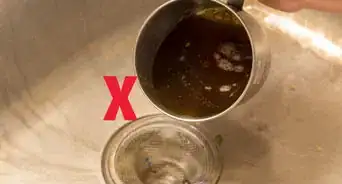
- Don’t use reactive metals, such as iron and copper. These materials can contaminate the oil and cause an undesired chemical reaction.[3]
-
3Seal the oil with an airtight lid. Oxygen is another element that will spoil olive oil. Whatever container you store your oil in, make sure it has an airtight lid that will keep out extra oxygen. After each time you use the oil, seal the lid tightly to protect the oil.[4]
- If you're concerned that your lid isn't sealing properly, wrap the top of the bottle with a small sheet of plastic wrap before putting on the lid.
-
4Keep the oil cool. The ideal temperature for storing olive oil is 57 F (14 C), but it can safely be stored anywhere up to 70 F (21 C). The ideal spot for olive oil is a root cellar or cold cellar that’s both cool and dark, but a cooler pantry in your kitchen will also work.[5]
- You can store the oil in the refrigerator, though this isn't necessary if you can keep the oil at the right temperature outside of the refrigerator.
- In hot and humid climates where the temperature is typically 80 F (27 C) or hotter, storing the oil in the refrigerator will help to preserve it.[6]
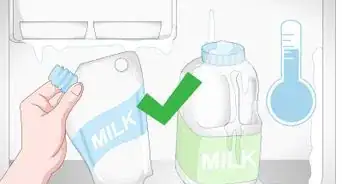
- Oil stored in the refrigerator will solidify and become cloudy, so you'll need to warm it up to room temperature before you can use it. Simply transfer it to the pantry and wait about half an hour for it to become liquid again.
-
5Store large quantities of oil separately. When you buy oil in bulk, transfer up to a quart (1 L) to a smaller bottle for everyday use. Seal the lid tightly on the bulk container, store it somewhere cool and dark, and only open it to refill the smaller container.[7]
- Buying olive oil in bulk can help you save money, but storing the oil properly becomes even more important when you're trying to protect large quantities.


Part 2
Part 2 of 3:Choosing Long-Lasting Olive Oil
-
1Check for a harvest date. Olive oil will be freshest within a year of the olives being harvested, but the oil will still be good for another year after that.[8] For the freshest and longest-lasting olive oil possible, look for a harvest date on the bottle, and buy oil made with freshly harvested olives.
- Go by the bottling date if you can't find a harvest date on the oil. When stored properly, the oil will be good for 18 months to two years from the bottling date.[9]
-
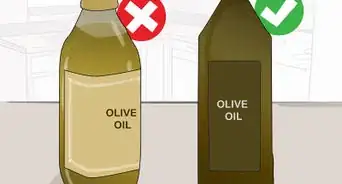
2Buy oil that comes in a dark or metal container. Oil that’s bottled in dark glass or stainless steel will be protected from UV and fluorescent light in the factory, during shipment, and at the grocery store. Because light can degrade olive oil, buying oil in a dark bottle will last longer than oil bottled in clear glass.[10]
-
3Avoid oil that comes in a plastic bottle. Plastic bottles don’t protect olive oil from light the way dark glass and metal containers do, so oil that comes in plastic containers may already have a shortened shelf life. Olive oil stored in plastic bottles also tends to have fewer carotenes, less chlorophyll, and phenols, which are antioxidants found in olives.[11]
-
4Pick a bottle from the back of the shelf. When it’s not possible to buy oil that comes in dark glass or stainless steel, choose a bottle from the back of the shelf. This way, the other bottles will have protected the oil inside from some light contamination in the grocery store.[12]


Part 3
Part 3 of 3:Using Olive Oil
-
1Drizzle it on foods before eating. Olive oil is a delicious garnish that you can add to foods right before serving. The oil will add an extra dimension to the flavor, add richness to the dish, and bring out some flavors in the food. Drizzle on some oil right before serving foods like:[13]
- Pasta
- Hummus
- Soups
- Salad
-
2Finish meat with a splash of oil. Right before serving your favorite steak, fish filet, or other piece of meat, drizzle on a small amount of olive oil to add extra richness and juiciness to the meat. Season the meat with salt and pepper, to taste, and serve.
-
3Use it in place of butter. Olive oil makes an excellent substitute for butter in some situations, especially when it comes to baked goods. Instead of spreading butter on your toast, sandwiches, muffins, or fruit breads, drizzle and spread some olive oil on top.[14]
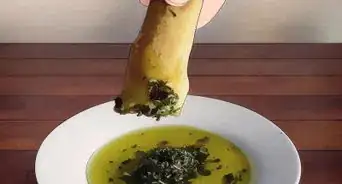
- For fresh bread, try combining olive oil and some balsamic vinegar on a flat plate and dip the bread into the oil and vinegar before eating.
-
4Dress your salads. Fresh olive oil has a light and non-greasy taste, which makes it ideal for making vinaigrettes and salad dressings. You can either follow a proven vinaigrette recipe, or make your own by experimenting with different combinations of:
- Olive oil
- Balsamic, rice, or wine vinegar
- Lemon juice
- Honey or maple syrup
- Mustard
-
5Use it for cooking. Despite its bad rap, you can cook and pan fry foods with olive oil. The smoke point, or the temperature at which the oil burns, of olive oil is anywhere between 410 and 486 F (210 and 252 C) depending on how refined it is. Most at-home cooking is done between 250 and 400 F (121 and 204 C), so olive oil is safe for:[15]
- Pan frying
- Sautéing
- Stir frying


Community Q&A
-
QuestionIs it safe to keep refilling the same bottle with more oil?
 Community AnswerYes, just make sure you give it a little rinse before putting oil back in. This helps keep it nice and sanitary.
 -
QuestionWhat causes olive oil to separate?
 Community AnswerPure olive oil doesn't separate, unless it's contaminated with another liquid. It's normal for there to be a greenish haze at the bottom of a bottle of olive oil, but it should not be separating. If you find a bottle that is separating, return it to the store where you bought it for a refund or exchange.
 -
QuestionHow should organic olive oil be stored?
 CaeiiaTop AnswererIn a glass bottle that is dark (and protects from UV rays) in a dark, cool place such as a cupboard.
 -
QuestionHow do I store a bottle of olive oil after opening it?
 Community AnswerYou can store it in a dry, cool cabinet.
References
- ↑ https://www.oliveoilsource.com/page/keeping-olive-oil-fresh
- ↑ https://www.realsimple.com/food-recipes/shopping-storing/more-shopping-storing/store-olive-oil
- ↑ http://www.thekitchn.com/this-is-how-you-should-be-storing-olive-oil-tips-from-the-kitchn-219089
- ↑ https://californiaoliveranch.com/olive-oil-101/what-affects-the-quality-of-olive-oil/
- ↑ http://www.thekitchn.com/this-is-how-you-should-be-storing-olive-oil-tips-from-the-kitchn-219089
- ↑ http://www.stilltasty.com/questions/index/27/page:3
- ↑ https://www.oliveoilsource.com/page/keeping-olive-oil-fresh
- ↑ https://www.oliveoiltimes.com/olive-oil-basics/good-olive-oils-gone-bad/8900
- ↑ https://californiaoliveranch.com/olive-oil-101/what-affects-the-quality-of-olive-oil/
- ↑ https://californiaoliveranch.com/olive-oil-101/what-affects-the-quality-of-olive-oil/
- ↑ https://www.ncbi.nlm.nih.gov/pmc/articles/PMC4375245/
- ↑ https://www.realsimple.com/food-recipes/shopping-storing/more-shopping-storing/store-olive-oil
- ↑ https://www.buzzfeed.com/christinebyrne/things-you-shouldnt-be-cooking-with-olive-oil?utm_term=.vlNk8lNLW#.sqxQowA4B
- ↑ http://www.shape.com/blogs/fit-foodies/olive-oil-better-we-ever-thought
- ↑ https://www.theglobeandmail.com/life/health-and-fitness/health/smoke-point-matters-in-cooking-with-oil/article26569060/
About This Article

To store olive oil, keep it in a pantry, closet, cupboard, or other dark area, since sunlight and fluorescent lights will deteriorate the quality of the oil. If the olive oil was packaged in a clear glass or plastic bottle, transfer it to a dark glass bottle or wrap the bottle with aluminum foil to further protect it from the light. Seal the bottle tightly after each time you use the oil, and keep it at a temperature between 57 and 70 °F. If you live in a hot climate, keep your olive oil in the refrigerator to prolong its shelf life. When stored properly, olive oil will stay good for up to 2 years. For more tips, including how to choose the olive oil that will last you a long time, read on!