wikiHow is a “wiki,” similar to Wikipedia, which means that many of our articles are co-written by multiple authors. To create this article, 14 people, some anonymous, worked to edit and improve it over time.
There are 7 references cited in this article, which can be found at the bottom of the page.
The wikiHow Culinary Team also followed the article's instructions and verified that they work.
This article has been viewed 473,538 times.
Learn more...
Despite their acidity, lemons go bad like any other fruit. Shriveling, soft or hard spots, and a dull color are all signs that a lemon has started to lose flavor and juice. Prevent this happening by learning how to store lemons at the right temperature.
Steps
Method 1
Method 1 of 3:Storing Whole Lemons
-
1Store lemons for immediate use. If you plan to use the lemons within a few days of purchase, store them away from direct sunlight. They typically stay fresh for about one week at room temperature. After this point, they start to wrinkle, lose their vibrant color, and develop soft or hard patches.[1]
-
2Store extra lemons sealed in the refrigerator. Place the lemons in zip-locked bags, squeezing out as much air as you can. In this state, the lemons may retain most of their juice and flavor for as long as four weeks.[2]
- The ideal temperature for storing ripe (yellow) lemons is between 4º and 10ºC (39–50ºF). For most refrigerators, the middle shelves or door shelves are around this temperature.

Method 2
Method 2 of 3:Storing Cut Lemons
-
1Cover the cut side of the lemon. Reduce water loss and oxidization by protecting the cut side from air. Here are a few ways to do this:
- Place lemon halves cut-side-down on a small plate.
- Wrap wedges or slices in plastic wrap.
- Place the cut lemons in the smallest airtight container you can find.
-
2Refrigerate. Although they last longer than most other cut fruit, lemons are still best within 2–3 days of cutting.
-
3Freeze slices to add to drinks. Freeze the slices on a baking sheet lined with parchment paper, spaced out so they don't touch each other. Once frozen, toss them all in a sealed plastic bag and store in the freezer indefinitely.
- Freezing lemons (or any food items) on a baking sheet prevents them sticking to each other as ice forms.
- Like most fruit, lemons become mushy when frozen. The frozen slices are best added to cold drinks directly from the freezer, while they're still hard.
Method 3
Method 3 of 3:Storing Juice and Zest
-
1Refrigerate lemon juice. Despite its acidity, lemon juice can harbor bacteria if kept at room temperature. After about 2–4 days in the refrigerator, the juice will start to lose its taste. Throw it out once it looks dull and dark or loses most of its taste, usually about 7–10 days.[3]
- Do not store lemon juice in transparent bottles, since light will break down the juice more quickly.
- Store-bought bottled lemon juice typically contains preservatives, which increase its shelf life to several months.
-
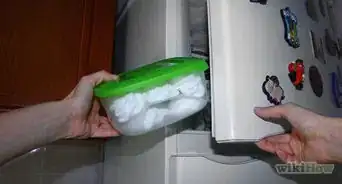
2Freeze leftover juice in ice cube trays. This is the easiest way to freeze excess juice. Once frozen, transfer to a sealed plastic bag in the freezer.
- Alternatively, can the lemon juice instead.
-
3Store zest in an airtight container. Once you've zested the lemon, move the zest to an airtight glass container. Store in a cool, dry location.[4] Freshly grated zest loses flavor fast, and may become a bacterial risk after just 2–3 days.[5]
-
4Freeze leftover zest. If you have a great deal of zest, space small, tightly packed spoonfuls on a baking sheet lined with parchment paper. Freeze, then transfer to a freezer-safe container.
Community Q&A
-
QuestionHow long can I store frozen lemons in the freezer?
 Community AnswerYou can store lemons in the freezer for about 3 to 4 months and in a refrigerator about 3 to 4 weeks.
 -
QuestionHow long can I store lemons for?
 Community AnswerA single lemon can stay fresh in the refrigerator for a week if it is cut and for a week and a half uncut. If it is not in the refrigerator, it can go bad quickly unless the room temperature is cold.
 -
QuestionDoes lemon juice provide health benefits?Community AnswerYes. It contains vitamins and nutrients as does all citrus.
-
QuestionShould lemons stay on the tree be picked as needed?
 Community AnswerIt depends on if they are ripe. If they are ripe and on the tree, you should pick them so that they do not over-ripen and die.
 -
QuestionDo these instructions also apply to limes?Community AnswerYes, you can use these tips for limes too.
-
QuestionDo they need to be washed?
 Marie Croft CavinsCommunity AnswerThey should be. You don't know who has handled them before you bought them. Also, they may have pesticides on them. When you cut them, you can transfer bacteria into them as the knife cuts them.
Things You'll Need
- Zip tight plastic bags
- Refrigerator
- Freezer






References
- ↑ http://www.whfoods.com/genpage.php?tname=foodspice&dbid=27#purchasequalities
- ↑ http://www.americastestkitchenfeed.com/cooking-science/2013/02/we-prove-it-the-best-way-to-store-lemons/
- ↑ http://www.doesitgobad.com/does-lemon-juice-go-bad/
- ↑ http://www.whfoods.com/genpage.php?tname=foodspice&dbid=27#purchasequalities
- ↑ http://www.eatbydate.com/what-is-lemon-zest/
- ↑ http://postharvest.ucdavis.edu/PFfruits/Lemon/
- ↑ http://www.americastestkitchenfeed.com/cooking-science/2013/02/we-prove-it-the-best-way-to-store-lemons/
- ↑ http://pdf.usaid.gov/pdf_docs/Pnacy845.pdf
About This Article
To store lemons that have been cut, cover the exposed side of the fruit by placing them face-down on a plate or wrapping them in plastic wrap. Then, place the lemons in the refrigerator to keep them fresh and juicy. Cut lemons will last in the fridge for 2-3 days, but you can also freeze lemon slices by placing them on a baking sheet lined with parchment paper in the freezer. Once the lemons are completely frozen, you can put them in a plastic bag and store them in the freezer for several months.