This article was co-authored by Alan O. Khadavi, MD, FACAAI. Dr. Alan O. Khadavi is a Board Certified Allergist and a Pediatric Allergy Specialist based in Los Angeles, California. He holds a BS in biochemistry from the State University of New York (SUNY) at Stony Brook and an MD from the State University of New York Health Science Center at Brooklyn. Dr. Khadavi completed his pediatric residency at Schneider Children’s Hospital in New York, and then went on to complete his allergy and immunology fellowship and pediatric residency at Long Island College Hospital. He is board certified in adult and pediatric allergy/immunology. Dr. Khadavi is a Diplomate of the American Board of Allergy and Immunology, a Fellow of the American College of Allergy, Asthma & Immunology (ACAAI), and a member of the American Academy of Allergy, Asthma & Immunology (AAAAI). Dr. Khadavi's honors include Castle Connolly’s list of Top Doctors 2013-2020, and Patient Choice Awards "Most Compassionate Doctor" in 2013 & 2014.
This article has been viewed 30,909 times.
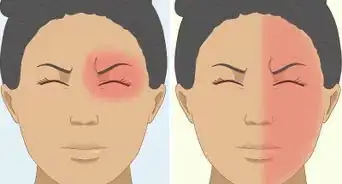
Sinus headaches are the kind of headaches that come alongside an episode of sinusitis. The pain is felt in the upper face and can be described as dull and throbbing. Luckily, there are some things that can be done to both treat and prevent sinus headaches.
Steps
Method 1
Method 1 of 3:Treating Sinus Headaches with Medication
-
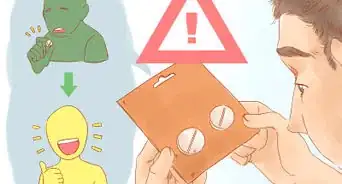
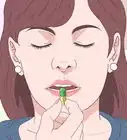
1Take Sudafed. If you cannot see your doctor immediately, you can take Sudafed PE Sinus Headache, which comes in 325 mg/5 mg caplets. These can be bought over-the counter.
- They contain acetaminophen which helps to relieve pain. They also contain phenylephrine hydrochloride which relieves congestion in the nose by shrinking the blood vessels.
- You can take four caplets every four hours, or as needed. You can only take a maximum of twelve caplets within the 24 hours. Make sure you are not allergic to any of its ingredients before taking.[1]
-
2Try using a nasal spray. Using a nasal spray can be helpful, as it decongests the clogged nose, thereby relieving pressure on the air pockets. Less or no pressure will lead to headache relief.
- One preferred brand of nasal spray that can be bought from the drugstore is Vicks Sinex Decongestant Nasal Spray. It is available in two forms: the 0.025% solution and the 0.05% solution.
- The dosages are as follows: For 0.025% solution - four to six drops in each nostril twice a day, or as necessary. For 0.05% solution - two to three drops in each nostril twice a day, or as needed.
- Experts advise that you do not use nasal spray beyond three days unless advised by your doctor.[2]
Advertisement


Method 2
Method 2 of 3:Easing Sinus Headaches with Self-Help Strategies
-
1Understand what a pressure point massage is. Another method that can be used to relieve sinus headaches is massage. Massage can lessen the pressure in the nasal passage which is causing the pain. Below are different kinds of massage and the information on how to do them.
-
2Try to give yourself a massage. There are two simple trigger points that you may choose to massage: the center of your eyebrows just above your nose and the sides of the bridge of your nose.
- Slowly apply pressure onto these trigger points. Push only until you feel discomfort or resistance in the muscle.
- Hold the fingers in place for 5 to 60 seconds or until the area being pressed feels numb.
- Push once more to increase the pressure until discomfort is felt.
- Do steps 2 ,3 and 4, three to four times on each trigger point.
- Each trigger point can be massaged three to six times a day.
-
3Try the tapping method. You will need the help of another person to perform this massage. Sit on a chair and face the other person. Ask the other person to place his hands on the sides of your head.
- Using the pointer fingers, the other person will begin tapping, starting at the temples, then going down to the cheek bone, and continuing until fingers meet at the nose.
- From the nose, the tapping will slowly move back to the cheek bone and then to the temples.
- The tapping end with a gentle massage on the temples.
- This can be done as often as needed.
-
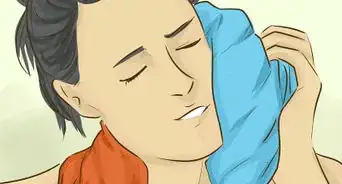
4Use either a hot or cold compress. Warmth can help to clear blockages and cause greater blood flow in the nose. On the other hand, coldness can relieve pain. You can apply hot and cold compresses to ease headaches related to sinus pressure, as follows:
- You will need a hot water bag and an ice pack. Wrap each of them with cloth so that the heat or cold is not too intense on your skin.
- Place the hot compress across your sinuses. Keep it in place for three minutes.
- Follow this right away with a cold compress on the same spot for 30 seconds.
- Repeat steps 2 and 3 three times per treatment. This can be done two to six times a day as needed.
-
5Try using a vaporizer or humidifier. The mucus in the nose and sinuses will not flow properly if the air that you breathe is very dry (like when the weather is extremely cold).
- When this happens, the sinuses will not be able to drain well so congestion occurs in the nasal passages. This results in sinusitis and sinus headaches.
- You can reverse this situation by using an air humidifier or vaporizer. Place it in your bedroom and leave it on as you sleep.[3]
-
6Try clearing your headache with steam. If you do not have a humidifier machine at home, you can improvise and do any of the following:
- Turn on a steam shower and sit nearby so that you can breathe in the steam. Stay in the shower room until you feel better.
- Fill a tub or a sink with hot water. Sit or stand facing it and stay there until nasal congestion feels loose.
- Alternatively, you can actually get into the shower or tub.
-
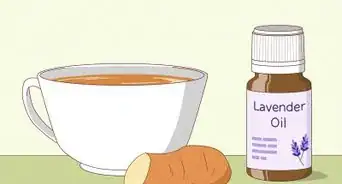
7Drink tea. Herbal teas have been known to reduce headaches and relieve pain, pressure and congestion. You can make your own tea at home. All you need are two pieces of ginger as big as your thumb. Here are some simple steps to follow:
- Wash two thumb-sized pieces of ginger. Do not peel.
- Slice them and add to a cup of freshly boiled water.
- Allow the ginger slices to be submerged in the water for 15 minutes.
- Drink the tea while it's still hot.
- You can drink a cup whenever the headache attacks.
Advertisement


Method 3
Method 3 of 3:Knowing What Triggers the Sinus Headaches
-
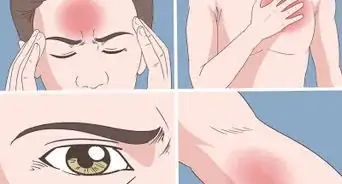
1Be aware of infections. Knowing what is causing your sinus headache is vital in stopping it, as it will lead you to the right remedy.
- An episode of sinus headaches can be caused by infections in the nose or allergic reactions.
- As a response to these things, more mucus is produced in the nose, which causes the pressure that leads to a sinus headache.
-
2Look out for swelling and mucus congestion as the cause of your headaches. Swelling and mucus congest the nose, which puts more pressure on the air pockets in front of the person's skull. This results in sinus headaches.
-
3Know that allergies can trigger sinus headaches. If certain foods like milk, nuts or chicken trigger your allergies, remove them from your diet.
- If a specific medications is causing an allergic reaction, ask your doctor for a replacement drug.
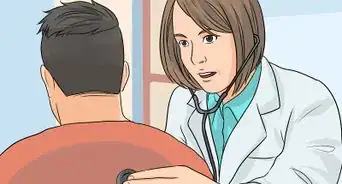
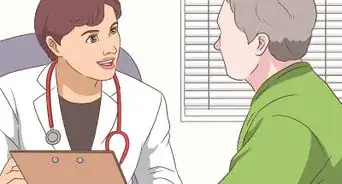
- If you are not sure if you have an allergy or what's causing an allergy, you can seek the help if a doctor who can run tests to find out.
-
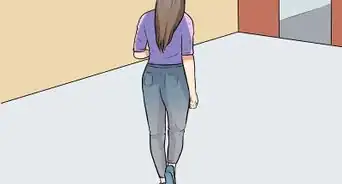
4Keep track of your headaches during cold weather. If cold weather conditions trigger nasal problems like rhinitis and colds, try to stay indoors, keep warm and wear cozy shoes and clothing especially when going outside.Advertisement




-Step-14.webp)
References
- ↑ http://www.empr.com/sudafed-pe-sinus-headache/drug/3059/
- ↑ http://www.healthlinkbc.ca/healthtopics/content.asp?hwid=hw67419#aa17962
- ↑ http://www.nhs.uk/conditions/sinus-headache/Pages/Introduction.aspx
- Beers, M. et.al. (2003). The Merck Manual of Medical Information (2nd Home Edition)
- Bruce, D. et al. (2007). The Sinus Cure: 7 Simple Steps to Relieve Sinusitis and Other Ear, Nose, and Throat Conditions
- Balys, Rick, "Sinus Headache: Revisiting the Diagnosis". The Canadian Journal of Diagnosis, March 2013






























Medical Disclaimer
The content of this article is not intended to be a substitute for professional medical advice, examination, diagnosis, or treatment. You should always contact your doctor or other qualified healthcare professional before starting, changing, or stopping any kind of health treatment.
Read More...