This article was medically reviewed by Sari Eitches, MBE, MD. Dr. Sari Eitches is an Integrative Internist who runs Tower Integrative Health and Wellness, based in Los Angeles, California. She specializes in plant-based nutrition, weight management, women's health, preventative medicine, and depression. She is a Diplomate of the American Board of Internal Medicine and the American Board of Integrative and Holistic Medicine. She received a BS from the University of California, Berkeley, an MD from SUNY Upstate Medical University, and an MBE from the University of Pennsylvania. She completed her residency at Lenox Hill Hospital in New York, NY and served as an attending internist at the University of Pennsylvania.
There are 28 references cited in this article, which can be found at the bottom of the page.
wikiHow marks an article as reader-approved once it receives enough positive feedback. This article has 93 testimonials from our readers, earning it our reader-approved status.
This article has been viewed 11,460,862 times.
Whether you have a minor headache or a debilitating migraine, you may feel frustrated and worried that the pain will never go away. Fortunately, there are steps you can take to deal with the immediate pain, as well as to avoid or minimize future headaches.
Here are 21 effective ways to get rid of a headache.
Steps
Method 1
Method 1 of 21:Drink some caffeine.
-
1Taking a small amount of caffeine when your headache starts may help. A study with over 1900 patients found that a little bit of caffeine in combination with medication sometimes helped those with tension headaches.[1]
- However, too much caffeine can cause chronic migraines, and sudden caffeine withdrawal can also cause headaches.

Method 2
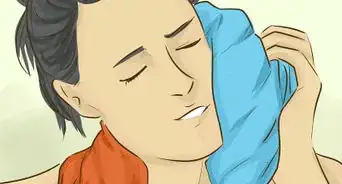
Method 2 of 21:Apply a cold pack to your eyes or head.

Method 3
Method 3 of 21:Take a warm bath or shower.
-
1Warm water can help relax tense muscles. Relaxing the muscles around your head and neck may help ease your symptoms.[4]
- You can also try a heating pad or warm compress.

Method 4
Method 4 of 21:Dim the lights.
-
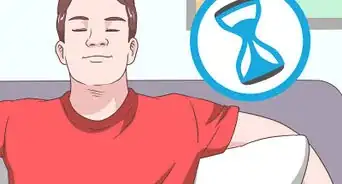
1A darkened, quiet room may help soothe your symptoms.[5] For 80% of people, light can trigger a headache or make an existing one worse.
- You can try using an eye mask to block out the light if your shades or curtains aren’t effective.

Method 5
Method 5 of 21:Try over-the-counter medications.
-
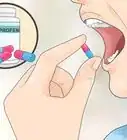
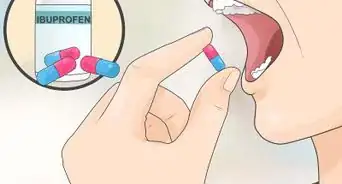
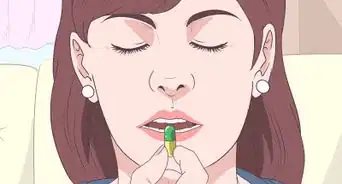
1There are multiple over-the-counter medications that can help with headaches. Acetaminophen, aka Tylenol, ibuprofen, and aspirin can all ease the symptoms of a headache.[6]

Method 6
Method 6 of 21:Relax with meditation or yoga.
-
1Stress can be a major cause of headaches. 66.7% of patients in one study reported stress as the main cause of their headaches.[7]

Method 7
Method 7 of 21:Try acupressure.
-
1Performing acupressure techniques may help reduce muscular tension.[10] Stimulating points on your neck, shoulder, and hands can help relieve headaches. Some techniques to try include:[11]
- Behind your ear: Locate the mastoid bone just behind your ear, and follow the natural groove in your neck to where the muscles attach to the skull. Apply deep, very firm pressure for 4-5 seconds while you breathe deeply.[12]
- On your shoulder: Locate the point on your shoulder muscle about halfway between your neck and the edge of your shoulder. Using your opposite hand (right hand on the left shoulder, left hand on the right shoulder), pinch the shoulder muscle between your fingers and thumb. Use your index finger to apply firm downward pressure for 4-5 seconds.[13]
- On your hand: Massage the soft part of your hand in between your index finger and thumb. Apply firm, circular pressure for 4-5 seconds. However, this should be avoided during pregnancy because it might induce labor.[14]

Method 8
Method 8 of 21:Use lavender oil.
-
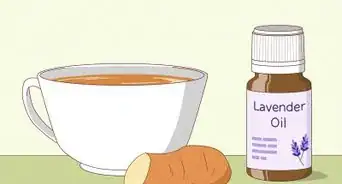
1Rubbing 2-3 drops of lavender oil on your upper lip may help. One study found that 92 out of 129 participants reported partially or entirely reduced headache symptoms after doing so.[15]

Method 9
Method 9 of 21:Do weekly massage sessions.
-
1Regular massages may actually reduce the frequency of headaches. One small study found that weekly massage sessions led to both less frequent migraines and better sleep.[16] Massages combined with exercise and a more relaxed lifestyle can also be effective.

Method 10
Method 10 of 21:Seek help from a chiropractor.
-
1Spinal manipulation from a chiropractor may help reduce pain that triggers headaches. A review of over 21 medical articles found that spinal manipulation can help patients experiencing pain in their neck or multiple areas of their head.[17]
- However, spinal manipulation isn’t recommended for ordinary tension headaches.

Method 11
Method 11 of 21:Try osteopathic manipulative treatment.
-
1Osteopathic manipulative treatment may provide relief from headaches. This is where muscles and joints are moved with techniques like stretching and gentle pressure.[18]
- This is a non-invasive alternative to medication with little to no side effects.

Method 12
Method 12 of 21:Try acupuncture.
-
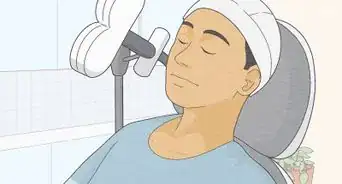
1Acupuncture may be as effective as some headache medications. A study with over 4419 participants found that acupuncture patients had fewer headaches, with acupuncture being at least as effective as the drugs specifically designed to prevent headaches.[19]
- One US population based survey reported that 9.9% of respondents who did acupuncture did so to treat their migraines and headaches [20]

Method 13
Method 13 of 21:Stay hydrated.
-
1Not drinking enough water can cause headaches.[21] Studies have found that headache symptoms can be caused by dehydration.[22]
- A very small study showed that those who drank 1.5L of water a day more than usual had shorter and less severe headaches.[23]
- Without enough water in your body, your blood vessels constrict and can cause pain.
- Drink room temperature water, as extremely cold or iced water may have a slight effect on triggering migraines in some people.[24]

Method 14
Method 14 of 21:Limit alcohol.
-
1Drinking too much alcohol can make you dehydrated, leading to headaches. Alcohol can cause your body to lose fluid through frequent urination.[25]
- Eat more foods with high water content. These can include snacks like watermelon, celery, and cucumber.

Method 15
Method 15 of 21:Be more mindful and do breathing exercises.
-
1Mindfulness and deep breathing may actually help with headaches. Practicing mindfulness may possibly be as effective as medications alone for reducing headache symptoms.[26]
- For a simple breathing exercise, try breathing in for five counts and out for five counts for a minute.

Method 16
Method 16 of 21:Sleep more.

Method 17
Method 17 of 21:Watch what you eat.
-
1Certain foods can trigger headaches. The most common foods found to cause headaches are red wine, chocolate, citrus fruits, ice cream, fatty foods, cheese, and processed meats.[30]
- You can also try keeping a food diary to see what foods you eat around the times that you start getting headaches.

Method 18
Method 18 of 21:Exercise regularly.
-
1Exercise can release endorphins that block pain signals to the brain. It has also been found to reduce anxiety and depression.[31]

Method 19
Method 19 of 21:Consider herbal headache remedies.
-
1Some people find that certain herbs help with their headaches. Use them as directed and stop immediately if you experience unpleasant side effects.
- Butterbur: To reduce migraine frequency, take butterbur supplements (as the plant itself contains toxic elements that are removed when it's made into capsules).
- Ginger: Ginger can help treat nausea and vomiting, which are common side-effects of a severe headache.[32]

Method 20
Method 20 of 21:Try a magnesium supplement.
-
1Magnesium deficiency may cause migraines. Magnesium deficiency is more common in migraine sufferers than typical adults.[33]
- In one small study, patients who were given 600 mg of magnesium daily for several weeks experienced a 41.6% reduction of migraines.[34]
- Those who suffer cluster headaches also tend to have low levels of magnesium.

Method 21
Method 21 of 21:Know the type of headache you’re experiencing.
-
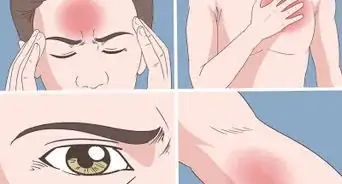
1Not all headaches have the same symptoms or causes. Knowing what type of headache(s) you’re experiencing makes it easier to choose the best treatment and avoid triggers. Some common types of headaches include:
- Tension headaches. These are the most common, occurring less than 15 days a month. Often caused by stress, their symptoms include forehead, scalp, or neck pain.[35]
- Migraines. These can last from hours to days. They usually cause throbbing pain, as well as a sensitivity to light and sound.[36] If you are having a headache that lasts anywhere between 4-72 hours, that can be classified as a migraine.
- Thunderclap headaches. These come on fast and incredibly painful. Pain will peak in about 1 minute, and the headache will last at least 5 minutes. If this happens to you, get medical attention at once. Thunderclap headaches are often the symptom of a serious underlying health condition.[37]
- Rebound headaches. These are caused by frequent use of pain relievers or anti-migraine drugs. About 1 in 100 people have experienced a rebound headache in the last year.[38]
- Cluster headaches. These are rare and tend to occur in cycles. They are classifiable by intense pain around one eye or one side of the head.[39]

Expert Q&A
-
QuestionWhat's a natural remedy for hormonal headaches?
 Sari Eitches, MBE, MDDr. Sari Eitches is an Integrative Internist who runs Tower Integrative Health and Wellness, based in Los Angeles, California. She specializes in plant-based nutrition, weight management, women's health, preventative medicine, and depression. She is a Diplomate of the American Board of Internal Medicine and the American Board of Integrative and Holistic Medicine. She received a BS from the University of California, Berkeley, an MD from SUNY Upstate Medical University, and an MBE from the University of Pennsylvania. She completed her residency at Lenox Hill Hospital in New York, NY and served as an attending internist at the University of Pennsylvania.
Integrative InternistYou can try doing deep breathing exercises and meditation to help destress and soothe your headache. Another thing you can try is self-massage or acupressure.
Warnings
- Get emergency medical treatment if you have sudden numbness or weakness in your face, arm, or leg on one side of your body, as well as if you become confused and have trouble speaking or understanding people.Thanks!
- Take all pain medications according to the dosage on the label.Thanks!
- Avoid taking nonsteroidal anti-inflammatory drugs such as aspirin, ibuprofen, or naproxen if you have an ulcer or gastrointestinal problems, as they can make your symptoms worse.Thanks!

References
- ↑ https://www.ncbi.nlm.nih.gov/pmc/articles/PMC5655397/
- ↑ https://medlineplus.gov/ency/article/003024.htm
- ↑ https://www.ncbi.nlm.nih.gov/pmc/articles/PMC1697736/
- ↑ https://www.cigna.com/individuals-families/health-wellness/natural-remedies-for-headaches
- ↑ https://medlineplus.gov/ency/article/003024.htm
- ↑ https://www.pennmedicine.org/updates/blogs/health-and-wellness/2019/november/migraines-vs-headaches
- ↑ https://pubmed.ncbi.nlm.nih.gov/16897622/
- ↑ https://www.nccih.nih.gov/health/yoga-what-you-need-to-know
- ↑ https://www.nccih.nih.gov/health/meditation-in-depth
- ↑ Sari Eitches, MBE, MD. Sleep Specialist. Expert Interview. 3 April 2020.
- ↑ http://exploreim.ucla.edu/wellness/acupressure-for-headache-or-neck-and-shoulder-tension/
- ↑ http://exploreim.ucla.edu/chinese-medicine/acupressure-point-gb20/
- ↑ http://exploreim.ucla.edu/chinese-medicine/acupressure-point-gb21/
- ↑ http://exploreim.ucla.edu/chinese-medicine/acupressure-point-li4/
- ↑ https://pubmed.ncbi.nlm.nih.gov/22517298/
- ↑ https://pubmed.ncbi.nlm.nih.gov/16827629/
- ↑ https://pubmed.ncbi.nlm.nih.gov/21640251
- ↑ https://www.nccih.nih.gov/health/spinal-manipulation-what-you-need-to-know
- ↑ https://www.ncbi.nlm.nih.gov/pmc/articles/PMC3099267/
- ↑ https://www.ncbi.nlm.nih.gov/pmc/articles/PMC3099267/
- ↑ Sari Eitches, MBE, MD. Sleep Specialist. Expert Interview. 3 April 2020.
- ↑ https://www.healthdirect.gov.au/headaches#prevented
- ↑ https://www.ncbi.nlm.nih.gov/pmc/articles/PMC2908954/
- ↑ https://pubmed.ncbi.nlm.nih.gov/11442559/
- ↑ https://www.healthdirect.gov.au/headaches#prevented
- ↑ https://www.nccih.nih.gov/health/meditation-in-depth
- ↑ Sari Eitches, MBE, MD. Sleep Specialist. Expert Interview. 3 April 2020.
- ↑ https://pubmed.ncbi.nlm.nih.gov/15985108/
- ↑ https://www.cigna.com/individuals-families/health-wellness/natural-remedies-for-headaches
- ↑ https://medlineplus.gov/ency/article/003024.htm
- ↑ https://www.pennmedicine.org/updates/blogs/health-and-wellness/2019/november/migraines-vs-headaches
- ↑ https://www.webmd.com/vitamins/ai/ingredientmono-961/ginger
- ↑ https://link.springer.com/article/10.1007%2Fs00702-012-0790-2
- ↑ https://www.ncbi.nlm.nih.gov/pmc/articles/PMC4586582/
- ↑ https://my.clevelandclinic.org/health/diseases/9639-headaches#management-and-treatment
- ↑ https://my.clevelandclinic.org/health/diseases/9639-headaches#management-and-treatment
- ↑ https://my.clevelandclinic.org/health/diseases/17876-thunderclap-headaches
- ↑ https://www.health.harvard.edu/blog/stopping-the-vicious-cycle-of-rebound-headaches-2019110718180
- ↑ https://my.clevelandclinic.org/health/diseases/9639-headaches#management-and-treatment
About This Article

Medical Disclaimer
The content of this article is not intended to be a substitute for professional medical advice, examination, diagnosis, or treatment. You should always contact your doctor or other qualified healthcare professional before starting, changing, or stopping any kind of health treatment.
If you’re suffering from a headache, there are some tricks you can try for fast-acting relief. Close your eyes and inhale for a count of 5, then exhale for a count of 5. Keep breathing like this until your headache subsides. Massage your temples or the back of your neck at the same time for extra relief. Placing a cold compress over your eyes or forehead can also help, especially if you have a migraine. For a tension headache, hold a heating pack against your head or neck, or take a warm bath or shower. Caffeine can also get rid of a headache, so try drinking some caffeinated tea or coffee. Even just drinking water can ease a headache if you’re feeling dehydrated. If your headache persists, take a break from what you’re doing and do something relaxing, like yoga or meditation. Dim the lights and shut off any screens since bright light can make headaches worse. Applying peppermint oil to your temples and inhaling lavender oil can provide quick headache relief and help you relax. Finally, consider taking an over-the-counter pain reliever like Tylenol or Advil if natural methods aren’t helping. To learn how to get rid of a headache with natural remedies like ginger and tea, read the article!