This article was co-authored by Catherine Cheung, DPM and by wikiHow staff writer, Hannah Madden. Dr. Catherine Cheung is a board certified Podiatrist based in San Francisco, California. Dr. Cheung specializes in all aspects of foot and ankle care, including complex reconstruction. Dr. Cheung is affiliated with the Brown & Toland Physicians and the Sutter Medical Network. She earned a DPM from the California College of Podiatric Medicine, completed her residency at the Encino Tarzana Medical Center, and completed a fellowship at the Kaiser Permanente San Francisco Medical Center. She is board certified by the American Board of Podiatric Surgery.
There are 8 references cited in this article, which can be found at the bottom of the page.
wikiHow marks an article as reader-approved once it receives enough positive feedback. In this case, several readers have written to tell us that this article was helpful to them, earning it our reader-approved status.
This article has been viewed 351,226 times.
Tired feet are a common complaint for most people, especially those who have to stand for long periods of time or walk long distances. If you just got home from work or you’re done exercising for the day, you’re probably looking for some relief. Read through these tips and tricks to learn how you can soothe your tired feet to feel better almost instantly.
Steps
Method 1
Method 1 of 10:Elevate your feet while resting.
-
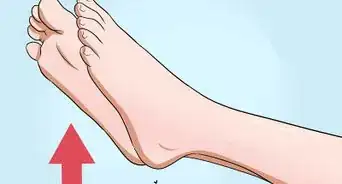
1If your feet are swollen, elevation can help them feel better. Try to prop your feet up to at least the level of your heart to get the blood and lymph fluid out of your lower legs. Use pillows to elevate your feet while laying on the sofa, but don't hamper blood flow by crossing your ankles.[1]
- Ice your feet while you’re elevating them if they’re swollen. Leave the ice on for 20 minutes and then take 20 minutes off.[2]
Advertisement

Method 2
Method 2 of 10:Take a warm bath.
-
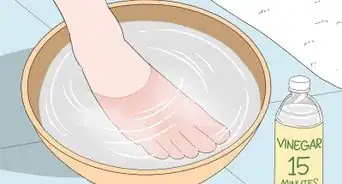
1It will help to soothe and relax your feet when they’re sore. Fill up a large tub with warm water and soak your feet for about 30 minutes, or until the water gets cold. Keep a towel nearby so you can dry your feet off carefully to prevent slips and falls.[3]
- Some people find that adding Epsom salt to the water helps soothe their sore and tired feet. Although the science behind Epsom salt isn’t sound, you can add some to the water to see if it helps you.[4]

Method 3
Method 3 of 10:Roll your foot on a tennis ball.
-
1It will help stretch the arch of your foot and give you some relief. Sit in a comfortable position and place the arch of one foot over a tennis ball on the floor. Slowly roll your foot back and forth over the ball, pressing down slightly to relieve some tension. Do this for about 1 minute, then switch to your other foot.[5]
- You can do this exercise 2 to 3 times per day to get some relief.
Advertisement

Method 4
Method 4 of 10:Stretch your toes.
-
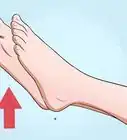
1This simple stretch can relieve tension and cramping. Sit down and place one foot out in front of you with your heel on the floor. With one hand, reach down and pull your big toe back toward you, feeling a stretch in the bottom of your foot. Hold the position for about 30 seconds, then switch feet.[6]
- You can do this stretch 2 to 4 times on each foot until you feel some relief.

Method 5
Method 5 of 10:Get a foot massage.
-
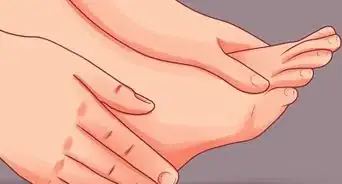
1A foot and calf massage can reduce tension and inflammation. Make an appointment with a licensed massage therapist and tell them that you’ve been having trouble with your feet. They can work from your toes up to your calf to reduce swelling and make your feet feel great.[7]
- If you don’t have time to get a massage appointment, you can always ask a loved one for a foot massage or even give yourself one.
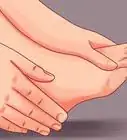
- To massage your own feet, sit in a comfortable chair and bend one leg, resting your foot on your other knee. Use your hands to gently massage your toes, arch, and heel, before switching to the other foot.
Advertisement

Method 6
Method 6 of 10:Take over-the-counter NSAIDs.
-
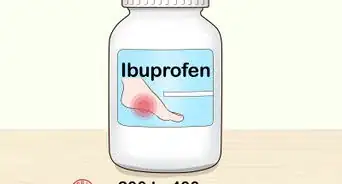
1Medications can help you deal with pain and inflammation. Non-steroidal anti-inflammatories (NSAIDs) such as ibuprofen, naproxen, or aspirin are available at most drugstores. Keep in mind that these medications can be hard on your stomach, kidneys and liver, so it's best not to use them for more than 2 weeks at a stretch.[8]
- If you’re going to take medication, try to eat right before or right after. Medication can cause an upset stomach if you haven’t eaten recently.
- Don't take NSAIDs if you have ulcers, heart or kidney disease.

Method 7
Method 7 of 10:Try a topical analgesic.
-
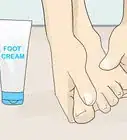
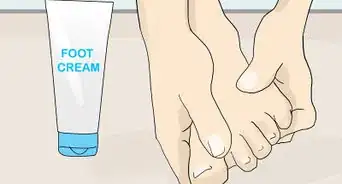
1These lotions and creams soothe your feet from the outside in. Head to the drugstore and pick out a product that contains menthol, eucalyptus oil, turpentine oil, or salicylates (it will probably be labeled as a pain relieving gel). Rub the product on your feet when they’re feeling sore and wait for a nice relief.[9]
- There are also creams and gels out there that contain substance P or capsicum, the substance that makes peppers taste spicy. If you use a product with substance P in it, it may burn or sting when you first put it on (but that means that it’s working).
Advertisement

Method 8
Method 8 of 10:Change your shoes.
-
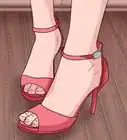
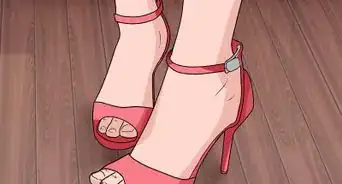
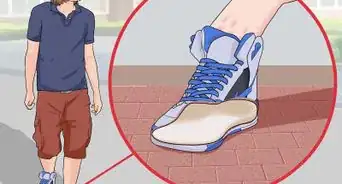
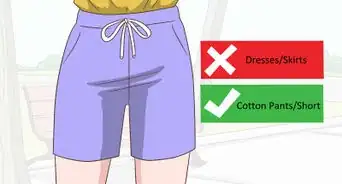
1Heavy or ill-fitting shoes can make foot pain worse. Try to wear stable, lightweight footwear that’s right for your activity levels. If you wear heels, try to go for kitten heels so they don’t crowd your toes and stress your arch.[10]
- If you're a serious runner, replace your shoes every 350 – 500 miles or 3 months, whichever comes first.
- Remember to always tie your shoes tightly. Loose shoes put more strain on your foot and lower leg muscles.

Method 9
Method 9 of 10:Wear shoe orthotics.
-
1Custom shoe inserts can really cut down on foot pain. Ask your doctor to get you a prescription for a custom-made shoe insert that you can wear every day. It will help to support your arch and toes as you stand, walk, and run. It can also help reduce the risk of problems developing in other joints such as the ankle, knee, and hips.[11]
- Health professionals that make custom orthotics include podiatrists and some osteopaths and chiropractors.
- Some health insurance plans cover the cost of customized orthotics. If yours doesn't, then consider a pair of off-the-shelf orthopedic shoe insoles—they're considerably less expensive and may provide quick relief.
Advertisement

Method 10
Method 10 of 10:See a podiatrist for severe foot pain.
-
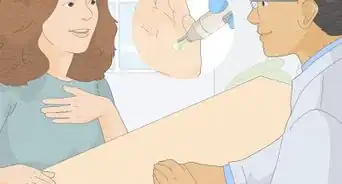
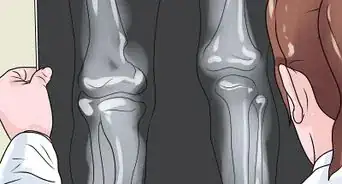
1If your foot pain happens every day, you may need medical attention. Podiatrists are foot specialists who can treat a variety of conditions, sometimes with simple surgical techniques, but more often with conservative approaches such as custom orthotics, orthopedic shoes, braces or taping. They can tell you what’s causing your foot pain and how you can treat it if home remedies aren’t working.[12]
- A podiatrist is a great source of information on what types of shoes are best for your feet and gait (the way that you walk).

Expert Q&A
-
QuestionHow do I get my feet to stop aching?
 Catherine Cheung, DPMDr. Catherine Cheung is a board certified Podiatrist based in San Francisco, California. Dr. Cheung specializes in all aspects of foot and ankle care, including complex reconstruction. Dr. Cheung is affiliated with the Brown & Toland Physicians and the Sutter Medical Network. She earned a DPM from the California College of Podiatric Medicine, completed her residency at the Encino Tarzana Medical Center, and completed a fellowship at the Kaiser Permanente San Francisco Medical Center. She is board certified by the American Board of Podiatric Surgery.
Board Certified PodiatristMake sure that you're wearing comfortable shoes that allow for some air to pass through. If your feet tend to ache after walking or exercising, warm your feet up by massaging them a little and stretch them out before doing anything physical. When you're done, elevate your feet. You can ice them if your feet are swollen as well. Do 20 minutes on and 20 minutes off.



References
- ↑ Catherine Cheung, DPM. Board Certified Podiatrist. Expert Interview. 21 April 2019.
- ↑ Catherine Cheung, DPM. Board Certified Podiatrist. Expert Interview. 21 April 2019.
- ↑ https://www.health.harvard.edu/healthbeat/7-ways-to-fix-foot-pain
- ↑ https://www.painscience.com/articles/epsom-salts.php
- ↑ https://www.uofmhealth.org/health-library/tr5853
- ↑ https://www.uofmhealth.org/health-library/zm6086#zm6086-sec
- ↑ https://www.health.harvard.edu/healthbeat/7-ways-to-fix-foot-pain
- ↑ https://www.mayoclinic.org/symptoms/foot-pain/basics/when-to-see-doctor/sym-20050792
- ↑ https://www.health.harvard.edu/healthbeat/7-ways-to-fix-foot-pain
About This Article

Medical Disclaimer
The content of this article is not intended to be a substitute for professional medical advice, examination, diagnosis, or treatment. You should always contact your doctor or other qualified healthcare professional before starting, changing, or stopping any kind of health treatment.
To soothe tired feet, try soaking your feet in a warm bath with some Epsom salts for 30 minutes, which can reduce pain and swelling. You can also lie down and elevate your feet using pillows, which can help excess blood leave your feet so they feel less swollen and sore. If you're looking for a short-term solution, try taking an over-the-counter NSAID, like ibuprofen, to reduce inflammation and pain in your feet. For more tips from our Medical co-author, like how to soothe tired feet with professional treatments, scroll down!