This article was co-authored by Catherine Cheung, DPM. Dr. Catherine Cheung is a board certified Podiatrist based in San Francisco, California. Dr. Cheung specializes in all aspects of foot and ankle care, including complex reconstruction. Dr. Cheung is affiliated with the Brown & Toland Physicians and the Sutter Medical Network. She earned a DPM from the California College of Podiatric Medicine, completed her residency at the Encino Tarzana Medical Center, and completed a fellowship at the Kaiser Permanente San Francisco Medical Center. She is board certified by the American Board of Podiatric Surgery.
There are 9 references cited in this article, which can be found at the bottom of the page.
wikiHow marks an article as reader-approved once it receives enough positive feedback. In this case, 93% of readers who voted found the article helpful, earning it our reader-approved status.
This article has been viewed 955,679 times.
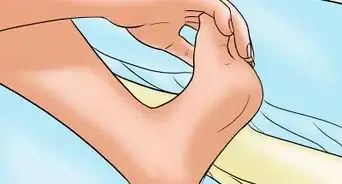
Do you have a small, rough growth on your heel or the bottom of your toe? It could be a plantar wart. They usually aren't a serious health concern and typically go away on their own. If you find it embarrassing or uncomfortable, you can usually get rid of it yourself with diligent care. This does take a bit of patience—there aren't really any instant fixes. But if months go by and nothing you try seems to work, see your doctor to explore medical options to remove it.[1]
Steps
Method 1
Method 1 of 7:Soak your feet for 15-20 minutes to soften the skin.
-
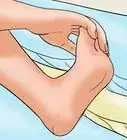
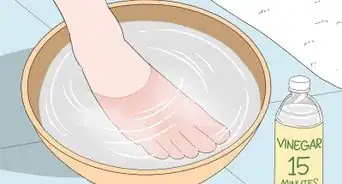
1Warts are more difficult to treat if they're covered with hard, dead skin. The pressure of walking on your feet causes a thickened layer of skin to build up over the plantar wart. Soaking your feet in warm water makes this excess skin easier to remove.[2]
- You can try adding Epsom salts or baking soda to the water—2 home remedies to soften and get rid of calluses.
Advertisement

Method 2
Method 2 of 7:Use a pumice stone to slough off the callus.
-
1Lightly rub the calloused skin to remove it. You can buy a pumice stone at a pharmacy or wherever personal care products are sold—they're relatively inexpensive. After soaking your feet and drying them thoroughly, simply rub the pumice stone over the dry skin to exfoliate it.[3]
- Don't do this if you have diabetes or peripheral neuropathy. Because of your reduced sensitivity, you might end up damaging the surrounding tissue.[4]
- Keep in mind the pumice stone won't completely remove the plantar wart, since it's mostly under your skin. However, it helps get rid of the dry skin that's built up over top of the wart, which makes the wart easier to treat and less painful in the meantime.
- Once you use a pumice stone on a plantar wart, only use it for that purpose. If you also use it on healthy skin, you risk spreading the virus that causes plantar warts.[5]

Method 3
Method 3 of 7:Apply a thin layer of salicylic acid lotion or gel.
-
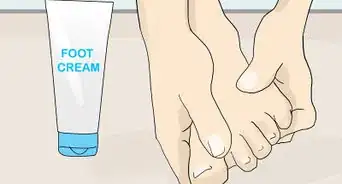
1Buy salicylic acid lotion or gel at your local pharmacy. Wash your feet, soak them, then exfoliate the hard skin over the plantar wart with a pumice stone. This allows the salicylic acid to penetrate the plantar wart. Allow the lotion or gel to dry completely before you cover your foot or walk around.[6]
- Salicylic acid is most commonly found in anti-acne treatments, but there are some products made specifically to treat warts. The salicylic acid products for feet typically have a higher percentage of salicylic acid, so you'll probably have better results with them.
Advertisement

Method 4
Method 4 of 7:Cover the wart to prevent it from spreading.
-
1Use a regular bandage to cover the wart, especially if you're barefoot. Covering the wart keeps it from spreading the virus to other parts of your foot. It also helps you avoid spreading the virus to others through indirect contact.[7]
- It can be difficult to keep a bandage on the bottom of your foot, so you'll need to check it periodically and replace it if it starts to come off.
- You might also try using silver duct tape to cover the wart. It might sound ridiculous, and scientists aren't quite sure why this might work, or even if it does. But it's so low-tech and inexpensive, it's worth a try![8]

Method 5
Method 5 of 7:Try over-the-counter wart removers.
-
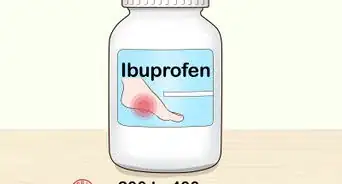
1Buy nonprescription freezing medicine at any pharmacy. Brands include Compound W Freeze Off and Dr. Scholl's Freeze Away.[9] In general, these don't get as cold as cryotherapy done by a medical professional and work less than half the time.[10] However, if you don't want to seek medical treatment, they might be worth a try.
- Many wart removers are very flammable. Don't use them around an open flame or any heat source, such as a curling iron.[11]
Advertisement

Method 6
Method 6 of 7:Protect your feet to keep the virus from spreading.
-
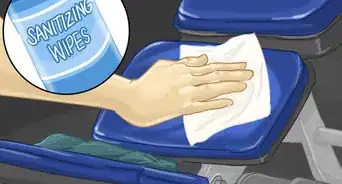
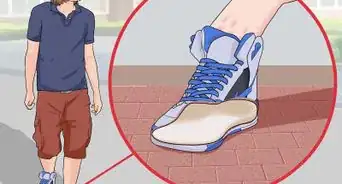
1Wear sandals around swimming pools and in locker rooms. The virus that causes plantar warts thrives in moist areas. Any time you're in a moist environment, cover the soles of your feet.[12]
- Do what you can to keep your feet clean and dry. That might mean washing your feet more than twice a day—just make sure they're completely dry before you put on socks or shoes.
- While you're dealing with a plantar wart, try to wear open shoes or sandals that won't trap moisture. If that's not an option for you, rotate your shoes so that the insides have time to dry out between wears.

Method 7
Method 7 of 7:See your doctor if self-care treatments aren't working.
-
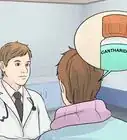
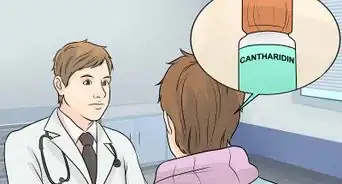
1Tell your doctor how long you've had the wart and how you've treated it. They'll likely ask you questions about whether it's changed in size or appearance and might refer you to a specialist (a podiatrist or dermatologist) to have it tested. Then, they'll recommend an appropriate course of treatment. Medical treatments include:[13]
- Prescription-strength salicylic acid medication
- Cryotherapy (freezing the wart off using liquid nitrogen)
- Laser treatment
- HPV vaccine
- Surgery
Advertisement

Expert Q&A
Did you know you can get premium answers for this article?
Unlock premium answers by supporting wikiHow
-
QuestionWhat if my feet are itchy?
 Catherine Cheung, DPMDr. Catherine Cheung is a board certified Podiatrist based in San Francisco, California. Dr. Cheung specializes in all aspects of foot and ankle care, including complex reconstruction. Dr. Cheung is affiliated with the Brown & Toland Physicians and the Sutter Medical Network. She earned a DPM from the California College of Podiatric Medicine, completed her residency at the Encino Tarzana Medical Center, and completed a fellowship at the Kaiser Permanente San Francisco Medical Center. She is board certified by the American Board of Podiatric Surgery.
Board Certified PodiatristIf your feet are itchy, it's likely because your feet aren't getting enough air. Try switching to a more breathable set of shoes or sandals. Avoid wearing the same set of shoes two days in a row, and don't wear nylon socks. Take your socks and shoes off when you get home to let your feet get some air. If you have any antifungal powder, sprinkle some in your shoes to see if they stop itching.
Support wikiHow by unlocking this expert answer.
-
QuestionIs it bad to pick at my own wart?
 Chris M. Matsko, MDDr. Chris M. Matsko is a retired physician based in Pittsburgh, Pennsylvania. With over 25 years of medical research experience, Dr. Matsko was awarded the Pittsburgh Cornell University Leadership Award for Excellence. He holds a BS in Nutritional Science from Cornell University and an MD from the Temple University School of Medicine in 2007. Dr. Matsko earned a Research Writing Certification from the American Medical Writers Association (AMWA) in 2016 and a Medical Writing & Editing Certification from the University of Chicago in 2017.
Family Medicine PhysicianI would not pick at a wart as this might make it bleed. I would use a pumice to remove it naturally.Support wikiHow by unlocking this expert answer.
-
QuestionWhat happens if I try to cut the wart out on my own?Chris M. Matsko, MDDr. Chris M. Matsko is a retired physician based in Pittsburgh, Pennsylvania. With over 25 years of medical research experience, Dr. Matsko was awarded the Pittsburgh Cornell University Leadership Award for Excellence. He holds a BS in Nutritional Science from Cornell University and an MD from the Temple University School of Medicine in 2007. Dr. Matsko earned a Research Writing Certification from the American Medical Writers Association (AMWA) in 2016 and a Medical Writing & Editing Certification from the University of Chicago in 2017.
Family Medicine PhysicianThis is very dangerous. I would not do this. You need to see a podiatrist to make sure that you are being treated properly.Support wikiHow by unlocking this expert answer.
-
QuestionI have a wart on my left foot, and the doctor froze it about a month ago with liquid nitrogen. How long will it take to fall off?Chris M. Matsko, MDDr. Chris M. Matsko is a retired physician based in Pittsburgh, Pennsylvania. With over 25 years of medical research experience, Dr. Matsko was awarded the Pittsburgh Cornell University Leadership Award for Excellence. He holds a BS in Nutritional Science from Cornell University and an MD from the Temple University School of Medicine in 2007. Dr. Matsko earned a Research Writing Certification from the American Medical Writers Association (AMWA) in 2016 and a Medical Writing & Editing Certification from the University of Chicago in 2017.
Family Medicine PhysicianI would not pick at a wart as this might make it bleed. I would use a pumice to remove it naturally.Support wikiHow by unlocking this expert answer.
Warnings
- Avoid touching the wart directly or picking at it—you can spread the virus and end up with more warts. If you do accidentally touch it, wash your hands immediately.[19]Thanks!
- Some skin cancers look like warts when they first appear. If your wart changes in size, color, or shape, bleeds, or grows quickly, see a specialist to have it tested.[20]Thanks!
- If you have diabetes or a weakened immune system, see your doctor rather than attempting self-care methods.[21]Thanks!
- Even after the wart goes away, you may still have the virus in your skin—which means you might get another wart years later. Practicing good foot hygiene helps prevent this.[22]Thanks!
- Don't ignore any growths or changes to the skin on your feet—some might not be benign like plantar warts. Seek medical advice if you're concerned.[23]Thanks!

References
- ↑ https://www.mayoclinic.org/diseases-conditions/plantar-warts/symptoms-causes/syc-20352691
- ↑ https://www.health.harvard.edu/diseases-and-conditions/how-to-get-rid-of-warts
- ↑ https://www.mayoclinic.org/diseases-conditions/plantar-warts/diagnosis-treatment/drc-20352697
- ↑ Catherine Cheung, DPM. Board Certified Podiatrist. Expert Interview. 21 April 2019.
- ↑ https://www.aad.org/public/diseases/a-z/warts-heal
- ↑ https://www.health.harvard.edu/diseases-and-conditions/how-to-get-rid-of-warts
- ↑ https://www.aad.org/public/diseases/a-z/warts-heal
- ↑ https://www.health.harvard.edu/diseases-and-conditions/how-to-get-rid-of-warts
- ↑ https://www.mayoclinic.org/diseases-conditions/plantar-warts/diagnosis-treatment/drc-20352697
- ↑ https://www.ncbi.nlm.nih.gov/pmc/articles/PMC6002322/
- ↑ https://www.mayoclinic.org/diseases-conditions/plantar-warts/diagnosis-treatment/drc-20352697
- ↑ https://www.iowaclinic.com/primary-care/best-ways-get-rid-plantar-warts/
- ↑ https://www.mayoclinic.org/diseases-conditions/plantar-warts/diagnosis-treatment/drc-20352697
- ↑ https://www.iowaclinic.com/primary-care/best-ways-get-rid-plantar-warts/
- ↑ https://health.clevelandclinic.org/weird-wart-home-remedies-and-what-works/
- ↑ https://www.aad.org/public/diseases/a-z/warts-self-care
- ↑ https://www.mayoclinic.org/diseases-conditions/plantar-warts/diagnosis-treatment/drc-20352697
- ↑ https://www.aad.org/public/diseases/a-z/warts-heal
- ↑ https://www.aad.org/public/diseases/a-z/warts-heal
- ↑ https://www.health.harvard.edu/diseases-and-conditions/how-to-get-rid-of-warts
- ↑ https://www.mayoclinic.org/diseases-conditions/plantar-warts/symptoms-causes/syc-20352691
- ↑ https://www.health.harvard.edu/diseases-and-conditions/how-to-get-rid-of-warts
- ↑ Catherine Cheung, DPM. Board Certified Podiatrist. Expert Interview. 21 April 2019.
About This Article

Medical Disclaimer
The content of this article is not intended to be a substitute for professional medical advice, examination, diagnosis, or treatment. You should always contact your doctor or other qualified healthcare professional before starting, changing, or stopping any kind of health treatment.
To get relief from a wart on the bottom of your foot, try rubbing the wart down with a pumice stone after soaking it in warm water for 15-20 minutes. You can also gradually strip away the callous and underlying wart by applying salicylic acid treatments over several days. For a more natural alternative, put some apple cider vinegar on a cotton ball and use a bandage to keep it on the wart overnight for several days in a row. However, keep in mind that there’s not a lot of scientific evidence that apple cider vinegar can help with warts. Scroll down for more advice from our Medical co-author, including how to get medical treatment for your wart!