This article was co-authored by Peter Gardner, MD and by wikiHow staff writer, Hannah Madden. Peter W. Gardner, MD is a board certified physician who has practiced Gastroenterology and Hepatology for over 30 years. He specializes in diseases of the digestive system and liver. Dr. Gardner earned his Bachelor’s degree from the University of North Carolina and attended Georgetown Medical School. He completed his residency in Internal Medicine and then his fellowship in Gastroenterology at the University of Connecticut. He is a previous Chief of Gastroenterology at Stamford Hospital and remains on the staff. He is also on the staff of Greenwich Hospital and New York (Columbia) Presbyterian Hospital. Dr. Gardner is an Approved Consultant in Internal Medicine and Gastroenterology with the American Board of Internal Medicine.
There are 8 references cited in this article, which can be found at the bottom of the page.
This article has been viewed 38,998 times.
If you’ve ever had heartburn or felt a burning, dull sort of ache in your chest near the top of your stomach, you’ve experienced epigastric pain. While this can be uncomfortable, it is treatable with at-home remedies or a prescription from your doctor. Try out a few of these methods to alleviate your pain and feel better almost instantly.
Steps
Method 1
Method 1 of 11:Try antacids.
-
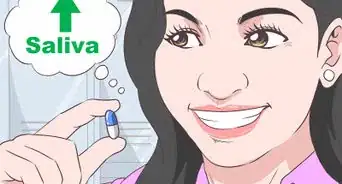
1Over-the-counter antacids can help relieve pain.[1] Brand names like Zantac and Pepcid (and their generic forms, Ranitidine and Famotidine) can help relieve your symptoms. Follow the directions on the bottle to help relieve pain and heartburn almost right away.[2]
- You can usually find antacids at most drug stores.
Advertisement


Method 2
Method 2 of 11:Chew sugar-free gum after you eat.
-
1Chewing gum promotes saliva. The extra saliva can help wash away the extra acid that creates epigastric pain. Chew one piece of sugar-free gum for 30 minutes after you eat to help avoid and alleviate any pain.[3]
- Stay away from peppermint-flavored gum, as that can make epigastric pain worse.

Method 3
Method 3 of 11:Drink baking soda mixed with water.
-
1Baking soda can neutralize the acidity in your stomach. For occasional epigastric pain, try drinking ½ teaspoon (2.8 g) of baking soda in a 125 mL (0.53 c) of water. Don’t use the remedy too often, though, because the high salt content can cause bloating and nausea.[4]
- If you’re on medication, talk to your doctor before drinking baking soda and water. Baking soda can disrupt the absorption rates of some medications.
- If you’re pregnant, stay away from this method. Baking soda can cause fluid buildup, which can be uncomfortable.
Advertisement

Method 4
Method 4 of 11:Drink aloe vera syrup.
-
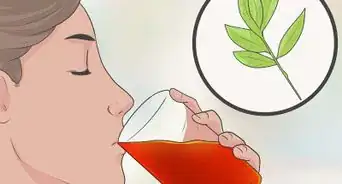
1Aloe vera can soothe and alleviate epigastric pain. Try drinking 10 mL (0.042 c) of aloe vera syrup every morning before you start eating for the day. After 2 to 4 weeks, you should notice an improvement in your pain levels.[5]
- If you can’t find aloe vera syrup, look for aloe vera juice instead.
- Use caution with aloe vera syrup, as it can act as a laxative.

Method 5
Method 5 of 11:Eat smaller meals.
-
1Eating a lot of food puts pressure on your stomach. Try reducing your meals by a quarter, and then a half, and see how you feel. Or, instead of eating 3 meals per day, try eating 6 small meals. When your stomach is emptier, your epigastric pain won’t be as severe.[6]
- If you eat too much, your stomach can expand too far, causing acid to get into your esophagus.
Advertisement

Method 6
Method 6 of 11:Avoid alcohol, caffeine, and citrus.
-
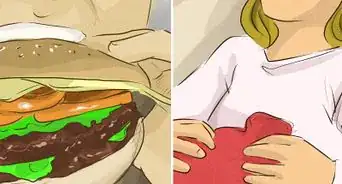
1These foods can make epigastric pains worse. You should also try to avoid fatty foods or any food with chocolate in them. Peppermint can also cause epigastric pain, so watch out for mint-flavored foods.[7]
- You might also notice that certain foods trigger more pain than others. It might be helpful to keep a food diary and write down everything you eat plus your pain levels that day.

Method 7
Method 7 of 11:Stay upright after eating.
-
1Lying down increases the pressure on your esophageal sphincter. If you’ve just eaten, try sitting or standing up for at least 2 to 3 hours before lying down. Make sure you eat dinner well before bedtime to avoid any late night pain.[8]
- Remaining upright after eating can also improve your digestion.
Advertisement

Method 8
Method 8 of 11:Prop your torso up while you sleep.
-
1Add a wedge-shaped cushion to your bed to help with epigastric pain. Don’t just prop your head and shoulders up—that can actually make your pain worse. Get a wedge-shaped pillow from a medical supply store to start sleeping upright.[9]
- Staying upright helps take pressure off of your esophageal sphincter, which can help relieve pain.

Method 9
Method 9 of 11:Lose weight if you need to.
-
1Being overweight puts you at a higher risk for epigastric pain. Talk to your doctor about whether you need to lose weight and how much. It might not be necessary, or you might need to lose less than you think.[10]
- If you do decide to lose weight, ease into it with a healthy diet and daily exercise. Try to avoid fad diets, as they usually don’t work long-term.
Advertisement

Method 10
Method 10 of 11:Get prescription antacids.
-
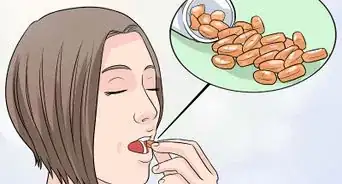
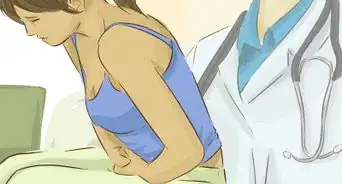
1Sometimes over-the-counter antacids aren’t enough. If you’ve tried other antacids a couple other times and they aren’t working, make an appointment with your doctor. They can prescribe an antacid for you that is stronger and might relieve your pain better.[11]
- Make sure you tell your doctor that you’ve tried other antacids before and that they aren’t working for you.

Method 11
Method 11 of 11:Get a surgery if you need to.
-
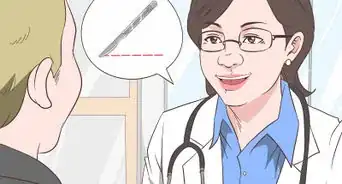
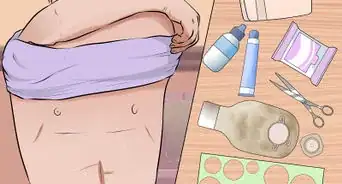
1Laparoscopic antireflux surgery can relieve your symptoms. If lifestyle changes and at-home remedies haven’t worked, your doctor may recommend a surgery. A surgeon will create incisions in your abdomen to make an effective valve mechanism at the bottom of the esophagus. You can expect to stay in the hospital for about 2 days if you get this surgery.[12]
- This surgery is most successful for people who experience epigastric pain while lying down.
Advertisement

Expert Q&A
Did you know you can get expert answers for this article?
Unlock expert answers by supporting wikiHow
-
QuestionWhat can trigger epigastric pain?
 Peter Gardner, MDPeter W. Gardner, MD is a board certified physician who has practiced Gastroenterology and Hepatology for over 30 years. He specializes in diseases of the digestive system and liver. Dr. Gardner earned his Bachelor’s degree from the University of North Carolina and attended Georgetown Medical School. He completed his residency in Internal Medicine and then his fellowship in Gastroenterology at the University of Connecticut. He is a previous Chief of Gastroenterology at Stamford Hospital and remains on the staff. He is also on the staff of Greenwich Hospital and New York (Columbia) Presbyterian Hospital. Dr. Gardner is an Approved Consultant in Internal Medicine and Gastroenterology with the American Board of Internal Medicine.
Board Certified GastroenterologistCommon causes include overeating, eating high fat foods, and eating right before lying down. Pregnant women, people who are overweight, and people with diabetes are more prone to it. Other times your body is just born that way, and you see 13 year olds with indigestion issues.
Support wikiHow by unlocking this expert answer.
Warnings
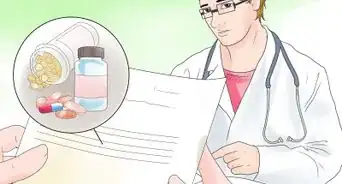
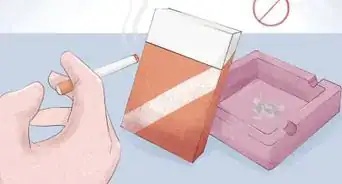
- If your pain is causing a lack of appetite or weight loss, consult your doctor.[14]Thanks!
References
- ↑ Peter Gardner, MD. Board Certified Gastroenterologist. Expert Interview. 25 August 2020.
- ↑ http://www.aafp.org/afp/2003/0915/p1215.html
- ↑ https://www.health.harvard.edu/staying-healthy/11-stomach-soothing-steps-for-heartburn
- ↑ https://badgut.org/information-centre/a-z-digestive-topics/baking-soda-for-heartburn/
- ↑ https://www.naturalmedicinejournal.com/journal/2016-09/effective-natural-treatment-gerd-aloe-vera-syrup
- ↑ Peter Gardner, MD. Board Certified Gastroenterologist. Expert Interview. 25 August 2020.
- ↑ http://www.aafp.org/afp/2003/0915/p1215.html
- ↑ https://www.health.harvard.edu/staying-healthy/11-stomach-soothing-steps-for-heartburn
- ↑ https://www.health.harvard.edu/staying-healthy/11-stomach-soothing-steps-for-heartburn
- ↑ http://www.aafp.org/afp/2003/0915/p1215.html
- ↑ https://my.clevelandclinic.org/health/articles/heartburn-treatment
- ↑ https://my.clevelandclinic.org/health/treatments/4354-laparoscopic-antireflux-surgery
- ↑ Peter Gardner, MD. Board Certified Gastroenterologist. Expert Interview. 25 August 2020.
- ↑ http://www.mayoclinic.org/diseases-conditions/heartburn/basics/symptoms/con-20019545











































Medical Disclaimer
The content of this article is not intended to be a substitute for professional medical advice, examination, diagnosis, or treatment. You should always contact your doctor or other qualified healthcare professional before starting, changing, or stopping any kind of health treatment.
Read More...