This article was co-authored by Simon Miyerov. Simon Miyerov is the President and Driving Instructor for Drive Rite Academy, a driving academy based out of New York City. Simon has over 8 years of driving instruction experience. His mission is to ensure the safety of everyday drivers and continue to make New York a safer and efficient driving environment.
There are 10 references cited in this article, which can be found at the bottom of the page.
This article has been viewed 175,531 times.
Learning to drive is really exciting for many teens, but it can also be downright scary. There’s a lot to think about: signaling, road signs, steering, other drivers--the list goes on and on. If you suffer from driving anxiety, you’re not alone, and fortunately, there are some steps you can take to address it. The key to overcoming driving anxiety is practice! You should also engage in anxiety management techniques prior to and during every drive. Overcoming anxiety is no easy task, but with time and effort, you could be cruising with confidence soon.
Steps
Part 1
Part 1 of 4:Building Confidence in Your Driving Skills
-
1Take classes with a certified driving instructor. This will allow you to sharpen your driving skills and gain confidence, plus the instructor’s presence can help you feel safer on the road.
- A crash course or an intensive driving course is great if you need a confidence boost right before your driving test. These courses pack a ton of information and practice into a short period of time.[1]
-
2Practice the basics. Feeling confident in your driving abilities can help reduce anxiety. Practice basic maneuvers, like parking, turning, and signaling, in quiet, safe place. A large parking lot works well.[2]
- Focus on maneuvers that give you a lot of stress. Parallel parking is a common one.
-
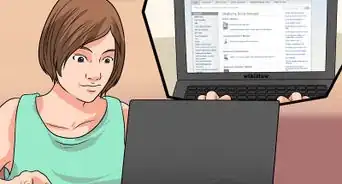
3Review your driver safety manual.[3] Don’t worry! You don’t have to memorize the entire thing. However, you should be familiar the basic road rules--it’ll help you feel less anxious and more confident behind the wheel.
- Most driver’s manuals are available online or at the office that issued your permit or license.[4]
-
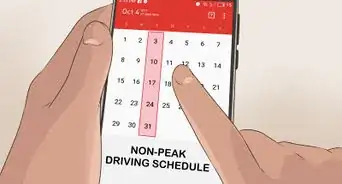
4Start on safe, slow roads. After you’ve mastered driving in the parking lot without anxiety, start driving in safe, slow areas with minimal traffic. This will help you get used to driving on a real road.[5]
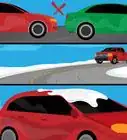
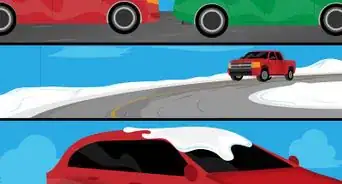
- In the beginning, avoid driving during rush hour and in bad weather.
- Even if you have your license, you may want a parent or other trusted adult present.
-
5Gradually work up to driving in more stressful situations. Once you feel comfortable driving on low stress roads near your house, slowly get out of your comfort zone. You might start by driving on a main road with a parent. Then, try driving on that same road without a parent (if you have your license). Eventually, you should work up to higher stress situations, like driving on the highway.
- Each situation should be a bit more challenging than the previous one.
- Remember, don’t rush the process. While getting out of your comfort zone is necessary to overcome your driving anxiety, avoid entering situations that you’re unprepared for.[6]


Part 2
Part 2 of 4:Preparing to Drive
-
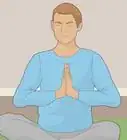
1Practice relaxation techniques before hitting the road. Before taking a drive, get yourself in a relaxed mindset by engaging in your favorite relaxation techniques. You might try yoga, meditation, or even watching your favorite TV show.
- Try to set aside 10 or 20 minutes each day to practice your techniques.[7]
-
2Make your car comfortable. Feeling at ease in your car can help reduce your anxiety. Clean out trash from your car that might be distracting, especially if it’s around the pedals. Make sure your seat is in a comfortable position so you can easily grip the wheel and reach the pedals. Don’t forget to adjust your mirrors before you set off, too.[8]
- Before you begin driving, you may want to give yourself a minute or two to settle in. Make sure you have everything you need for your journey and make any last minute seat or mirror adjustments.
- Plan your route before you start driving so you know where you're going and don't have to worry about it later on.[9]
-
3Minimize distractions. Distractions can make anxiety even worse, so take all the precautions you can to avoid them. Avoid eating or drinking, messing with the radio, using your phone, and talking excessively. You want all of your focus on the road.[10]
-
4Visualize yourself arriving safely. Before you set off, it may help to picture yourself arriving at your destination, safe, calm, and happy.[13]


Part 3
Part 3 of 4:Coping with Anxiety While Driving
-
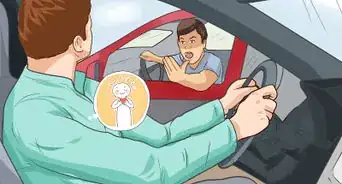
1Practice mindfulness. When you’re feeling anxious on the road, practice mindfulness. Pay attention to your feelings of anxiety and the bodily sensations they create. Instead of suppressing these sensations and emotions, acknowledge them, sit with them, and address them.[16]
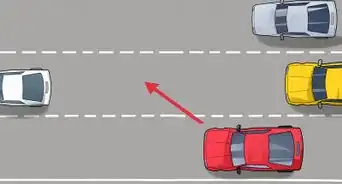
- For example, if you need to change lanes and start to feel anxious, take a deep breath and bring your awareness to your experience of anxiety. Notice the tightness in your chest, your firm grip on the wheel, and your worried thoughts about crashing the car. Sit with these feelings for a bit until you feel them start to dissipate.
- You might address your worries by reminding yourself how much you’ve practiced changing lanes with your driving instructor.
-
2
-
3Pull over if you start to panic. If your anxiety starts to feel too intense for you to drive safely, pull over as soon as you can. Practice one of your go-to relaxation techniques. You might also want to take a quick walk to clear your mind or grab some food.[19]
- Make sure you pull over in a safe place. Try to avoid pulling over near really busy streets or in isolated areas.[20]
-
4See a mental health professional if your anxiety is debilitating. If you find that your anxiety is making you avoid driving completely, you may have driving phobia. Driving phobia often arises following an accident, and is characterized by an intense fear and avoidance of driving that interferes with daily functioning. If you believe you may have driving phobia, consider seeking professional medical care.
- For example, if you have your license but are too afraid to drive yourself to school, you may have driving phobia.
- Cognitive behavioral therapy (CBT) is one of the most effective ways to combat driving phobia. Ask your mental health professional if CBT would be helpful for you.[21]


Part 4
Part 4 of 4:Reducing Anxiety with Lifestyle Behaviors
-
1Get enough sleep. Sleeping too little can worsen anxiety and impair your focus while on the road.[22] Try to get at least eight to ten hours per night.
-
2Exercise regularly. Exercise has been shown to reduce anxiety and improve mood, plus it keeps you fit! Try to exercise for at least a little bit every day.[25]
-
3Avoid drugs and alcohol. Alcohol and recreational drugs can make anxiety worse. Avoid these, especially before you hit the road. After all, driving under the influence is illegal.[26]
- You should also avoid nicotine and caffeine before driving. Both of these can worsen anxiety.


Expert Q&A
-
QuestionHow can I stop feeling nervous while driving?
 Simon MiyerovSimon Miyerov is the President and Driving Instructor for Drive Rite Academy, a driving academy based out of New York City. Simon has over 8 years of driving instruction experience. His mission is to ensure the safety of everyday drivers and continue to make New York a safer and efficient driving environment.
Driving InstructorIt may help if you plan the route you're taking before you start driving. That way, you don't have to check your phone or GPS, and you won't feel as stressed.
Warnings
- Although the brake is your friend, don't go too slow or stop too frequently when you shouldn't.Thanks!
- Wear your seat belt!Thanks!
- Don’t be afraid to ask for help if you need it.Thanks!



References
- ↑ http://www.thecollegedriver.com/posts/2446-8-Tips-to-Relieve-the-Stress-of-Learning-to-Drive
- ↑ https://www.safedrivingforlife.info/blog/overcoming-driving-anxiety
- ↑ Simon Miyerov. Driving Instructor. Expert Interview. 4 December 2019.
- ↑ http://www.dmv.org/driver-handbook.php
- ↑ https://www.safedrivingforlife.info/blog/overcoming-driving-anxiety
- ↑ Simon Miyerov. Driving Instructor. Expert Interview. 4 December 2019.
- ↑ https://www.helpguide.org/articles/stress/relaxation-techniques-for-stress-relief.htm
- ↑ https://www.safedrivingforlife.info/blog/overcoming-driving-anxiety
- ↑ Simon Miyerov. Driving Instructor. Expert Interview. 4 December 2019.
- ↑ http://www.dmv.org/distracted-driving/three-types-of-distractions.php
- ↑ http://www.dmv.org/distracted-driving/three-types-of-distractions.php
- ↑ http://www.dmv.org/distracted-driving/three-types-of-distractions.php
- ↑ https://www.safedrivingforlife.info/blog/overcoming-driving-anxiety
- ↑ https://www.helpguide.org/articles/stress/relaxation-techniques-for-stress-relief.htm
- ↑ https://www.helpguide.org/articles/stress/relaxation-techniques-for-stress-relief.htm
- ↑ https://psychcentral.com/blog/archives/2013/01/28/using-mindfulness-to-treat-anxiety-disorders/
- ↑ https://www.safedrivingforlife.info/blog/overcoming-driving-anxiety
- ↑ https://www.helpguide.org/articles/stress/relaxation-techniques-for-stress-relief.htm
- ↑ https://www.safedrivingforlife.info/blog/overcoming-driving-anxiety
- ↑ http://www.dmv.org/distracted-driving/three-types-of-distractions.php
- ↑ https://www.adaa.org/blogs/fear-of-driving
- ↑ http://www.mayoclinic.org/diseases-conditions/anxiety/manage/ptc-20168185
- ↑ https://www.helpguide.org/articles/sleep/getting-better-sleep.htm
- ↑ https://www.helpguide.org/articles/sleep/getting-better-sleep.htm
- ↑ http://www.mayoclinic.org/diseases-conditions/anxiety/manage/ptc-20168185
- ↑ http://www.mayoclinic.org/diseases-conditions/anxiety/manage/ptc-20168185
About This Article