This article was co-authored by Pippa Elliott, MRCVS. Dr. Elliott, BVMS, MRCVS is a veterinarian with over 30 years of experience in veterinary surgery and companion animal practice. She graduated from the University of Glasgow in 1987 with a degree in veterinary medicine and surgery. She has worked at the same animal clinic in her hometown for over 20 years.
This article has been viewed 9,741 times.
Seizures are common in gerbils. The seizures are not life-threatening, and most gerbils can live a healthy life without any treatment for them. Certain risk factors, like the breed of the gerbil and the age, can make the gerbil more prone to seizures. To know if your gerbil is experiencing a seizure, you should look for hypnotic behavior, like the inability to move, or violent muscle contractions.
Steps
Method 1
Method 1 of 3:Identifying a Seizure in Gerbils
-
1Watch for hypnotic seizures. Some gerbils have mild hypnotic seizures. These seizures are usually mild. During this type of seizure, the gerbil may stop moving and just stand in place. Their ears and whiskers may start twitching.[1]
- During hypnotic seizures, the gerbil may feel limp if you pick them up.
-
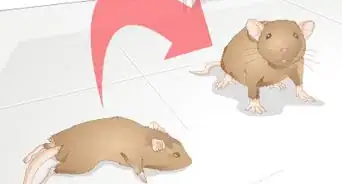
2Look for muscle contractions. Another type of seizure, called a grand mal seizure, may look scarier or more intense. During this type of seizure, your gerbil may have muscle contractions and their body may go rigid.[2]
- Even though this seizure looks intense, it generally lasts for less than a minute and will not cause any damage to your gerbil.
Advertisement -
3Monitor the duration of your gerbil’s seizure activity. Your gerbil’s seizures should last somewhere from under a minute to a couple of minutes. Most gerbils who experience seizures have very short seizures that last less than a minute. If your gerbil experiences seizures that last much longer than that, it could be a symptom of a more serious condition.[3]
- If your gerbil experiences seizures that last for a long time, you should take them to the vet to check for more serious brain damage.
- Many gerbils take up to 10 minutes to recover after a seizure.
Advertisement


Method 2
Method 2 of 3:Recognizing Risk Factors
-
1Determine if seizures were inherited in your gerbil. Epilepsy is a common disease that affects 20 to 40% of gerbils. The disease is inherited from the parents. Gerbils who are bred from parents that have seizures are pretty much guaranteed to have seizures as well. If you can, figure out if your gerbil is an at-risk breed or from parents who have epilepsy.[4]
- If your gerbil has seizures, reconsider breeding them so you don’t pass on the gene.
-
2Decide if your gerbil is the correct age for seizures. Gerbils experience seizures during a certain time in their lives. Generally, seizures start when the gerbil is around two months old. They sometimes increase in intensity until the gerbil is six months old.[5]
- Often, a gerbil will stop having seizures after six months of age.
-
3Recognize the triggers for a seizure. Gerbils can have seizures if they are triggered by extremely stressful situations. Too much handling or inappropriate handling can be a trigger. They may also be triggered if something changes in their environment.[6]
- For example, a gerbil may have a seizure if you change their living space or even put a new toy in their cage.
- Loud noises or too much stimuli in the room can cause seizures. Consider keeping your gerbil in a low-traffic, quiet room if they have seizures.
Advertisement


Method 3
Method 3 of 3:Treating Seizures in Gerbils
-
1Move the gerbil to a stress-free environment. There is nothing you can do for gerbils during a seizure. Most gerbils seize for a very short amount of time and then recover quickly. However, during or after the seizure, you should move your gerbil to a quiet, dark, stress-free environment.[7]
- You can move the cage to a bedroom or another room that doesn’t get used often. This helps reduce the stressors that can induce seizures.
-
2Know that there is not standard treatment for seizures. For most gerbils with seizures, there is no treatment. The seizures usually go away after six months of age, and they cause no permanent brain damage. This means there is no standard treatment for seizures. Your gerbil can live a happy, healthy life with the seizures.[8]
- However, if there is a related problem to the seizures, your vet may consider giving the gerbil anticonvulsant medication to treat the seizures and related problems.
-
3Take your gerbil to the vet if there are any problems. While most gerbils that have seizures are fine and don’t need medical attention, there are some conditions that may require you to seek medical attention. If your gerbil suffers from grand mal seizures, you may want to get them checked out by your vet, just in case.[9]
- You also should take your gerbil to the vet if the seizures last for a long time, like over a minute or two.
Advertisement







References
- ↑ http://www.petmd.com/exotic/conditions/neurological/c_ex_gb_epilepsy
- ↑ http://azeah.com/gerbils/epilepsy
- ↑ http://azeah.com/gerbils/epilepsy
- ↑ http://www.cpr-nc.org/pet-care-info/gerbils
- ↑ http://www.merckvetmanual.com/pethealth/exotic_pets/gerbils/disorders_and_diseases_of_gerbils.html
- ↑ http://azeah.com/gerbils/epilepsy
- ↑ http://azeah.com/gerbils/epilepsy
- ↑ http://azeah.com/gerbils/epilepsy
- ↑ http://www.petmd.com/exotic/conditions/neurological/c_ex_gb_epilepsy
About This Article

Since 20 to 40 percent of gerbils have epilepsy that they've inherited from their parents, you may notice your gerbil having seizures when it is between 2 and 6 months of age. If you notice your gerbil stop moving, except for its twitching ears and whiskers, it may be having a mild hypnotic seizure. Your gerbil can also suffer from a grand mal seizure, where its body goes rigid and it experiences muscle contractions, but keep in mind that although it may look scary, it won't cause damage to your gerbil and shouldn't last for more than a minute. However, if you notice your gerbil's seizures last longer than a minute, they could be a symptom of a more serious condition, and you should schedule an appointment with your vet. For more tips from our Veterinary co-author, like how to treat seizures in gerbils, keep reading.