This article was co-authored by wikiHow staff writer, Hannah Madden. Hannah Madden is a writer, editor, and artist currently living in Portland, Oregon. In 2018, she graduated from Portland State University with a B.S. in Environmental Studies. Hannah enjoys writing articles about conservation, sustainability, and eco-friendly products. When she isn’t writing, you can find Hannah working on hand embroidery projects and listening to music.
There are 10 references cited in this article, which can be found at the bottom of the page.
This article has been viewed 5,438 times.
Learn more...
As global temperatures continue to rise, climate change is becoming a very real issue for communities around the world. Unfortunately, people living in poverty are the most likely to be affected by climate change since they have less access to the resources that might help them. There are a few ways you can assist people who might be affected by rising temperatures in your own community and across the globe.
Steps
Method 1
Method 1 of 11:Donate to climate-change charities.
-
1Tons of organizations are already helping people affected. You can pick one in your area, one from another country, or one that’s spread all across the globe to donate to. To really make an impact, consider setting up monthly donations to give a steady amount of money over time. Look for charities that are helping marginalized people who are affected by climate change.[1]
- Look into donating to Project Drawdown, the NAACP Environmental Climate and Justice Program, the Climate Science Legal Defense Fund, the Environmental Protection Network, or the Clean Air Task Force.
- Charities like these give money and resources to people who have had their homes or livelihoods destroyed by climate change.
Advertisement

Method 2
Method 2 of 11:Volunteer for climate change relief programs.
-
1There’s probably one in your area that needs help. Reach out to the director and ask if they need anything, from door-to-door pamphleting, petition-signing, social media promotion, or community outreach. You can search “environmental nonprofit” + “your area” to find one near you.[2]
- There might also be a chapter of a global climate change relief program nearby, like the NAACP Environmental Climate and Justice Program or GreenPeace.
- Programs like these usually provide support to the community and contact representatives about climate change issues.

Method 3
Method 3 of 11:Call your local representatives.
-
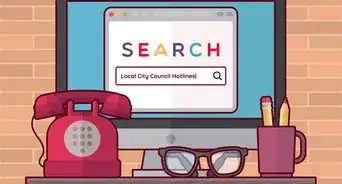
1Let them know that climate change is a big deal to you. Find the numbers for your state representative, your mayor, or your governor, and call their office to voice your opinion. Tell them that the people who are affected by climate change should be the number one priority on the docket, and that they need to take action by providing relief and resources.[3]
- Try saying something like, “My name is Shelly White and I live in Clackamas County. I’m calling to let you know that I think climate change is one of the most serious issues we’re facing today. I’d love to see legislation enacted to help those affected by it in the future.”
Advertisement

Method 4
Method 4 of 11:Promote messages from marginalized groups.
-
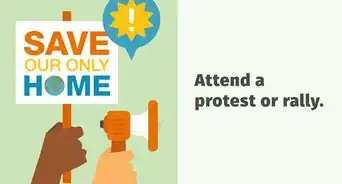
1People who are affected by climate change will tell you what they need. If you see protests, pamphlets, or petitions going around in your area that talk about climate change and the people affected, be sure to spread the message around. Non-white communities are usually affected by climate change the most, so be sure to keep an eye out.[4]
- Marginalized groups might also need volunteers to spread their messages. If you have the time, consider reaching out to see what they need.

Method 5
Method 5 of 11:Check in on elderly people during warm months.
-
1As the days get hotter, sensitive groups are more likely to be affected. If you have older neighbors or relatives, consider checking up on them every few days or so to see how they’re doing. They might need air conditioning installed in their home if they don’t have it already.[5]
- This is especially true if you live in a city. Urban areas are likely to get even hotter than rural areas because of the infrastructure.
- Young children and people with underlying medical conditions are also at risk for heat stress.
Advertisement

Method 6
Method 6 of 11:Donate food to food banks in your area.
-
1Climate change often leads to food insecurity. If you can, try donating non-perishable food items to places in your area so people can have access to quality nutrition. This is a great way to help people in your community who might be affected directly by climate change.[6]
- As the climate gets warmer, crops are harder and harder to grow, which means that food might get more expensive. People living in poverty may not be able to keep up with the rising food costs.

Method 7
Method 7 of 11:Shop at small, local businesses.
-
1Pour money back into your community. Try to shop locally as much as you can, and keep your money circulating through your community instead of national corporations. Small businesses will be hit hard by the effects of climate change since they often can’t afford to change their supply lines or outsource production to other areas.[7]
- This is especially important for food shopping. If you can buy and eat local-grown food, you can put money back into the community while lowering your carbon footprint at the same time.
Advertisement

Method 8
Method 8 of 11:Lower your carbon footprint.
-
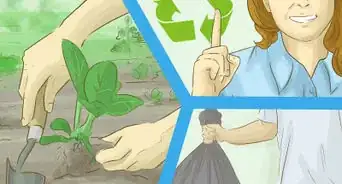
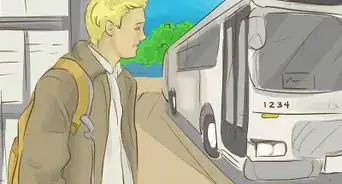
1You can make a difference in your own community every day. Try to eat less red meat, take public transportation instead of driving, cut down on how often you fly, and shop locally as often as possible. If everyone took these small steps, we could greatly reduce the effects of climate change.[8]
- While individual impacts are definitely useful, it’s corporations who are mostly responsible for climate change.[9]

Method 9
Method 9 of 11:Cut back on using biofuels.
-
1Biofuels are fuels produced from plant or animal matter. This includes palm oil, corn, rapeseed, sugar cane, soya, and wheat. While these are often promoted as great alternatives to fossil fuels, their production seriously impacts forest-dwelling people in third-world countries. If you can, stay away from these ingredients when you shop for food to protect citizens across the globe.[10]
- Deforestation is a huge issue with crops like these. In some areas, entire towns are being wiped out to grow and sell crops, leaving their communities without a place to go.
Advertisement

Method 10
-
1Educate those around you so they care about climate change issues too. You can start small with your loved ones or your neighbors, then get bigger by putting up information online or throughout your neighborhood. Even if you sway one person, you’ll be making a difference![11]
- This is really important in areas where people might not “believe” in climate change. If they hear the facts from someone they trust (like you!), they might be more inclined to take the issue seriously.

Method 11
Method 11 of 11:Offer your services to climate change organizations.
-
1Lawyers and scientists are always needed to help fight climate change. If you have experience in the industry, consider volunteering your time to help climate change organizations in your area fight for climate justice. If you aren’t a lawyer or scientist, consider recruiting them instead.[12]
- If you’re a researcher, you can volunteer to do field work for climate change organizations to back up their claims with science.
- If you’re a lawyer, help marginalized people get the help and services they need from their local government.
Advertisement




-Step-14-Version-6.webp)


References
- ↑ https://www.nytimes.com/2020/01/29/climate/nyt-climate-newsletter-donations.html
- ↑ https://www.nbcnews.com/better/science/6-ways-ordinary-people-can-prevent-climate-change-according-researchers-ncna926311
- ↑ https://www.nbcnews.com/better/science/6-ways-ordinary-people-can-prevent-climate-change-according-researchers-ncna926311
- ↑ https://www.sierraclub.org/redwood/napa/blog/2020/11/how-minorities-are-disproportionately-affected-climate-change-and-what-we
- ↑ https://19january2017snapshot.epa.gov/climate-impacts/climate-impacts-society_.html
- ↑ https://foodtank.com/news/2020/10/36-organizations-helping-solve-the-climate-crisis/
- ↑ https://www.un.org/esa/desa/papers/2017/wp152_2017.pdf
- ↑ https://www.bbc.com/future/article/20181102-what-can-i-do-about-climate-change
- ↑ https://harvardpolitics.com/climate-change-responsibility/
- ↑ https://minorityrights.org/wp-content/uploads/old-site-downloads/download-524-The-Impact-of-Climate-Change-on-Minorities-and-Indigenous-Peoples.pdf
- ↑ https://www.who.int/news-room/fact-sheets/detail/climate-change-and-health
- ↑ https://www.nytimes.com/2020/01/29/climate/nyt-climate-newsletter-donations.html
About This Article