This article was co-authored by Mohiba Tareen, MD and by wikiHow staff writer, Janice Tieperman. Mohiba Tareen is a board certified Dermatologist and the founder of Tareen Dermatology located in Roseville, Maplewood and Faribault, Minnesota. Dr. Tareen completed medical school at the University of Michigan in Ann Arbor, where she was inducted into the prestigious Alpha Omega Alpha honor society. While a dermatology resident at Columbia University in New York City, she won the Conrad Stritzler award of the New York Dermatologic Society and was published in The New England Journal of Medicine. Dr. Tareen then completed a procedural fellowship which focused on dermatologic surgery, laser, and cosmetic dermatology.
There are 10 references cited in this article, which can be found at the bottom of the page.
This article has been viewed 5,972 times.
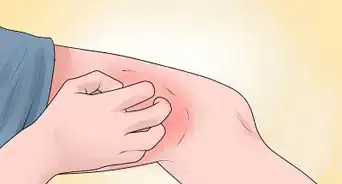
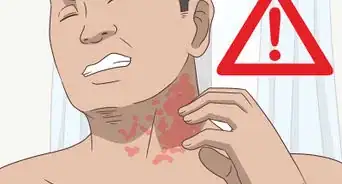
Psoriasis is a fairly common skin disease that causes a person’s skin to “flare” into red, itchy, and sometimes scaly patches.[1] While this condition isn’t life-threatening, it can be frustrating to deal with on a regular basis, especially if you have persistent flare-ups. Although there’s no known cure for this condition, there are plenty of easy adjustments you can make to your everyday life that may help ease your symptoms over time.[2]

Steps
Method 1
Method 1 of 3:Changing Your Diet
-
1Add more lean proteins to your diet to reduce inflammation. Include healthy meats like chicken and fish to your meals, or reach for some vegetarian options, like beans or tofu. If you’re a fan of red meats, shop for cuts with a high lean percentage, like lean beef.[3]
- As an extra precaution, cut off any fat that’s still attached to your meat.
- Use a digital calculator to figure out how much protein you should be eating regularly: https://www.calculator.net/protein-calculator.html.
-
2Opt for foods with lots of healthy fats. Shop for foods with a lot of omega-3 fatty acids, like fatty fish and nuts. Add some herring, salmon, mackerel, or albacore tuna into your diet if you like to eat meat, or reach for walnuts and pumpkin seeds as a vegetarian or vegan option.[4]
- Fish with anti-inflammatory qualities are sometimes known as “coldwater fish.”
- Omega-3 fatty acids have many benefits for your health, including lowering your risk for heart disease.[5]
-
3Supplement your diet with 4-5 servings of fresh fruits and veggies. Add fresh produce to your meal as an ingredient or a side dish, depending on what you’re in the food for. Make it your goal to eat at least 4-5 servings of fruits and veggies each day, which are a great part of an anti-inflammatory diet.[6]
- For reference, 1 medium-sized fruit like an apple or peach counts as a serving of fruit.
- If you’re preparing a salad, keep in mind that 1 cup (75 g) equals 1 serving of vegetables.
-
4Eat 3-5 servings of whole grains instead of refined grains. Think about the grains you tend to eat on a regular basis. Shop for whole grain alternatives to some of your favorite breads and pastas, like spaghetti and whole grain bread. Try to include whole grains in every meal to round out your healthy diet, which may help reduce your psoriasis symptoms.[7]
- For reference, 1 slice of whole grain bread counts as a serving.
- Eating whole grains in and of itself won’t independently reduce your symptoms, but it contributes to a diet that may.
Did You Know? Eating anti-inflammatory foods like fresh produce, fatty fish, whole grains, and healthy cuts of meat may improve your psoriasis symptoms overall.
-
5Cut your drinking back to 1-2 drinks per day. Think about how often you enjoy beer, wine, or your favorite cocktail. While an occasional drink is fine, try to not have more than 1 serving of alcohol. If possible, cut back your drinking to a weekly or monthly occasion.[8]
- Ideally, women should have 1 or fewer drinks each day, while men should have 2 or fewer drinks.
- Cutting back on alcohol may help your psoriasis treatments work better, and also prevents negative side effects to your liver if you take medication.
-
6Limit how much dairy you eat and drink if it affects your psoriasis. Keep track of your psoriasis symptoms whenever you enjoy milk, yogurt, or some other dairy product. If you notice your symptoms getting worse, switch to a dairy-free milk or yogurt and see if you notice a positive difference.[9]
- Not everyone with psoriasis is affected by dairy, but it may be worth looking into.
-
7Avoid fatty meats, refined sugar, and anything processed. Shop for natural foods that don’t have a lot of red meat processed ingredients, like packaged deli meat, canned soup, and TV dinners. The cons of these foods far outweigh the pros, and don’t offer your body a lot of valuable sustenance.[10]
- Processed foods may have unhealthy fats, like trans fats.


Method 2
Method 2 of 3:Adjusting Your Daily Routine
-
1Exercise for 30 minutes each day so you can look and feel healthier. Set aside time each day to get in a half hour or so of steady exercise.[11] Ideally, try to participate in around 150 minutes of blood-pumping exercise each week. For an extra boost, try adding strength training to your normal exercise regimen.[12]
- For instance, you can go for a 30-minute jog, or you can try a fun activity like jump roping.
- There are a lot of free videos online that lead you through different workouts.
- Exercise helps you lose weight, which can lower your chances of a flare-up.
-
2Avoid things that commonly trigger your symptoms. Keep track of foods and other triggers that typically cause your psoriasis to flare up. Note that sunlight, smoking, basic injuries, a stressful schedule, and infections may all cause your symptoms to flare up or get worse.[13]
- Psoriasis triggers are different for everyone, so it may take a bit of time before you figure out what sets your skin off.
- Whenever you have a flare-up, write down everything you ate that way, as well as any activities you did. You may end up noticing a pattern!
-
3Limit how much time you spend in the sun. Go outside when the weather is partly cloudy or overcast so your skin is less likely to be irritated by the sun. Start by going out in the sun in small, 15-minute increments. If you don’t have any negative reactions, see if you can handle more time in the sunlight.[14]
- Always wear strong, 30 SPF sunscreen when you go outside for long periods of time.
-
4See if there are ways you can reduce stress in your daily life. View your daily schedule and think about what events and obligations make you feel especially stressed or unhappy, whether it’s at home or at work. While some stressors are unavoidable, see if you can cut back on the elements of your life that bring you a lot of unhappiness. If you can’t reduce stress in your daily life, try giving yourself more “me time” throughout the week.[15]
- For instance, if hanging around a certain person stresses you out, try hanging out with a different group of friends.
- Wind down after a long day by reading a good book, watching your favorite TV show, or taking a relaxing bath.
- Stress can make your make you more prone to flare-ups.
-
5Talk to your doctor to see if certain medications are making your psoriasis worse.[16] Mention your current medications and treatment plans, even if they don’t seem connected to your condition. Your doctor may be able to recommend alternative medical treatments, or point you in the right direction.[17]
- Specifically, medications like beta blockers and lithium may be contributing to your psoriasis.
-
6Quit smoking if you smoke regularly. Try weaning yourself off cigarettes and tobacco products if you use them often. For extra help, invest in specialty gum or patches to lessen your cravings. If you’re really having trouble making a clean break, talk to your doctor and see if they have any suggestions.[18]
- Smoking can be a big psoriasis trigger, and also puts you at risk for other diseases.
Warning: Use caution when wearing nicotine patches, as these may make your psoriasis symptoms worse.


Method 3
Method 3 of 3:Soothing Your Skin
-
1Take a medicated bath every day for 15 minutes to soothe your skin. Draw yourself a warm bath and pour in a scoop of colloidal oatmeal and Epsom salts along with a spoonful of bath oil. Mix all of these ingredients together and relax in the tub for at least 15 minutes.[19]
- Double-check that you’re soaking the skin that has a psoriasis flare-up.
- Medicated baths help soothe your skin, which can make your symptoms a lot more bearable.
-
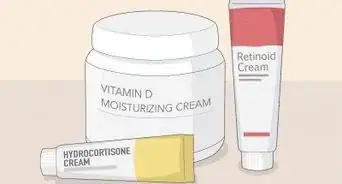
2Moisturize your skin after every bath.[20] Dab yourself dry with a towel after your nightly bath and rub a layer of medicated moisturizer over your affected skin. Repeat this on a nightly basis and see if you notice any positive changes. If you can see a difference, apply the cream 1-3 times each day.[21]
- Visit your local pharmacy to find special moisturizers for psoriasis.
- There’s no guarantee that moisturizers will make your psoriasis any better, but they may help you feel more comfortable as you deal with the symptoms.
-
3Rub aloe cream over your skin on an as-needed basis. Squeeze out enough aloe cream to cover the section of affected skin. Apply this cream around 2-3 times a day for at least 1 month and see if your psoriasis symptoms improve at all.[22]
- You can find aloe cream at most pharmacies.
- You’ll have to apply the cream regularly to see positive results.


Expert Q&A
Did you know you can get expert answers for this article?
Unlock expert answers by supporting wikiHow
-
QuestionHow can I change my diet to help my psoriasis?
 Mohiba Tareen, MDMohiba Tareen is a board certified Dermatologist and the founder of Tareen Dermatology located in Roseville, Maplewood and Faribault, Minnesota. Dr. Tareen completed medical school at the University of Michigan in Ann Arbor, where she was inducted into the prestigious Alpha Omega Alpha honor society. While a dermatology resident at Columbia University in New York City, she won the Conrad Stritzler award of the New York Dermatologic Society and was published in The New England Journal of Medicine. Dr. Tareen then completed a procedural fellowship which focused on dermatologic surgery, laser, and cosmetic dermatology.
FAAD Board Certified DermatologistIt’s important to get that good, good omega three fat in your diet, including fish oil, avocado, nuts, and almonds. All those things are part of the Mediterranean diet, which has been shown to be really helpful for eczema and psoriasis-prone skin.
Support wikiHow by unlocking this expert answer.
-
QuestionShould I put lotion on my psoriasis?Mohiba Tareen, MDMohiba Tareen is a board certified Dermatologist and the founder of Tareen Dermatology located in Roseville, Maplewood and Faribault, Minnesota. Dr. Tareen completed medical school at the University of Michigan in Ann Arbor, where she was inducted into the prestigious Alpha Omega Alpha honor society. While a dermatology resident at Columbia University in New York City, she won the Conrad Stritzler award of the New York Dermatologic Society and was published in The New England Journal of Medicine. Dr. Tareen then completed a procedural fellowship which focused on dermatologic surgery, laser, and cosmetic dermatology.
FAAD Board Certified DermatologistYes! Lotion can help soothe your skin if you have psoriasis. However, some lotions may be irritating, so pick a lotion that works for you.Support wikiHow by unlocking this expert answer.
Warnings
- While lifestyle changes can go a long way, you may need to take medications to target your psoriasis symptoms. Talk to your doctor and see if this is an option.[25]Thanks!











References
- ↑ Mohiba Tareen, MD. FAAD Board Certified Dermatologist. Expert Interview. 26 March 2020.
- ↑ https://www.health.harvard.edu/diseases-and-conditions/a-deeper-look-at-psoriasis
- ↑ https://www.psoriasis.org/treating-psoriasis/complementary-and-alternative/diet-and-nutrition/anti-inflammatory-diet
- ↑ https://www.psoriasis.org/treating-psoriasis/complementary-and-alternative/diet-and-nutrition/anti-inflammatory-diet
- ↑ Mohiba Tareen, MD. FAAD Board Certified Dermatologist. Expert Interview. 26 March 2020.
- ↑ https://www.psoriasis.org/treating-psoriasis/complementary-and-alternative/diet-and-nutrition/anti-inflammatory-diet
- ↑ https://www.health.harvard.edu/diseases-and-conditions/a-deeper-look-at-psoriasis
- ↑ https://www.aad.org/public/diseases/psoriasis/insider/diet
- ↑ https://www.psoriasis.org/treating-psoriasis/complementary-and-alternative/diet-and-nutrition/anti-inflammatory-diet
- ↑ https://www.psoriasis.org/treating-psoriasis/complementary-and-alternative/diet-and-nutrition/anti-inflammatory-diet
- ↑ https://www.aad.org/public/diseases/psoriasis/insider/diet
- ↑ https://www.heart.org/en/healthy-living/fitness/fitness-basics/aha-recs-for-physical-activity-in-adults
- ↑ https://www.nhs.uk/conditions/psoriasis/causes/
- ↑ https://www.aad.org/public/diseases/psoriasis/triggers/flares
- ↑ https://www.health.harvard.edu/diseases-and-conditions/a-deeper-look-at-psoriasis
- ↑ Mohiba Tareen, MD. FAAD Board Certified Dermatologist. Expert Interview. 26 March 2020.
- ↑ https://www.health.harvard.edu/diseases-and-conditions/a-deeper-look-at-psoriasis
- ↑ https://www.aad.org/public/diseases/psoriasis/insider/diet
- ↑ https://www.psoriasis.org/over-the-counter/
- ↑ Mohiba Tareen, MD. FAAD Board Certified Dermatologist. Expert Interview. 26 March 2020.
- ↑ https://www.psoriasis.org/over-the-counter/
- ↑ https://www.psoriasis.org/over-the-counter/
- ↑ https://www.psoriasis.org/talk-psoriasis/
- ↑ https://www.aad.org/public/diseases/psoriasis/insider/diet
- ↑ https://www.aad.org/public/diseases/psoriasis/treatment/medications













































Medical Disclaimer
The content of this article is not intended to be a substitute for professional medical advice, examination, diagnosis, or treatment. You should always contact your doctor or other qualified healthcare professional before starting, changing, or stopping any kind of health treatment.
Read More...