This article was co-authored by wikiHow staff writer, Eric McClure. Eric McClure is an editing fellow at wikiHow where he has been editing, researching, and creating content since 2019. A former educator and poet, his work has appeared in Carcinogenic Poetry, Shot Glass Journal, Prairie Margins, and The Rusty Nail. His digital chapbook, The Internet, was also published in TL;DR Magazine. He was the winner of the Paul Carroll award for outstanding achievement in creative writing in 2014, and he was a featured reader at the Poetry Foundation’s Open Door Reading Series in 2015. Eric holds a BA in English from the University of Illinois at Chicago, and an MEd in secondary education from DePaul University.
There are 20 references cited in this article, which can be found at the bottom of the page.
wikiHow marks an article as reader-approved once it receives enough positive feedback. In this case, 100% of readers who voted found the article helpful, earning it our reader-approved status.
This article has been viewed 219,320 times.
Learn more...
Apple cider vinegar is a popular ingredient in a variety of different DIY remedies. Unfortunately, while it may be helpful in very small amounts when it’s added to your diet, it’s probably going to do more harm than good when it comes to skin conditions. With that said, there are plenty of ways that you can soothe your psoriasis outbreaks and reduce discomfort. If you want to learn more about why apple cider vinegar isn’t ideal and learn about the proven treatments that will work, you’re in the right place!
Steps
Question 1
Question 1 of 7:Does apple cider vinegar help with psoriasis?
-
1No, it’s probably not going to do much for your psoriasis. Some people claim that apple cider vinegar is antibacterial or anti-inflammatory, but there’s not a lot of good evidence that this is the case.[1] In fact, it doesn’t actually appear apple cider vinegar does much of anything to help improve the health of skin.[2] If anything, it’s likely just going to irritate or damage your skin if it’s already feeling sensitive.[3] [4]
- Very few of the apple cider vinegar skin remedies out there are based on any scientific foundation.[5] It’s true that people have historically used apple cider vinegar for a variety of conditions for hundreds of years, but there’s just no science behind a lot of those practices.[6]
- There isn’t any good evidence that vinegar will prevent infections, either.[7]
Advertisement


Question 2
Question 2 of 7:Why isn’t apple cider vinegar ideal for psoriasis?
-
1Apple cider vinegar won’t soothe any of your symptoms. Vinegar is slightly acidic, and the premise here is that when you have a skin problem your skin’s pH is off, so adding an acid should rebalance it.[8] Unfortunately, vinegar doesn’t appear to have anything more than a temporary impact on skin pH, and you’re likely to experience additional pain or irritation on your already-sensitive skin.[9]
-
2Vinegar can’t treat the underlying causes of psoriasis. Even if apple cider vinegar were good for your skin, it still likely wouldn’t help with the underlying problem. Psoriasis is caused by an overactive immune system and it often flares up due to environmental triggers.[10] Unfortunately, putting apple cider vinegar on your skin won’t help your immune system, and it won’t minimize the impact of environmental triggers.Advertisement


Question 3
Question 3 of 7:Is it safe to put apple cider vinegar on your skin?
-
1Not really, since it can potentially damage or burn your skin. Apple cider vinegar is acidic, and it’s prone to irritating sensitive skin. In fact, roughly 4-8% of vinegar is acetic acid, a naturally-occurring chemical that can physically erode your skin. There are instances of people chemically burning their skin with apple cider vinegar treatments, so you’re better off skipping this one.[13]

Question 4
Question 4 of 7:Will drinking apple cider vinegar help with psoriasis?
-
1There’s no evidence one way or the other. There isn’t any conclusive evidence that drinking apple cider vinegar will have an impact on your skin. It’s safe to drink in small amounts, and there’s some minor evidence that it can help you lose weight, but you likely won’t fix your psoriasis by drinking apple cider vinegar. If you do want to drink it, dilute it heavily with water. Vinegar’s high acidity can irritate your throat or erode tooth enamel if you drink it straight.[14]
- Don’t do this if you’re diabetic. Consuming apple cider vinegar can alter your insulin levels.[15]
Advertisement

Question 5
Question 5 of 7:Can I use apple cider vinegar for scalp psoriasis?
-
1Yes, it may help relieve an itchy scalp! There aren’t a ton of studies on this, but the National Psoriasis Foundation does suggest using apple cider vinegar specifically for psoriasis on your scalp. Use 100% organic apple cider vinegar and dilute it with water so that it’s 50% vinegar and 50% water. Apply the vinegar and water to your scalp by hand and rinse your scalp with water after the vinegar dries.[16]
- Doing this several times a week may reduce your itchiness and irritation.
- Do not do this if you have open wounds, cracked skin, or your scalp is bleeding.[17]

Question 6
Question 6 of 7:What’s the most effective treatment for psoriasis?
-
1Topical creams, light therapy, and medication are all effective. There are three ways that doctors will approach psoriasis treatment: creams, light therapy, and medication. These are all effective options, but what works for one person may not work for you. See your doctor to explore the various options out there. [18]
- Topical creams and ointments reduce inflammation, soothe pain, and moisturize your skin.[19] You can buy medical-grade creams that have been clinically tested.[20]
- Avoid buying them from unknown websites on the internet.[21]
- If their price is extremely low compared to their retail price, they may not be worth buying.[22]
- Light therapy involves exposing your skin to high levels of UVB light for a few minutes. This stunts the growth of skin cells, which are the cause of those obnoxious rashes.[23]
- Oral medications and injections help to suppress inflammation, or keep your immune system from overreacting.[24]
-
2Work with your doctor to find the best combination for you. Some people get no benefit from something like light therapy, while others see massive benefits. Everyone is different, and what’s ideal for you may not be ideal for someone else. This is why it’s so important to work with your doctor to find the best treatment combination for you.[25]
- It may take a bit of trial and error to find the best treatment for you. It can be irritating to spend so much time trying treatments that don’t work, but rest assured that psoriasis is very treatable once you find the best combination for you.
Advertisement



Question 7
Question 7 of 7:How can I speed up the healing process for psoriasis?
-
1Reducing your stress levels will have a huge impact. Stress is a common trigger for many people with psoriasis. If possible, avoid situations where you suspect you’re going to get stressed out. Develop a coping mechanism, like deep breathing exercises, to treat stress in the moment. Get plenty of sleep, exercise regularly, and eat a healthy diet. All of this should help to minimize your outbreaks and speed up healing time.[26]
- Soaking your skin in Epsom salts may help alleviate psoriasis discomfort.[27] [28]
- This can become a vicious cycle if your psoriasis causes you stress. You see the skin patches, they stress you out, and then the stress makes things worse. Do your best to remind yourself that psoriasis is exceptionally common, and it will go away. If you don’t treat it like a big deal, it will disappear sooner than you can imagine!
-
2Keep your skin clear and healthy, and avoid inclement weather. Avoid harsh and abrasive soaps, don’t scratch, and put sunscreen on if you’re going outside. The more your skin gets damaged, the more likely those psoriasis patches will be to stick around. Crazy changes in the weather can also keep your skin from healing, so cover up if you’re heading out in the cold or keep your skin clear if it’s going to be hot outside.[29]
-
3Apply a corticosteroid, vitamin D, or retinoid cream to your skin. Your doctor may have prescribed you a cream or ointment, and if they have, use that as directed. Otherwise, swing by your local pharmacy and pick up a healing cream or ointment containing vitamin D or retinoids. Read the label and apply the healing cream to your skin as directed. This should help your psoriasis clear up.[30]
- You could also use a product that contains salicylic acid or coal tar.[31] These are less popular options for psoriasis, though.
Advertisement


Expert Q&A
-
QuestionWhat are the disadvantages of bathing using apple cider vinegar?
 Alina Goldenberg MD, MAS, FAADDr. Alina Goldenberg is a Board Certified Dermatologist. She specializes in allergic contact and atopic dermatitis, patch testing, skin cancer screening and treatment, and medical and cosmetic dermatology. Dr. Goldenberg has published numerous peer-reviewed publications, textbook chapters and received grants and awards from organizations such as the National Institutes of Health and the American Skin Association. She holds a BA in Public Health from The University of California, Berkeley, a MAS in Clinical Research, and an MD from The University of California, San Diego.
Board Certified DermatologistDespite possessing antibacterial and antifungal properties, you shouldn't bathe in vinegar, as that may lead to skin irritation in atopic dermatitis and is not recommended. -
QuestionHow does apple cider vinegar help skin?Alina Goldenberg MD, MAS, FAADDr. Alina Goldenberg is a Board Certified Dermatologist. She specializes in allergic contact and atopic dermatitis, patch testing, skin cancer screening and treatment, and medical and cosmetic dermatology. Dr. Goldenberg has published numerous peer-reviewed publications, textbook chapters and received grants and awards from organizations such as the National Institutes of Health and the American Skin Association. She holds a BA in Public Health from The University of California, Berkeley, a MAS in Clinical Research, and an MD from The University of California, San Diego.
Board Certified DermatologistApple cider vinegar is one of the most commonly utilized natural remedies in dermatology. Vinegar can help rebuild the skin barrier by reforming the acidic mantle — the acidic pH of the skin barrier, which is often broken in atopic dermatitis and contact dermatitis. That said, it should only be used diluted and with professional supervision. -
QuestionWhat should I use instead of apple cider vinegar?Alina Goldenberg MD, MAS, FAADDr. Alina Goldenberg is a Board Certified Dermatologist. She specializes in allergic contact and atopic dermatitis, patch testing, skin cancer screening and treatment, and medical and cosmetic dermatology. Dr. Goldenberg has published numerous peer-reviewed publications, textbook chapters and received grants and awards from organizations such as the National Institutes of Health and the American Skin Association. She holds a BA in Public Health from The University of California, Berkeley, a MAS in Clinical Research, and an MD from The University of California, San Diego.
Board Certified DermatologistSea salt has been used for decades as a remedy for inflammatory skin conditions, particularly psoriasis. Imitating the concentration of the Dead Sea, which has been shown to improve psoriasis symptoms, may offer a limited benefit as a psoriasis treatment. -
QuestionWhat is psoriasis?
 Heather Richmond, MDDr. Heather Richmond, MD is a board certified Dermatologist at Dermatology and Laser Surgery Center in Houston, Texas. With over nine years of experience, Dr. Richmond specializes in comprehensive dermatology including medical, surgical, and cosmetic procedures. She graduated cum laude from Yale University with a BA in Molecular, Cellular, and Developmental Biology. She earned her MD from the University of California, Irvine School of Medicine, where she was inducted into the Alpha Omega Alpha Honor Medical Society. She completed her Internal Medicine internship at Cedars-Sinai Medical Center and her Dermatology residency at The University of Texas MD Anderson Cancer Center in Houston. Dr. Richmond is a fellow of the American Academy of Dermatology and is a member of the American Society for Dermatologic Surgery, American Society for Laser Medicine and Surgery, and the Texas and Houston Dermatological Societies.
Board Certified DermatologistPsoriasis is an autoimmune condition that can be genetic. There is an abnormal thickening of the skin, and the patients develop red plaques with a lot of scaling. -
QuestionHow can you cure psoriasis?Heather Richmond, MDDr. Heather Richmond, MD is a board certified Dermatologist at Dermatology and Laser Surgery Center in Houston, Texas. With over nine years of experience, Dr. Richmond specializes in comprehensive dermatology including medical, surgical, and cosmetic procedures. She graduated cum laude from Yale University with a BA in Molecular, Cellular, and Developmental Biology. She earned her MD from the University of California, Irvine School of Medicine, where she was inducted into the Alpha Omega Alpha Honor Medical Society. She completed her Internal Medicine internship at Cedars-Sinai Medical Center and her Dermatology residency at The University of Texas MD Anderson Cancer Center in Houston. Dr. Richmond is a fellow of the American Academy of Dermatology and is a member of the American Society for Dermatologic Surgery, American Society for Laser Medicine and Surgery, and the Texas and Houston Dermatological Societies.
Board Certified DermatologistYou can use different agents to treat psoriasis. There are both topical and systemic therapies to cure it. -
QuestionWhat is the difference between eczema and psoriasis?Heather Richmond, MDDr. Heather Richmond, MD is a board certified Dermatologist at Dermatology and Laser Surgery Center in Houston, Texas. With over nine years of experience, Dr. Richmond specializes in comprehensive dermatology including medical, surgical, and cosmetic procedures. She graduated cum laude from Yale University with a BA in Molecular, Cellular, and Developmental Biology. She earned her MD from the University of California, Irvine School of Medicine, where she was inducted into the Alpha Omega Alpha Honor Medical Society. She completed her Internal Medicine internship at Cedars-Sinai Medical Center and her Dermatology residency at The University of Texas MD Anderson Cancer Center in Houston. Dr. Richmond is a fellow of the American Academy of Dermatology and is a member of the American Society for Dermatologic Surgery, American Society for Laser Medicine and Surgery, and the Texas and Houston Dermatological Societies.
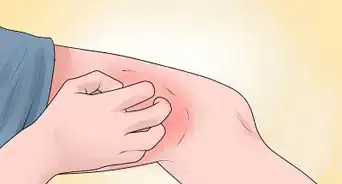
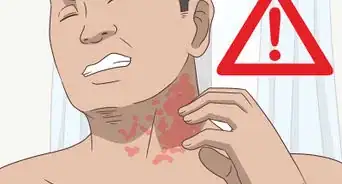
Board Certified DermatologistThe patients of both eczema and psoriasis have rashes. But they are fundamentally different diseases. Usually, eczema affects the flexural areas of the skin, such as the inside part of the elbows and knees. Psoriasis affects the extensor portions, like the back of the elbow and the front of the knee. Psoriasis has more nail involvement and may involve the scalp. That is a visual way to distinguish them.












References
- ↑ https://extension.wvu.edu/food-health/cooking/apple-cider-vinegar-myths-facts
- ↑ https://pubmed.ncbi.nlm.nih.gov/34077434/
- ↑ Alina Goldenberg MD, MAS, FAAD. Board Certified Dermatologist. Expert Interview. 16 August 2021.
- ↑ https://www.ncbi.nlm.nih.gov/pmc/articles/PMC4735895/
- ↑ https://www.ncbi.nlm.nih.gov/pmc/articles/PMC5868783/
- ↑ https://extension.wvu.edu/food-health/cooking/apple-cider-vinegar-myths-facts
- ↑ https://www.ncbi.nlm.nih.gov/pmc/articles/PMC1785201/
- ↑ https://nationaleczema.org/get-the-facts-acv/
- ↑ https://pubmed.ncbi.nlm.nih.gov/31328306/
- ↑ https://www.mayoclinic.org/diseases-conditions/psoriasis/symptoms-causes/syc-20355840
- ↑ https://www.mayoclinic.org/diseases-conditions/psoriasis/diagnosis-treatment/drc-20355845
- ↑ https://www.ncbi.nlm.nih.gov/pmc/articles/PMC1785201/
- ↑ https://www.ncbi.nlm.nih.gov/pmc/articles/PMC4479370/
- ↑ https://www.health.harvard.edu/blog/apple-cider-vinegar-diet-does-it-really-work-2018042513703
- ↑ https://www.health.harvard.edu/blog/apple-cider-vinegar-diet-does-it-really-work-2018042513703
- ↑ https://www.psoriasis.org/integrative-approaches-to-care/
- ↑ https://www.psoriasis.org/integrative-approaches-to-care/
- ↑ https://www.nhs.uk/conditions/psoriasis/treatment
- ↑ https://www.nhs.uk/conditions/psoriasis/treatment
- ↑ Heather Richmond, MD. Board Certified Dermatologist. Expert Interview. 15 September 2020.
- ↑ Heather Richmond, MD. Board Certified Dermatologist. Expert Interview. 15 September 2020.
- ↑ Heather Richmond, MD. Board Certified Dermatologist. Expert Interview. 15 September 2020.
- ↑ https://www.nhs.uk/conditions/psoriasis/treatment
- ↑ https://www.nhs.uk/conditions/psoriasis/treatment
- ↑ https://www.nhs.uk/conditions/psoriasis/treatment/
- ↑ https://www.health.harvard.edu/diseases-and-conditions/a-deeper-look-at-psoriasis
- ↑ https://www.psoriasis.org/over-the-counter/
- ↑ Alina Goldenberg MD, MAS, FAAD. Board Certified Dermatologist. Expert Interview. 16 August 2021.
- ↑ https://www.psoriasis.org/causes/
- ↑ https://www.mayoclinic.org/diseases-conditions/psoriasis/diagnosis-treatment/drc-20355845
- ↑ https://www.mayoclinic.org/diseases-conditions/psoriasis/diagnosis-treatment/drc-20355845
- ↑ https://www.sciencedirect.com/science/article/abs/pii/S0271531784800494

















































Medical Disclaimer
The content of this article is not intended to be a substitute for professional medical advice, examination, diagnosis, or treatment. You should always contact your doctor or other qualified healthcare professional before starting, changing, or stopping any kind of health treatment.
Read More...