This article was co-authored by Mohiba Tareen, MD. Mohiba Tareen is a board certified Dermatologist and the founder of Tareen Dermatology located in Roseville, Maplewood and Faribault, Minnesota. Dr. Tareen completed medical school at the University of Michigan in Ann Arbor, where she was inducted into the prestigious Alpha Omega Alpha honor society. While a dermatology resident at Columbia University in New York City, she won the Conrad Stritzler award of the New York Dermatologic Society and was published in The New England Journal of Medicine. Dr. Tareen then completed a procedural fellowship which focused on dermatologic surgery, laser, and cosmetic dermatology.
This article has been viewed 12,687 times.
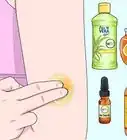
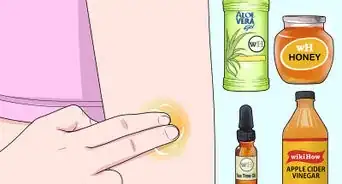
Acne is an outbreak of inflamed, infected skin follicles that generally occurs on the face, chest, back, and neck. Once acne is treated and begins to heal, the skin forms small scabs on the follicles to allow them to heal from within. Unfortunately, while the redness and swelling are fading, the discolored, raised scabs can be just as unsightly as the acne was. Between natural remedies and conventional medications, there are plenty of products that can help speed the healing process so that you can get your perfect skin back. The most popular include over-the-counter (OTC) washes and acne creams, tea tree oil, warm compresses, honey, and aloe vera gel.
Steps
Method 1
Method 1 of 6:Adopting a Cleaning Regimen
-
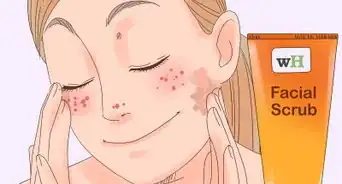
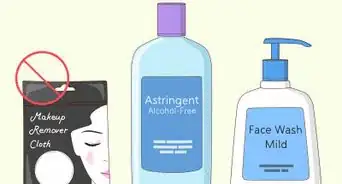
1Wash the affected area twice a day. Use an OTC medicated soap, antibacterial soap, acne soap, or wash with benzoyl peroxide. Use gentle circular strokes. Move in an upward and outward motion.
- Always use a clean washcloth to prevent transmitting bacteria that could lead to the formation of new acne.
-
2Dry the affected area. Use a clean dry towel. Blot your skin until it's completely dry. Avoid rubbing the affected area. This could break the skin and put you at risk for an infection.
-
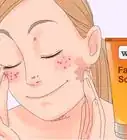
3Apply topical acne medication. You can choose an OTC cream or medication prescribed by your dermatologist. Squeeze a small amount onto the tip of your index finger. Dab the medication into your skin using gentle upward strokes. Apply it on and around the scabs.
- Always thoroughly wash your hands before touching your face to avoid transmitting dirt and bacteria.
-
4Follow the instructions on the medication package. Depending on the topical medication you're using, you might have to wash it off after a certain period of time. Others may be kept on under makeup and/or until the next time you wash your skin. Stick to the recommended usage to avoid over drying or irritating your skin.


Method 2
Method 2 of 6:Using Tea Tree Oil
-
1Purchase cotton balls. You can buy cotton balls in just about any grocery store or pharmacy. They're available in large and small sizes. Buy small cotton balls for small scabs and large cotton balls for large scabs.
-
2Apply tea tree oil to the cotton ball. If you have an eye dropper, use two to three drops. If not, place the cotton ball on the opening of the bottle. Turn the bottle upside down for a second to wet the cotton ball. Replace the cap to avoid spilling the oil.
-
3Dab the oil on your scabs. Do this after you've cleaned the affected area. Lightly touch the wet cotton ball to your scabs. To avoid breaking the crust of the scab, don't apply pressure. Allow the tea tree oil to dry on your face. Do this twice a day.


Method 3
Method 3 of 6:Applying Warm Compresses
-
1Find a clean washcloth. The material of the cloth doesn't matter. Whatever you normally use for your washing routine will work. If you're treating a large area of skin, you could use a hand towel.
-
2Fill a bowl with warm water. The size of the bowl depends on how many scabs you're treating. Make sure the water is warm, not hot. Hot water can irritate the scabs and break the capillaries under your skin. This could make your scabs look even worse.
-
3Dip the washcloth in warm water. Submerge the cloth in the water. Make sure it's thoroughly soaked. Wring out any excess to avoid making a mess.
-
4Apply the compress to your scabs. Lay the compress gently on your scabs. Avoid applying pressure to keep the crust intact. Leave the compress on for 10 minutes. Pat the area dry or allow it to air dry. Do this twice a day.
- The moisture and heat help to soften and loosen the scabs and also bring blood to the affected areas, which aids healing.


Method 4
Method 4 of 6:Using Honey
-
1Buy raw honey. Honey has been known for its antibacterial properties for centuries. However, most of the honey you find in the grocery store is loaded with additives. Raw honey is unprocessed and will heal your scabs more effectively. You can find raw honey at natural food stores, farmers' markets, and from local bee keepers.[1]
-
2Apply the honey with a clean plastic spatula. Do this after you've cleaned the affected area. Place the honey on your scabs using a light dabbing motion. Keep the honey on your scabs for at least two hours or overnight.
-
3Cover the honeyed scabs with hydropolymer dressing. Hydropolymer dressing covers leaking wounds in moist environments. Even if your scabs aren't leaking, the dressing will seal in the honey and prevent it from getting on your clothes or in your hair. You can usually find it at the drug store.
- If you can't find hydropolymer dressing, you can use regular adhesive bandages. However, the adhesive might lose its hold after a few hours.[2]
-
4Wash off the honey. The following morning (or after two hours have passed), wash your skin with your usual cleanser and warm water. Use upward and outward circular strokes. When you're finished, blot your skin dry with a clean towel.


Method 5
Method 5 of 6:Applying Aloe Vera Gel
-
1Buy aloe vera gel. You can usually find aloe vera gel at the drug store or natural foods store. Read the label. Choose the brand with the fewest number of ingredients. This way, you'll avoid additives that might aggravate your healing skin.[3] [4]
- Alternatively, if you have an aloe plant, you can break open the leaves and extract the gel.
-
2Apply the gel to your scabs. Do this after you've washed the affected area. Remove a generous amount of gel from the jar or aloe leaf. Lightly dab it on your scabs. Avoid rubbing to keep the scab crust intact. Leave the gel on your skin for at least two hours.
- You can also keep the gel on your skin overnight. If you choose to do this, apply hydropolymer dressing or adhesive bandages to prevent the gel from getting on your clothes or in your hair.
-
3Wash off the gel. Wet your skin with warm water. Apply your regular skin cleanser. Use gentle circular strokes and move in an outward and upward motion.


Method 6
Method 6 of 6:Applying Antibiotic Cream
-
1Choose an antibiotic cream. Purchase a topical antibiotic cream from your local pharmacy. Many options are available, such as Neosporin or Duac.
-
2Apply the cream to your scabs. Using clean hands or a cotton swab, apply a thin layer of antibiotic cream to each scab. Antibiotic cream helps heal existing acne and prevents new acne from appearing.[5]
- You can apply the cream twice daily.
-
3Let the cream soak in. You don’t need to remove the cream. Simply allow your skin to absorb the antibiotic cream. The antibiotic cream will soften the scabs which helps them to heal faster.
Things You'll Need
- Cotton balls (called cotton wool in the UK)
- Plastic spatula
- Wash cloth
- Hydropolymer dressing or adhesive bandages
- Tea tree oil
- Raw honey
- Aloe vera gel
- Antibiotic cream
Warnings
- Avoid getting any medication, cleanser, tea tree oil, or honey in your eyes, nose, or mouth. The cleanser and medication might contain ingredients that are harmful if consumed. Both the conventional and natural products can irritate sensitive mucous membranes.Thanks!

References
- ↑ https://www.ncbi.nlm.nih.gov/pmc/articles/PMC3609166/
- ↑ http://www.holistichealthherbalist.com/acne-scabs-bringing-you-down/
- ↑ Mohiba Tareen, MD. FAAD Board Certified Dermatologist. Expert Interview. 26 March 2020.
- ↑ http://www.holistichealthherbalist.com/acne-scabs-bringing-you-down/
- ↑ http://www.mayoclinic.org/diseases-conditions/acne/basics/treatment/con-20020580
About This Article