This article was medically reviewed by Paul Friedman, MD. Dr. Paul Friedman is a board certified Dermatologist specializing in laser and dermatologic surgery and cosmetic dermatology. Dr. Friedman is the Director of the Dermatology & Laser Surgery Center of Houston, Texas and practices at the Laser & Skin Surgery Center of New York. Dr. Friedman is a clinical assistant professor at the University of Texas Medical School, Department of Dermatology, and a clinical assistant professor of dermatology at the Weill Cornell Medical College, Houston Methodist Hospital. Dr. Friedman completed his dermatology residency at the New York University School of Medicine, where he served as chief resident and was twice awarded the prestigious Husik Prize for his research in dermatologic surgery. Dr. Friedman completed a fellowship at the Laser & Skin Surgery Center of New York and was the recipient of the Young Investigator's Writing Competition Award of the American Society for Dermatologic Surgery. Recognized as a leading physician in the field, Dr. Friedman has been involved in the development of new laser systems and therapeutic techniques.
There are 28 references cited in this article, which can be found at the bottom of the page.
wikiHow marks an article as reader-approved once it receives enough positive feedback. This article received 14 testimonials and 100% of readers who voted found it helpful, earning it our reader-approved status.
This article has been viewed 3,595,550 times.
Pimples are a part of life, but they don't have to stick around for months as swollen red monsters. Ice is a simple way to keep the swelling down in the short term, and there are a lot of other household remedies that you can try right away.
Here are 13 effective ways to get rid of swollen, red pimples fast.
Steps
Method 1
Method 1 of 13:Ice Cube
-
1Wrap an ice cube in a towel for a short-term fix. Hold it against the pimple so only the cloth is touching your skin, and leave it there for 5 to 10 minutes. The cold helps contract the blood vessels underneath the skin, making the pimple less red and obvious.[1]

Method 2
Method 2 of 13:Pimple Patches
-
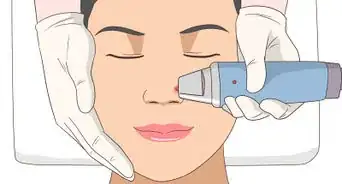
1Stick these over the pimple for a few hours. These draw pus out of pimples so they heal faster. You can buy them at a pharmacy as "hydrocolloid bandages" (which are cheaper), or as "pimple patches" (which sometimes have extra meds for deep, painful pimples). Either way, gently wash and dry the skin around the pimple and stick the patch over it. You might see the patch absorbing gunk within a few hours, and can leave it on for up to 12.[2]

Method 3
Method 3 of 13:Concealer
-
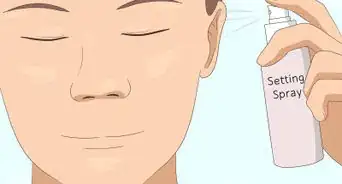
1Hide the pimples with makeup. Moisturize your skin, then cover your zits with a light layer of concealer the same shade as your skin. Apply a matching foundation to the rest of your face, and blend the concealer and foundation together using a clean brush or makeup sponge.[3]
- If this doesn't do the trick, try a color correcting product. Green or yellow tones help counteract the red color of the pimple.
- Using hypo-allergenic makeup is a good idea when you have a breakout.

Method 4
Method 4 of 13:Green Tea
-
1Try a green tea lotion or a used tea bag. Green tea on your skin might fight the bacteria infection that causes redness and swelling. A lotion with green tea extract as one of its main ingredients is probably your best bet, but in a pinch you could put a cool, wet tea bag over the pimple. Repeat once a day.[4]

Method 5
Method 5 of 13:Crushed Aspirin
-
1Try this folk remedy if you have aspirin handy. Crush an aspirin into a powder, mix it with a few drops of water to make a paste, then dab it over your pimple with a cotton swab. There's not much evidence that this helps, but it's an easy thing to try.[5]
- Don't try this if you're under 12 years old, or if the acne started because the skin was irritated (from a headband, for instance).[6]

Method 6
Method 6 of 13:Tea Tree Oil
-
1Dab a tea tree oil cream onto your acne. Look for a cream that has about 5% tea tree oil, and dab it over the pimples with a cotton swab. This is one of the most promising natural remedies, but (like all good acne treatment) it does take time to work. Repeat this every day to help your skin heal.[7]
- If you haven't used tea tree oil before, it's not a bad idea to do a patch test on your arm first, just to see if you're allergic.[8]
- You can buy pure tea tree oil instead and dilute it yourself on a kitchen scale, adding 1 gram of tea tree oil for every 19 grams of vegetable oil (not water). Jojoba oil is a good choice, since it helps reduce inflammation (while some other oils could clog pores and make things worse).[9]

Method 7
Method 7 of 13:Honey and Cinnamon
-
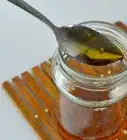
1This treatment is safe but might not be super effective. A dab of honey, especially with cinnamon stirred in, is a cheap and easy pimple spot treatment. Both of these foods can fight bacteria.[10] It's not super reliable when it comes to acne, but it could make the difference.[11]
- If you have hay fever, go for a honey face mask or other skincare product with honey instead. These should use honey that's had all the pollen filtered out, so it doesn't cause allergies.[12]

Method 8
Method 8 of 13:Face Mask
-
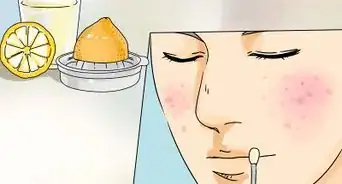
1Buy a moisturizing face mask marketed for acne. Your best bet is usually a basic, storebought product, maybe with an alpha hydroxy acid in the ingredients. (This could be listed as AHA, glycolic acid, or lactic acid.[13] ) These are some of the cheaper and gentler face masks, and also better against acne than the harsh ones with lemon juice or the fancy ones with exotic, untested ingredients—so that's a win-win.[14]
- Test a new product by dabbing it behind your ear and leaving it there for an hour or two to see if your face reacts badly.
- If you're putting the skin mask near your eyes, protect the sensitive skin there with a light dab of petroleum jelly.
- A clay mask with jojoba oil seems to work well for some people. Use it 2 or 3 times per week over your whole face or just over the area with acne.[15]

Method 9
Method 9 of 13:Benzoyl Peroxide
-
1This over-the-counter drug is a good first choice for swollen pimples. This can take a few weeks to work, but that's still better than most home remedies. Usually you wipe this over the pimple once or twice a day, but follow the instructions on the packet.[16]
- This stings or irritates some people's skin. You can try it once every other day at first to see if you get used to it.[17]
- If this doesn't work, you could try azelaic acid or a retinoid, or ask a doctor or dermatologist for a stronger prescription treatment. Salicylic acid, another very common over-the-counter acne drug, is usually better for whiteheads and blackheads instead of pimples.

Method 10
Method 10 of 13:Gentle Washing
-
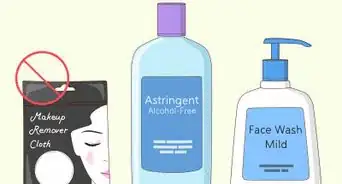
1Wash twice a day with lukewarm water. Just rinse the acne-covered area and wipe it gently with clean hands. Washing too often, scrubbing too hard, or using a rough washcloth can all make the acne worse.[18]
- Also wash your skin after you've been sweating.
- An oily scalp can cause acne around your hairline. Shampooing more often can help if your hair gets oily fast.
- You can also wash your face with a gentle cleanser. Some cleansers contain salicylic or glycolic acid, which can help open your pores and make your acne a little better.[19]

Method 11
Method 11 of 13:Moisturizer
-
1Moisturize if you're using harsh treatments. Many acne treatments—benzoyl peroxide, tea tree oil, aspirin, and others—can dry out your skin. It might feel a bit odd, but moisturizing dry skin can actually help keep acne under control. Moisturize after you wash, daily or whenever your skin feels dry.[20]
- Look for a moisturizer labeled "oil-free", "non-comedogenic", or "won't clog pores."

Method 12
Method 12 of 13:Dietary Changes
-
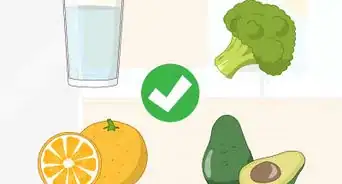
1Try eating less sugar and milk. This is not a super-studied topic, but it seems like some people clear up their acne if they eat lower-glycemic foods (that means eating less sugar and simple carbs), and drink less milk. Give it a try for a few weeks and see if it works for you.[21]
- It's not all dairy products—cheese and yoghurt seem fine. Skim milk has the biggest link to acne, so even switching to reduced fat or whole fat milk could help.

Method 13
Method 13 of 13:Hypo-Allergenic Makeup
-
1Try switching to lower-allergen makeup. Sometimes, acne is caused by makeup products. Test this out by switching to fragrance-free, hypo-allergenic makeup products for a few weeks.[22]
- There's a long list of ingredients that can cause issues, but the most common culprits are fragrances, followed by preservatives like paraben or methylisothiazolinone.
- Even hypo-allergenic makeup can cause issues. If you think makeup is giving you acne, a dermatologist or allergist can help you figure out what you can use.
- Don't forget to remove your makeup before going to sleep.[23] [24]

Warnings
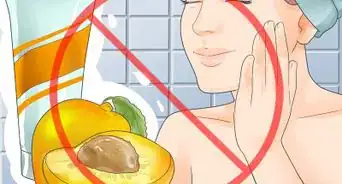
- Toothpaste is not a great choice for treating pimples. Yes, it can kill off bacteria, but it also has ingredients that can damage your skin. Your doctor can prescribe a much better treatment if over-the-counter drugs aren't working.[26]Thanks!
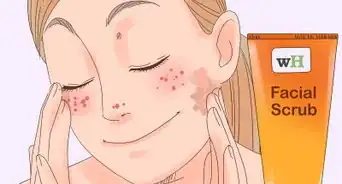
- Avoid exfoliants while you have acne. These irritate your skin and can make a breakout worse.[27]Thanks!
- Serratiopeptidase, which is sometimes marketed as an anti-inflammatory acne treatment, is not approved by the US FDA, and there is no good evidence that it works.[28] The Thailand FDA recalled this product from the market over these doubts.[29]Thanks!
- Anti-redness eye drops like Visine aren't designed for skin, and could be dangerous if used near the mouth and accidentally swallowed. It's best not to experiment with these as acne treatments.[30]Thanks!


References
- ↑ https://www.globenewswire.com/en/news-release/2018/09/11/1569374/0/en/How-to-Treat-Deep-Painful-Pimples-American-Academy-of-Dermatology.html
- ↑ https://www.washingtonpost.com/lifestyle/wellness/pimple-patches-hydrocolloid-darts-acne-stickers/2021/07/26/3f7eb12a-ee2b-11eb-bf80-e3877d9c5f06_story.html
- ↑ https://www.self.com/story/how-to-conceal-pimple
- ↑ https://pubmed.ncbi.nlm.nih.gov/32812270/
- ↑ https://www.jaad.org/article/S0190-9622(15)02614-6/fulltext/
- ↑ https://www.aad.org/public/everyday-care/injured-skin/burns/face-mask-skin-problems-treatment
- ↑ https://pubmed.ncbi.nlm.nih.gov/2145499/
- ↑ https://www.takingcharge.csh.umn.edu/how-do-i-choose-and-use-essential-oils
- ↑ https://www.ncbi.nlm.nih.gov/pmc/articles/PMC5796020/
- ↑ https://www.mdpi.com/2218-0532/85/2/19
- ↑ https://www.ncbi.nlm.nih.gov/pmc/articles/PMC3609166/
- ↑ https://www.ncbi.nlm.nih.gov/pmc/articles/PMC7036894/
- ↑ https://www.mayoclinic.org/diseases-conditions/acne/in-depth/acne-products/art-20045814
- ↑ https://health.clevelandclinic.org/do-face-masks-actually-work-or-are-they-just-a-fad/
- ↑ https://pubmed.ncbi.nlm.nih.gov/22585103/
- ↑ https://www.aad.org/public/diseases/acne/derm-treat/treat
- ↑ https://www.nhs.uk/medicines/benzoyl-peroxide/
- ↑ https://www.aad.org/public/diseases/acne/skin-care/tips
- ↑ Paul Friedman, MD. Board Certified Dermatologist, American Board of Dermatology. Expert Interview. 8 April 2020.
- ↑ https://www.aad.org/public/diseases/acne/skin-care/moisturizer
- ↑ https://www.jaad.org/article/S0190-9622(15)02614-6/fulltext#secsectitle0085
- ↑ https://dermnetnz.org/topics/contact-reactions-to-cosmetics/
- ↑ https://www.aad.org/public/diseases/acne/skin-care/habits-stop
- ↑ Paul Friedman, MD. Board Certified Dermatologist, American Board of Dermatology. Expert Interview. 8 April 2020.
- ↑ https://www.globenewswire.com/en/news-release/2018/09/11/1569374/0/en/How-to-Treat-Deep-Painful-Pimples-American-Academy-of-Dermatology.html
- ↑ https://www.nhs.uk/conditions/acne/treatment/
- ↑ https://www.aad.org/public/diseases/acne/skin-care/tips
- ↑ https://www.sciencedirect.com/science/article/pii/S1743919113000265
- ↑ https://www.bangkokpost.com/thailand/general/1528438/fda-expands-drug-recall
- ↑ https://thebeautybrains.com/2008/01/is-visine-good-for-skin-spots/
- Videos provided by Jennifer Chiu
About This Article

To reduce swollen and red pimples, hold an ice cube over them for a few minutes, which will contract the blood vessels under your skin so the pimples aren't as red and swollen. You can also try holding a steeped tea bag over the pimples since tea has anti-inflammatory tannins in it that can help reduce swelling. If you have some aspirin on hand, crush it up, mix it with water, and apply the paste to your pimples. After a few hours, rinse the paste off and your pimples should be less red and swollen! To learn how to prevent red and swollen pimples from forming in the first place, scroll down!