wikiHow is a “wiki,” similar to Wikipedia, which means that many of our articles are co-written by multiple authors. To create this article, volunteer authors worked to edit and improve it over time.
There are 11 references cited in this article, which can be found at the bottom of the page.
Learn more...
All marriages have their ebbs and flows, but it’s definitely time to take action if you’re worried that your marriage is on the brink of divorce. The good news is that marriages often can be rescued from this precipice with a mix of self-reflection, open communication, cooperative action, and professional counseling. This article lists helpful strategies for evaluating your marriage, evaluating yourself, and moving forward with the right plan for your situation.
Steps
Method 1
Method 1 of 13:Ask yourself crucial questions about your marriage.
-
1Evaluate your situation objectively and honestly. You know your marriage no longer feels right, but it’s important to dig deeper and figure out why. Start by asking yourself tough questions (and giving yourself honest answers) about your situation. For example:[1]
- Is my spouse my friend?
- Do I trust my spouse?
- Am I attracted to my spouse?
- Are we emotionally disconnected?
- Do I feel unhappy? If so, why?
- What are our (and my) main challenges?
- Does my partner know how I feel?


Method 2
Method 2 of 13:Be honest with yourself about your marriage’s future.
-
1Can you still envision a happy marriage with your spouse? Try to be as objective as possible when you ask yourself this question. If you can’t see any realistic path to a happy future, it’s probably time to turn your attention to ending the marriage as well as possible. If you still believe there is a path forward, confirm to yourself that you’re willing to do what it takes to get there.[2]
- It’s hard to admit that your marriage is over, and it’s difficult to commit to making changes to save your marriage. But never doubt that you have what it takes to make the right decision and act on it.

Method 3
Method 3 of 13:Identify ways you’re contributing to the problems.
-
1It’s not all your fault, but you can’t be 100% blameless. The goal here isn’t to shield your spouse from their role in your struggling marriage. Instead, it’s about looking inward and being honest about what you could have done differently—and can commit to doing differently.[3]
- Here’s a right and wrong way to do this exercise:
- RIGHT: “I could have been more open and honest with my spouse about the changes in my sexual needs, desires, and concerns.”
- WRONG: “It’s my fault my spouse cheated because I didn’t agree to have sex often enough.”
- You are not to blame for your spouse’s shortcomings in the relationship—only for your own. And you only have control over fixing your shortcomings—not theirs.
- Here’s a right and wrong way to do this exercise:

Method 4
Method 4 of 13:Create a plan for changes you can make yourself.
-
1What can you do to give your marriage its best chance? Surely there are changes your spouse needs to make in order to save your marriage, but that isn’t under your control. Focus instead on what is under your control—your side of the equation. Create a plan for yourself that you can share with your spouse in the hope that they’ll agree to make their own self-improvement plan as well.[4]
- Can you be a better listener? More empathetic? More affectionate in ways that resonate with your spouse?
- Can you pledge to adjust your negative mindset? To be less reflexively critical of your spouse?
- Can you adjust your work-life balance? Seek help for addiction, mental health issues, or other personal matters?

Method 5
-
1Use “I” statements so it’s clear you aren’t accusing them. Starting your sentences with phrases like “I feel,” “I would like,” and “My concern is” can prevent your spouse from getting defensive.[5] It can also encourage them to respond with “I” statements instead of accusing you, thereby avoiding the “blame game” that so often prevents healthy communication among married couples.[6]
- You might say something like this: “I feel like we need to make time to spend together. I would like for us to set aside a weekly date night. Would you be interested in trying that?”
- If at all possible, choose a time to talk when you’re both calm and able to give full attention.

Method 6
Method 6 of 13:Listen closely to what your spouse has to say.
-
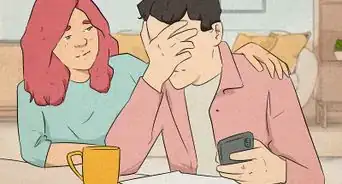
1Give them a chance to identify problems and a desire to fix them. Once you’ve shared your thoughts and feelings, actively listen as your spouse responds. You shouldn’t expect them to share your exact perspective on things, but you can hope that they’ll be equally willing to put in the work needed to repair your relationship.[7]
- They may instead get defensive, or hostile, or refuse to admit that there’s anything that needs to be repaired. This doesn’t necessarily mean that all is lost, though. Give them some time to “come around” while you work on your improvements.
Method 7
Method 7 of 13:Try to look at things from your spouse’s perspective.
-
1How do they perceive your marriage, and why? Even if your spouse agrees that your marriage is in crisis, they won’t see things exactly like you do. You might be concerned with communication and trust issues, while they’re more focused on a lack of respect and intimacy. Your spouse might also think the marriage is fine while you think it isn’t, or vice versa—put yourself in their shoes so you can better understand where they’re coming from.[8]
- If your spouse isn’t yet willing to share their perspective and feelings openly, make your best guess based on their actions, attitude, and comments.
Method 8
Method 8 of 13:Agree to be more open and honest with each other.
-
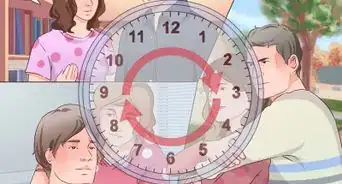
1Frequent, honest communication is essential to repairing a marriage. If you’ve agreed to work together to save the marriage, now is the time for “radical transparency”—being more open and honest than ever before.[9] Share what you’re doing, where you’re going, and what you’re thinking. To help out the process, consider scheduling a daily time (like when you’re walking the dog) to have an open and honest conversation.[10]
- For example, if your spouse’s past infidelity has harmed your marriage, encourage them to be extremely open about where they’re going, who they’re hanging out with, and so on. Or, if your struggles with addiction have caused marriage troubles, be extremely open about your struggles and your recovery process.[11]
- If they’re not ready to take this step yet, give them some time, but also recognize that saving your marriage is impossible if you don’t both eventually agree to re-open your lines of communication.



Method 9
Method 9 of 13:Make a concerted effort to forgive each other.
-
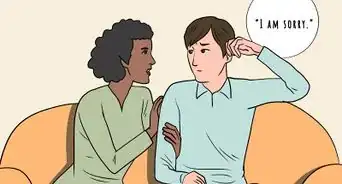
1Let go of past resentments and practice forgiveness moving forward. Forgiving your spouse doesn’t mean pretending their wrong choices never happened; it means releasing the hurt and anger you’ve allowed to fester inside you. In other words, forgiveness means letting go so you can make a fresh start in your marriage—without forgetting what caused problems before so you can work hard not to fall into the same traps. This works best if you both agree to practice forgiveness, but is beneficial for you even if you have to practice forgiveness alone.[12]
- Forgiveness begins inside of you, when you choose to let go of the resentment you’ve allowed to build up due to what your spouse did wrong. But it then needs to be expressed to them: “I forgive you for making financial decisions without my input that put us in a bad position. I want us to work together moving forward to improve our financial situation.”
Method 10
Method 10 of 13:Set new ground rules together for a fresh start.
-
1Don’t try to recapture the past—work to make something new. Your marriage is basically at a crossroads with 3 possible paths: divorce; continuing as it is, in a constant state of possible collapse; or reforming into a new, improved relationship. If you’re both dedicated to making things work, seize the opportunity to reframe your relationship in positive and supportive ways. You might set new “rules” like the following:[13]
- Setting up regular date nights.
- Forbidding personal attacks when you disagree.
- Agreeing to resolve minor conflicts before going to bed.
- Agreeing to share household responsibilities equitably.
Method 11
Method 11 of 13:Dedicate yourselves to spending quality time together.
-
1Restore old activities you enjoy and find new ones too. Remember how much time you used to spend with your spouse back when you first got married? That amount of quality time nearly always diminishes over time, but now you have the motivation to bring it back—and even improve it! Don’t just spend time together like you used to—find new things that you can do together.[14]
- You might, for instance, start volunteering together to support a cause that’s important to both of you. Or, you might take an art course or go to improv classes. Or, you might choose to go on a simple but important nightly walk together.[15]
Method 12
Method 12 of 13:Make a point of showing affection toward each other.
-
1Rekindle old sparks and feed new fires of affection as well. Help restore your marriage by acting as if you’ve just started your marriage. Hold hands. Make regular eye contact. Say “I love you.” Cuddle on the couch. Hug and kiss each other. Give each other massages. Talk about “old favorites” and new options for spicing things up in the bedroom—then try them out with regularity![16]
- Restoring intimacy can take a lot of time and effort in a struggling marriage, especially if infidelity has been a major problem. Give it time and take it slow, focusing first on small steps like holding hands.
Method 13
Method 13 of 13:Try discernment counseling if you disagree on what to do.
-
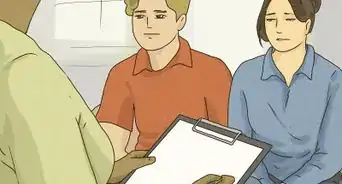
1Let a neutral expert provide a clearer picture of your situation. During discernment counseling, which usually lasts 1-5 sessions, a professional therapist helps you and your spouse determine if there is a path forward. The goal here isn’t to figure out how to repair the marriage, but rather to help get both of you on the same page—agreeing that either the marriage can or can’t be saved.[17]
- If both of you agree that the marriage can be saved, you can move on to marriage counseling to develop strategies on how to save it.[18]
- If, however, you both come to agree that the marriage is over, or you both remain divided in your opinions, it’s probably best to move forward with dissolving the marriage.
- Some marriage counselors also do discernment counseling, or you might work with a therapist who focuses specifically on discernment counseling.







References
- ↑ Moshe Ratson, MFT, PCC. Marriage & Family Therapist. Expert Interview. 18 September 2019.
- ↑ https://www.marriage.com/advice/save-your-marriage/save-a-marriage-on-the-brink-of-divorce/
- ↑ https://www.mentalhelp.net/blogs/on-the-brink-of-divorce-how-they-recovered/
- ↑ https://www.psychologytoday.com/us/blog/resolution-not-conflict/201303/marriage-problems-heres-8-step-rescue-plan
- ↑ https://www.psychologytoday.com/us/blog/resolution-not-conflict/201303/marriage-problems-heres-8-step-rescue-plan
- ↑ Jin S. Kim, MA. Licensed Marriage & Family Therapist. Expert Interview. 14 May 2019.
- ↑ Moshe Ratson, MFT, PCC. Marriage & Family Therapist. Expert Interview. 7 August 2019.
- ↑ https://www.marriage.com/advice/save-your-marriage/save-a-marriage-on-the-brink-of-divorce/
- ↑ Raffi Bilek, LCSW-C. Licensed Certified Social Worker – Clinical. Expert Interview. 15 October 2021.
- ↑ Allen Wagner, MFT, MA. Marriage & Family Therapist. Expert Interview. 24 September 2021.
- ↑ Lauren Urban, LCSW. Licensed Psychotherapist. Expert Interview. 3 September 2018.
- ↑ https://www.gottman.com/blog/10-things-try-giving-marriage/
- ↑ https://www.gottman.com/blog/10-things-try-giving-marriage/
- ↑ https://www.gottman.com/blog/10-things-try-giving-marriage/
- ↑ Allen Wagner, MFT, MA. Marriage & Family Therapist. Expert Interview. 24 September 2021.
- ↑ https://www.gottman.com/blog/10-things-try-giving-marriage/
- ↑ https://psychcentral.com/lib/when-one-spouse-wants-out-of-the-marriage-but-the-other-doesnt#1
- ↑ Moshe Ratson, MFT, PCC. Marriage & Family Therapist. Expert Interview. 7 August 2019.