This article was written by Moshe Ratson, MFT, PCC and by wikiHow staff writer, Amy Bobinger. Moshe Ratson is the Executive Director of spiral2grow Marriage & Family Therapy, a coaching and therapy clinic in New York City. Moshe is an International Coach Federation accredited Professional Certified Coach (PCC). He received his MS in Marriage and Family Therapy from Iona College. Moshe is a clinical member of the American Association of Marriage and Family Therapy (AAMFT), and a member of the International Coach Federation (ICF).
When you're having a hard time in your marriage, does it ever feel like talking just makes things worse? It can feel frustrating in the moment, but that's actually really common. In fact, sometimes the best ways to improve your marriage don't involve talking at all. We're sharing some of our favorite tips to reconnect with your spouse and get your marriage back on track—all without ever having to say the words, "We need to talk."
This article is based off an interview with our licensed marriage and family therapist, Moshe Ratson, MFT, PCC. Check out the full interview here.
Steps=
Method 1
Method 1 of 14:Touch your spouse affectionately.
-
1Start small if you're feeling really disconnected. Sometimes stress, tension, and arguments can build up until you're not even comfortable touching your spouse. That's really hard, especially if touch is the primary love language for you or your partner. Gradually introducing physical contact can help both of you feel that connection again, and it can help remind you that you both really do love each other.[1]
- Start out by reaching for your partner's hand when you're sitting on the couch together.
- You might also rest your hand on their shoulder for a moment when you walk past them.
- Once that starts to feel natural again, move on to lingering hugs, cuddles, massages, and other flirty touches.


Method 2
Method 2 of 14:Give them a surprise gift.
-
1A thoughtful present will make your partner feel special. It doesn't have to be anything elaborate. Even something small will show your spouse that you're really trying to improve your relationship. Here are a few ideas of what you could bring them:[2]
- Flowers
- Ice cream
- A playlist of your favorite songs[3]
- A photo album with pics of the two of you
- Something they want or need, like new socks or T-shirts

Method 3
Method 3 of 14:Write a love letter to your partner.
-
1List all the things you appreciate about them. Have you ever tried to tell your partner how much they meant to you, only to discover that you couldn't quite find the right words in the moment? A letter is the perfect way to express yourself because you can take the time you need to say exactly what you want.[4]
- Share big picture things you're grateful for, like, "Thank you for always being willing to try again, even when things get hard."
- Also, include little personal details to make the letter meaningful. Maybe something like, "I love the way you always change the oil in my car so I don't have to take it to the shop."

Method 4
Method 4 of 14:Find fun activities to do together.
-
1Trying something new can help you feel closer. Doing things side-by-side is a great way to spend time together without necessarily feeling you need to have a deep conversation. Feel free to come up with fun and exciting events for the two of you—but keep in mind that even something as simple as taking the dog for a walk or cooking a meal together can help the two of you bond again.[5]
- Other fun ideas might include taking a picnic lunch to the park, going on a hike, riding bikes, or checking out a museum near you.

Method 5
Method 5 of 14:Do something nice for them.
-
1Even a simple gesture can go a long way. Doing something thoughtful for someone else is a really effective way to show them that you care, without ever having to say a word.[6] It can be especially meaningful if you do something that they've previously mentioned they wish you would do—it will show them that you're listening and paying attention.[7]
- Make dinner for your partner after they've had to work late.
- Run a load of laundry if your partner is normally the one who does it—complete with drying, folding, and putting everything away.
- Clean their car if it's dirty.
- Fix something of theirs that's broken
Method 6
Method 6 of 14:Set aside planned time for each other.
-
1Regular quality time can make you feel closer. Your quality time can be any time and anything you want. Just make sure it's time that's set aside for just the two of you. You'll show your partner how important they are to you if you clear your schedule and block out any distractions during your date.[8]
- Try planning one date night a month, or maybe set a date to have coffee in bed on Saturday mornings.
Method 7
Method 7 of 14:Learn your partner's love language.
-
1Show them you care in a way they'll find meaningful. Love languages are the way that each person prefers to show and receive love. The 5 love languages are acts of service, words of affirmation, gift-giving, physical touch, and quality time. Really think about how your partner usually shows you that they care, or what seems to have the biggest impact when you've done it for them in the past.[9]
- If your partner's love language is words of affirmation, writing a love note would be a good option.
- If it's physical touch or quality time, plan a night when you can cuddle on the couch.
Method 8
Method 8 of 14:Focus on the things you like about your partner.
-
1This can help you worry less about the negative. When you're having marriage troubles, it can sometimes be hard to remember what originally drew you to your spouse. Or, maybe the things you used to love have gotten old—her spontaneity makes you feel like she's unreliable, for instance, or his stability makes you feel bored. You can help turn that around by intentionally focusing on the good things about them.[10]
- In the case of feeling bored, for instance, you might remind yourself, "He might not always be the most exciting, but he always does his best to provide for our children."
- If you're struggling with unreliability, you might think, "She might not always call when she's running late, but it's usually because she stopped to get dinner or pick up something for me."

Method 9
Method 9 of 14:Forgive your partner for the past.
-
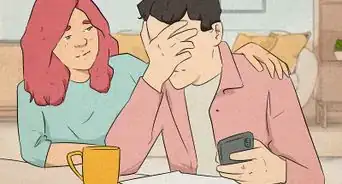
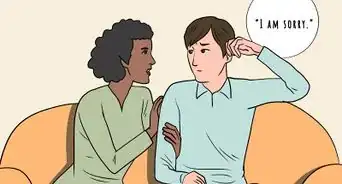
1Let go so you can move forward together. It can be really hard to forgive someone for hurting you. Maybe they said something that hurt you deeply, or maybe they betrayed your trust in some way. Whatever they did, if you want to be able to heal your marriage, you have to make the decision to accept what happened so you can look toward the future.[11]
- Forgiveness doesn't mean you have to forget what happened. It means you make a deliberate choice to stop holding onto the blame and hurt that your partner caused you.
- It can help to put yourself in your partner's shoes. What led to them making the decision that hurt you? If you can have compassion for them, it may be easier to forgive them.
Method 10
Method 10 of 14:Initiate sex with your spouse.
-
1Intimacy can be a powerful way to reconnect. Being intimate with your partner can help you feel more connected to each other. It might even help spark up those old feelings that might be hard to feel when you're frustrated or hurt.[12]
- Try finding new, creative places to have sex to keep things exciting!
- If sex seems like a big step right now, just ask them to cuddle for now.
Method 11
Method 11 of 14:Take care of yourself.
-
1Self-care is actually an important part of your relationship. If you're not making time for the things you enjoy, it could cause you to feel resentful and frustrated. On the other hand, if you carve out a little time each day that's just for you, you'll feel more relaxed and contented overall, which can make it easier to get along with your spouse.[13]
- Self-care can include things you find relaxing, like long showers, a cup of coffee on the porch, or time tending to your garden.
- Pursuing your hobbies and spending time with your friends can also be considered self-care.
- Encourage your partner to do the things they enjoy, as well! Having your own identities is really important in a marriage.[14]


Method 12
Method 12 of 14:Work on your inner self.
-
1Fix the things that you can change in the relationship. When a marriage is struggling, there's almost always something that both spouses can do to improve things. You might need to figure out why it triggers you when your partner does certain things, for instance.[15]
- Or, you might need to be more assertive so you don't end up resenting your partner for not meeting your needs.
- If you catch yourself being critical of your partner, ask yourself if there's a reason you feel like they need to live up to a certain standard.
- If you're dishonest with your spouse, try to figure out why you do things that you feel you need to hide.
Method 13
Method 13 of 14:Be patient.
-
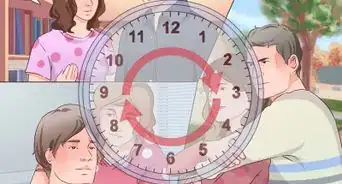
1Fixing your marriage can take time. The two of you still might sometimes fall back into old habits of arguing once in a while. But as long as your relationship seems to be improving overall, don't give up hope. Keep focusing on the best in your partner, working on yourself, and looking for little moments to reconnect in a quiet, natural way. In time, you can rebuild a trusting, loving relationship.[16]
Method 14
Method 14 of 14:Go to couples' counseling if the problems persist.
-
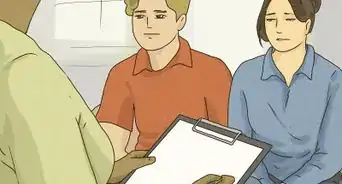
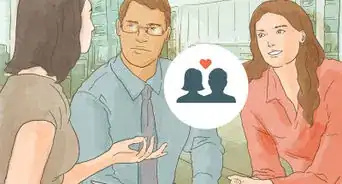
1A licensed therapist can help you have difficult conversations. It's not just a last resort—almost every couple can benefit from couple's counseling, but it's an especially good option if the two of you can't seem to talk without arguing. A therapist will help you learn new skills for improving the communication and conflict resolution in your marriage.[17]






References
- ↑ Jin S. Kim, MA. Licensed Marriage & Family Therapist. Expert Interview. 14 May 2019.
- ↑ Moshe Ratson, MFT, PCC. Marriage & Family Therapist. Expert Interview. 7 August 2019.
- ↑ Moshe Ratson, MFT, PCC. Marriage & Family Therapist. Expert Interview. 18 September 2019.
- ↑ Moshe Ratson, MFT, PCC. Marriage & Family Therapist. Expert Interview. 18 September 2019.
- ↑ Moshe Ratson, MFT, PCC. Marriage & Family Therapist. Expert Interview. 18 September 2019.
- ↑ Jin S. Kim, MA. Licensed Marriage & Family Therapist. Expert Interview. 14 May 2019.
- ↑ Moshe Ratson, MFT, PCC. Marriage & Family Therapist. Expert Interview. 18 September 2019.
- ↑ Moshe Ratson, MFT, PCC. Marriage & Family Therapist. Expert Interview. 7 August 2019.
- ↑ Jin S. Kim, MA. Licensed Marriage & Family Therapist. Expert Interview. 14 May 2019.
- ↑ Raffi Bilek, LCSW-C. Licensed Certified Social Worker – Clinical. Expert Interview. 15 October 2021.
- ↑ Moshe Ratson, MFT, PCC. Marriage & Family Therapist. Expert Interview. 7 August 2019.
- ↑ Moshe Ratson, MFT, PCC. Marriage & Family Therapist. Expert Interview. 7 August 2019.
- ↑ Allen Wagner, MFT, MA. Marriage & Family Therapist. Expert Interview. 24 September 2021.
- ↑ Lauren Urban, LCSW. Licensed Psychotherapist. Expert Interview. 3 September 2018.
- ↑ Moshe Ratson, MFT, PCC. Marriage & Family Therapist. Expert Interview. 18 September 2019.
- ↑ Moshe Ratson, MFT, PCC. Marriage & Family Therapist. Expert Interview. 18 September 2019.
- ↑ Raffi Bilek, LCSW-C. Licensed Certified Social Worker – Clinical. Expert Interview. 15 October 2021.
About This Article