This article was co-authored by Rebecca Ward, LMFT, SEP, PCC, MA and by wikiHow staff writer, Janice Tieperman. Rebecca A. Ward, LMFT, SEP, PCC is the Founder of the Iris Institute, a San Francisco, California-based business focusing on using somatic expertise to teach individuals and groups the skills to deal with dilemmas using interventions, including her own Original Blueprint® method. Ms. Ward specializes in treating stress, anxiety, depression, and trauma. She is a Licensed Marriage and Family Therapist (LMFT), a Somatic Experiencing® Practitioner (SEP), and a Professional Certified Coach (PCC) accredited by the International Coach Federation (ICF). Rebecca holds an MA in Clinical Mental Health Counseling from Marymount University and an MA in Organizational Leadership from The George Washington University.
There are 8 references cited in this article, which can be found at the bottom of the page.
This article has been viewed 7,637 times.
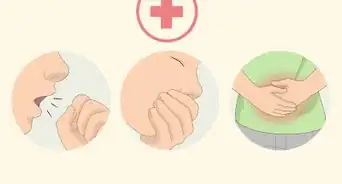
If you’re struggling with anxiety, you’re definitely not alone. Anxiety is different for everyone, and can lead to a lot of uncomfortable symptoms like fatigue, an increased heart rate, trouble concentrating, and more.[1] Don’t worry. Whether you’re at school, work, or by yourself, there are plenty of quick, easy, and healthy ways to express and cope with your anxiety.
Steps
Method 1
Method 1 of 9:Journal your thoughts.
-
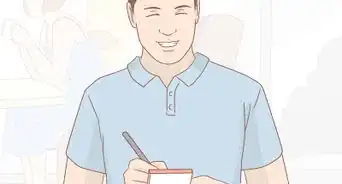
1Journaling helps you express your anxiety in a really productive way. Grab a spare notebook and jot down anything that’s on your mind. Regular journaling can help you hone in on your stressors, and may even help you figure out better, healthier ways to manage and cope with your anxiety. Try to journal a little bit every day, even if it’s only for a few minutes.[2]
- For example, with enough journaling, you might realize that a certain person at work is stressing you out. With this in mind, you could try spending less time around that person during future workdays.
- You could journal when you first wake up, or right before you head to bed each night.

Method 2
Method 2 of 9:Write and rip up a letter.
-
1Pretend you’re writing to the source of your anxiety. This might be a co-worker, person at school, or any other person who makes you feel anxious. Don’t actually send this letter—instead, write down everything that’s on your mind, including every detail about how this person makes you feel. Put your note aside for a few days, and then rip it into tiny pieces.[3]
- Don’t write out your thoughts on social media. Instead, let your letter be a private outlet where you can express your feelings.

Method 3
Method 3 of 9:Draw a word cloud.
-
1Word clouds help you express your biggest anxiety triggers. Start by sketching out a stick figure or silhouette with a large, empty thought bubble. Then, fill in this thought bubble with big, bold, colorful words that represent your anxiety. Jotting down these words might feel like you’re “dumping” your anxiety onto the paper.[4]
- For example, some stressors might be money, work, health issues, family drama, and not getting enough sleep.

Method 4
Method 4 of 9:Sketch where and how your anxiety is affecting you.
-
1Pinpoint your symptoms with a color-coded self-portrait. Sketch an outline of a person—this will represent you. Then, create a color code for yourself, with different colors representing different physical symptoms and emotions. Color in the outline with these colors to express how your anxiety is really affecting you.[5]
- For example, red might represent pain, yellow could represent tightness, brown could represent a sense of heaviness or dread, and gray might represent mental fogginess. You might color in the arms and shoulders with red, the legs with yellow, the chest with brown, and the head with gray.

Method 5
Method 5 of 9:Exercise frequently.
-
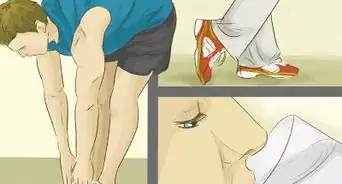
1Exercise helps you express your anxiety in a healthy way. Whenever you’re feeling stressed or a little on edge, go exercise.[6] You might go for a run, use the elliptical, or take a dip in the pool—whatever you prefer. According to experts, regular exercise can help both lower stress and boost your mood.[7]

Method 6
Method 6 of 9:Release your emotions in a physical way.
-
1Screaming and punching a pillow are healthy ways to express your anxiety. Find a quiet spot where you won’t be bothered by friends, family members, or other onlookers. Then, let out a big scream or slam your fist into a pillow. These reactions may seem silly or overdramatic, but they can be a really effective, cathartic way to express your anxiety.[8]
- It’s okay to cry! If your anxiety leaves you on the verge of tears, give yourself as much time as you need to cry and process your emotions.

Method 7
Method 7 of 9:Talk to a friend or loved one.
-
1Friends and family can be an important part of your support system. Anxiety is a really scary, alienating issue to deal with, especially if you’re holding all your negative thoughts inside.[9] Don’t be afraid to ask a trusted friend or relative for guidance and help. They’ll be happy to support you and help you figure out next steps you can take.[10]
- You might say something like, “My anxiety is consuming my thoughts, and it’s getting hard for me to focus on my job and studies. I’m not sure how I can work through this.”

Method 8
Method 8 of 9:Join a support group.
-
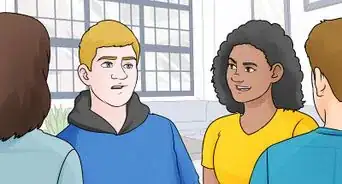
1Support groups can be a huge source of comfort. These groups are a great way to remember that you aren’t alone, and that lots of people understand and relate to what you’re going through. During a meeting, share something that’s been on your mind—you might be surprised at how many people relate![11]
- Check here for a support group near you: https://adaa.org/supportgroups.

Method 9
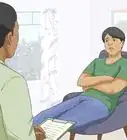
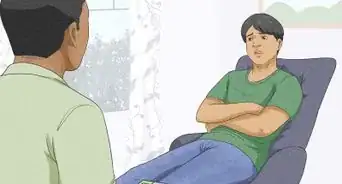
Method 9 of 9:Visit a counselor.

Warnings
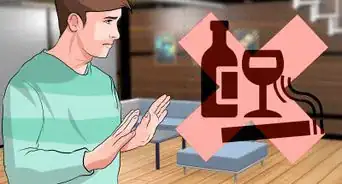
- While they may seem helpful in the moment, alcohol and other drugs won’t really help you express your anxiety in a healthy way.[14]Thanks!
References
- ↑ https://adaa.org/understanding-anxiety/generalized-anxiety-disorder-gad/symptoms
- ↑ https://www.urmc.rochester.edu/encyclopedia/content.aspx?ContentID=4552&ContentTypeID=1
- ↑ https://www.mhanational.org/helpful-vs-harmful-ways-manage-emotions
- ↑ https://arttherapyresources.com.au/art-therapy-exercises-anxiety/
- ↑ https://arttherapyresources.com.au/art-therapy-exercises-anxiety/
- ↑ Rebecca Ward, LMFT, SEP, PCC, MA. Licensed Therapist. Expert Interview. 29 May 2020.
- ↑ https://www.mayoclinic.org/diseases-conditions/anxiety/diagnosis-treatment/drc-20350967
- ↑ https://www.mhanational.org/helpful-vs-harmful-ways-manage-emotions
- ↑ Rebecca Ward, LMFT, SEP, PCC, MA. Licensed Therapist. Expert Interview. 29 May 2020.
- ↑ https://screening.mhanational.org/content/how-do-i-ask-my-friends-and-family-help/
- ↑ https://www.mayoclinic.org/diseases-conditions/anxiety/diagnosis-treatment/drc-20350967
- ↑ Rebecca Ward, LMFT, SEP, PCC, MA. Licensed Therapist. Expert Interview. 29 May 2020.
- ↑ https://www.mayoclinic.org/diseases-conditions/anxiety/diagnosis-treatment/drc-20350967
- ↑ https://www.fairview.org/patient-education/82144
About This Article

Medical Disclaimer
The content of this article is not intended to be a substitute for professional medical advice, examination, diagnosis, or treatment. You should always contact your doctor or other qualified healthcare professional before starting, changing, or stopping any kind of health treatment.