This article was co-authored by Tracy Carver, PhD. Dr. Tracy Carver is an award-winning Licensed Psychologist based in Austin, Texas. Dr. Carver specializes in counseling for issues related to self-esteem, anxiety, depression, and psychedelic integration. She holds a BS in Psychology from Virginia Commonwealth University, an MA in Educational Psychology, and a Ph.D. in Counseling Psychology from The University of Texas at Austin. Dr. Carver also completed an internship in Clinical Psychology through Harvard University Medical School. She was voted one of the Best Mental Health Professionals in Austin for four years in a row by Austin Fit Magazine. Dr. Carver has been featured in Austin Monthly, Austin Woman Magazine, Life in Travis Heights, and KVUE (the Austin affiliate for ABC News).
There are 8 references cited in this article, which can be found at the bottom of the page.
wikiHow marks an article as reader-approved once it receives enough positive feedback. This article has 14 testimonials from our readers, earning it our reader-approved status.
This article has been viewed 1,137,957 times.
We’ve all been nervous at some point—it’s a totally natural feeling that’s part of the human experience! However, if your nervousness causes you to freeze up before performing certain activities or just makes it really hard to go about your day, it’s something you probably want to work on improving. Luckily, with patience and practice, you can beat unpleasant nervous feelings.
Here are 11 tips for keeping your nerves at bay.
Steps
Method 1
Method 1 of 11:Practice for anything that you’re nervous to do.
-
1This makes you feel more ready and less nervous. Practice a presentation out loud in front of a mirror or in front of people you’re comfortable around, for example. Or, go out to a park and practice your shooting for an upcoming basketball game if that’s what’s making you nervous.[1]
- If you’re nervous about an upcoming social engagement, you can practice how to introduce yourself to new people or practice some small talk in front of the mirror.
Advertisement

Method 2
Method 2 of 11:Give yourself a pep talk.
-
1This can help push nervous thoughts out of your mind. For example, if you’re nervous for an upcoming athletic performance, tell yourself something like “I’ve got this!” or “You’re ready for this!” Or, if you’re nervous about trying something new like going hang gliding, tell yourself “This is going to be fun!”[2]
- You can also try developing a mantra, or a phrase or set of words that help calm you, and using it every time you feel nervous about anything. For instance, repeat something like “You are strong.” over and over to yourself any time you get nervous.

Method 3
Method 3 of 11:Visualize success.
-
1Positive thinking can decrease your negativity and nervousness. If you’re feeling nervous about something like an upcoming presentation or sports match, imagine it going super well for you. If negative thoughts come into your mind, push those out and continue visualizing yourself doing well.[3]
- To help you do this, ask yourself: “What’s the best thing that can happen?” Then, focus on visualizing the most positive outcome that could happen from your upcoming performance.
Advertisement

Method 4
Method 4 of 11:Take deep, slow breaths.
-
1This resets your nervous system to calm you down. Close your eyes and slow down your breathing rate to relax your mind and your body. Try breathing in through your nose for at least 4-5 seconds, then deeply exhale out of your mouth for as long as possible.[4]
- Yoga practitioners around the world manipulate their breathing patterns every day in an effort to calm the mind. Long, peaceful breaths cue our minds and bodies that everything is okay. Short, harsh breaths do the opposite. By breathing correctly, you can tell your body how to feel.[5]
- You can regulate your breath by counting to a certain number or repeating "Now I breathe in, now I breathe out."


Method 5
Method 5 of 11:Exercise early in the day.
-
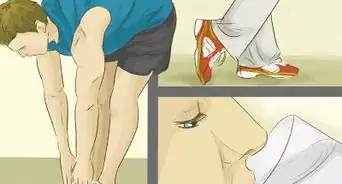
1Exercise boosts endorphins and reduces anxious feelings. Try relaxing exercises like yoga or tai chi. Or, go for a run or a bike ride or work out at a gym. Make it a goal to do about 30 minutes of physical activity a day.[6]
- For example, if you’re nervous for an upcoming presentation you have to give in the afternoon, get up early and go for a run in the morning to alleviate your nervous feelings.
Advertisement

Method 6
Method 6 of 11:Write down your nervous thoughts.
-
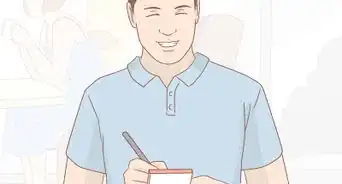
1Writing things down can help you let go of your worries. Get a writing utensil and a piece of paper and write down everything that’s making you feel nervous. Write down additional thoughts about why those things are making you feel nervous. Once you've written down your feelings, either throw the paper away as a symbolic gesture or keep it to consider it during the day.[7]
- For example, if you’re nervous about an upcoming social event, write down what that event is and try to elaborate on why it’s making you feel nervous. Then, confront those feelings and try to let them go — they might seem less rational when you see them written down!

Method 7
Method 7 of 11:Focus on the present instead of living in the past or future.
-
1What's done is done and what hasn't happened yet, well, hasn't happened. Don't stress yourself out by dwelling on an embarrassing moment or expecting to fail at something that’s coming up. Instead, focus on what you’re doing or what you can do in the present moment.[8]
- There is such a thing as a self-fulfilling prophecy. If you concentrate on messing up your big speech tomorrow, you might end up messing up your big speech tomorrow. Focusing on the now grounds you in what's going on and lets you keep a level head.
Advertisement

Method 8
Method 8 of 11:Remember that it's natural to get nervous.
-
1Nervousness is just anticipation for something that’s coming up. Try to practice self-compassion and recognize that you are bound to be nervous at some points in your life. It's a really natural reaction, so don't beat yourself up for feeling that way.[9]
- If you notice physical reactions like your throat tightening, your palms sweating, or your stomach feeling knotted, remind yourself that those are just natural reactions caused by your nervous system — it doesn't mean your body is betraying you![10]

Method 9
Method 9 of 11:Get organized for upcoming performances.
-
1The more organized you are, the less nervous you feel. For example, if you’re nervous for an upcoming presentation, get all your notes together, go over your presentation slides again, and make sure you have any props or visual aids you need ready to go. Or, if you’re nervous for your basketball game tomorrow, pack your uniform and other gear in a bag and place it by the door.[11]
- A “performance” can be anything you have to do that’s making you feel nervous. For example, a party or other social event can be considered a social performance. You could pick out your outfit and brainstorm some topics of conversation to get organized for something like that.
Advertisement

Method 10
Method 10 of 11:Face your fears.
-
1Avoiding things that make you nervous can just make those feelings worse. Instead, force yourself to do activities that make you nervous to overcome those feelings. Start small and work your way up to conquer bigger fears as you get more comfortable.[12]
- For example, if social interaction makes you nervous, start small by just going to a party full of strangers with a friend of yours. Then, once you feel okay there, make it a goal to introduce yourself to at least 1 new person.

Method 11
Method 11 of 11:Take care of your basic needs.
-
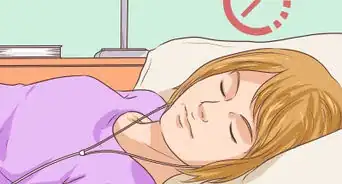
1Don’t let nervousness cause you to stop eating or sleeping. Do your best to get around 8 hours of sleep the night before any type of event that’s making you feel nervous. Stay hydrated by drinking lots of water and don’t skip meals![13]
- If you’re nervous before an event and it's really hard to eat a full meal, have a healthy, brain-boosting snack like a banana before instead.
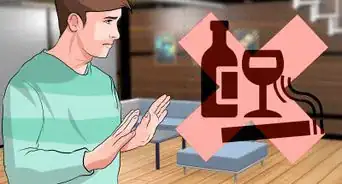
- Avoid or limit caffeine and alcohol, which can both contribute to anxious feelings.
Advertisement

Expert Q&A
Did you know you can get expert answers for this article?
Unlock expert answers by supporting wikiHow
-
QuestionHow do I stop getting nervous?
 Tracy Carver, PhDDr. Tracy Carver is an award-winning Licensed Psychologist based in Austin, Texas. Dr. Carver specializes in counseling for issues related to self-esteem, anxiety, depression, and psychedelic integration. She holds a BS in Psychology from Virginia Commonwealth University, an MA in Educational Psychology, and a Ph.D. in Counseling Psychology from The University of Texas at Austin. Dr. Carver also completed an internship in Clinical Psychology through Harvard University Medical School. She was voted one of the Best Mental Health Professionals in Austin for four years in a row by Austin Fit Magazine. Dr. Carver has been featured in Austin Monthly, Austin Woman Magazine, Life in Travis Heights, and KVUE (the Austin affiliate for ABC News).
Licensed PsychologistValidate your feelings—being nervous is totally normal. When your palms get sweaty or your stomach is in knots, your nervous system starts activating chemicals that it thinks are going to help you survive, so just try to appreciate your body for what it's doing.
Support wikiHow by unlocking this expert answer.
-
QuestionHow do I calm down when I'm nervous?Tracy Carver, PhDDr. Tracy Carver is an award-winning Licensed Psychologist based in Austin, Texas. Dr. Carver specializes in counseling for issues related to self-esteem, anxiety, depression, and psychedelic integration. She holds a BS in Psychology from Virginia Commonwealth University, an MA in Educational Psychology, and a Ph.D. in Counseling Psychology from The University of Texas at Austin. Dr. Carver also completed an internship in Clinical Psychology through Harvard University Medical School. She was voted one of the Best Mental Health Professionals in Austin for four years in a row by Austin Fit Magazine. Dr. Carver has been featured in Austin Monthly, Austin Woman Magazine, Life in Travis Heights, and KVUE (the Austin affiliate for ABC News).
Licensed PsychologistOnce you're aware that you're nervous, start to regulate your breathing. Deeply inhale through the nose for at least 4-5 seconds, then deeply exhale out of your mouth as long as possible. That's the best technology we have for consciously regulating the nervous system—and it's free for everyone.Support wikiHow by unlocking this expert answer.



References
- ↑ https://www.mayoclinic.org/diseases-conditions/specific-phobias/expert-answers/fear-of-public-speaking/faq-20058416
- ↑ https://kidshealth.org/en/teens/nerves.html
- ↑ https://www.mayoclinic.org/diseases-conditions/specific-phobias/expert-answers/fear-of-public-speaking/faq-20058416
- ↑ Tracy Carver, PhD. Licensed Psychologist. Expert Interview. 7 January 2021.
- ↑ Nicolette Tura, MA. Authentic Living Expert. Expert Interview. 23 January 2020.
- ↑ https://www.inc.com/larry-kim/15-power-up-tips-to-make-you-a-better-presenter.html
- ↑ https://www.nhs.uk/mental-health/conditions/social-anxiety/
- ↑ Nicolette Tura, MA. Authentic Living Expert. Expert Interview. 23 January 2020.
- ↑ Tracy Carver, PhD. Licensed Psychologist. Expert Interview. 7 January 2021.
- ↑ Tracy Carver, PhD. Licensed Psychologist. Expert Interview. 7 January 2021.
- ↑ https://www.mayoclinic.org/diseases-conditions/specific-phobias/expert-answers/fear-of-public-speaking/faq-20058416
- ↑ https://www.helpguide.org/articles/anxiety/social-anxiety-disorder.htm
- ↑ https://au.reachout.com/articles/how-to-stop-being-nervous
About This Article

Medical Disclaimer
The content of this article is not intended to be a substitute for professional medical advice, examination, diagnosis, or treatment. You should always contact your doctor or other qualified healthcare professional before starting, changing, or stopping any kind of health treatment.
It can be really hard to keep yourself from being nervous, but if you have to give a presentation, take a few deep breaths and take a sip of water to calm yourself. You can also listen to music you like to take your mind off of your nerves. Then, once you start to relax, try to dismiss fears that you can't control, like wondering what the audience is thinking while you're making a public speech. Instead, focus on what you can control, like making sure you speak clearly. No matter what the situation, remember that it's normal to get nervous, and it happens to everyone. For more calming exercises and tips from our Mental Health reviewer, read on!