This article was written by Nicole Levine, MFA. Nicole Levine is a Technology Writer and Editor for wikiHow. She has more than 20 years of experience creating technical documentation and leading support teams at major web hosting and software companies. Nicole also holds an MFA in Creative Writing from Portland State University and teaches composition, fiction-writing, and zine-making at various institutions.
The wikiHow Tech Team also followed the article's instructions and verified that they work.
This article has been viewed 7,211 times.
This wikiHow teaches you how to encrypt folders on your Windows PC. Because Windows does not come with the ability to encrypt folders, you’ll need to install a free app called 7-Zip.
Steps
Part 1
Part 1 of 2:Installing 7-Zip
-
1Go to https://www.7-zip.org. This is the website for 7-zip, a free Windows application that can be used to encrypt your folders.
-
2Click Download. Be sure to click the link for your version of Windows (32-bit or 64-bit). The installer will now download to your computer.
-
3Open the installer. This is the file you just downloaded. You may see a link to the file at the bottom of your web browser. Click it, then select Open if prompted.
- If you don’t see it in your browser, you should find it in the Downloads folder.
-
4Select a folder for 7-zip. The default option (c:\Program Files\7-Zip) should work for most people.
-
5Click Install. Once the installation is complete, the “Install” button will change to “Close.”
-
6Click Close. 7-Zip is now installed on your computer.


Part 2
Part 2 of 2:Encrypting a Folder
-
1
-
2Navigate to the folder you want to encrypt. Just make sure it’s visible on the screen—don’t open it.
- For example, if you want to encrypt a folder that’s in your own Documents folder, double-click Users, then double-click your username. You’ll see the Documents folder inside the Users folder.
-
3Click the folder you want to encrypt. It is now highlighted in a different color, which means it’s selected.
-
4Click Add. It’s the first icon at the top of 7-Zip. You’ll also see a “+” symbol on the button. A window will appear.
-
5Select a folder from the “Archive” drop-down menu. This is where the encrypted folder will be stored.
- Use the ⋯ button to locate the folder.
-
6Set a password for your encrypted folder. To do this, type a password into the first box in the “Encryption” area, then type it into the second box for confirmation.
- It’s extremely important that you remember this password, as you’ll need it to access these files.
- The default encryption method is AES-256. You’ll see that it’s selected from the Encryption drop-down. There’s no need to change it.
-
7Check the box next to “Delete files after compression.” This ensures that there will be no unencrypted version of the folder, making it safe from prying eyes.
-
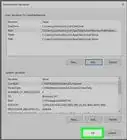
8Click OK. The folder is now encrypted. When you try to open it, you’ll be prompted to enter a password.




About This Article