wikiHow is a “wiki,” similar to Wikipedia, which means that many of our articles are co-written by multiple authors. To create this article, 13 people, some anonymous, worked to edit and improve it over time.
wikiHow marks an article as reader-approved once it receives enough positive feedback. In this case, 98% of readers who voted found the article helpful, earning it our reader-approved status.
This article has been viewed 35,052 times.
Learn more...
Driving in Australia, like most other western nations, is relatively easy and straightforward. Traffic rules are uniform from state to state (with the exception of Melbourne's quaint - but crucial to observe - 'hook turns' and the acceptable levels of alcohol - these vary from .05 to .08 BAC). A trap for many tourists is that Australia, like New Zealand and the UK, drive on the left of the road. Hook turns will be dealt with in the tips section.
Steps
-
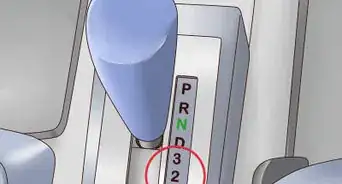
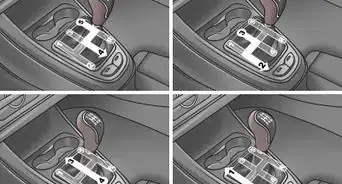
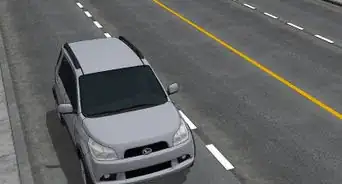
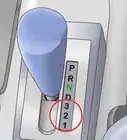
1Driving on the LHS means that your steering wheel will be on the right of the car with the gears to your left.
- The basic challenge for an unfamiliar driver will be that it is not left-hand turns which are problematic. Simply be in the left-hand lane, obey any traffic signals and a left-turn is easy.
-
2Understand the speed limits in Australia. Speed limits vary between different types of roads and the areas that you are in.
-
3Be aware that red means red on traffic signals. You can never turn left on a red.
-
4Use Roundabouts correctly. Australia has many 'roundabouts' - known as 'traffic circles' in some other nations. The rule here is simple. Approach, slow down, and look to your right. If you see a car, stop before entering the roundabout - that car is more than likely going to pass you (it's 2 of the 3 options). As you become more accustomed to LHS driving, you'll learn to look for the other car's indicator. If it's flashing a right hand turn, it won't be in your path and you are good to go on. But always slow down and remember that even the locals get very conservative on multiple lane roundabouts.
-
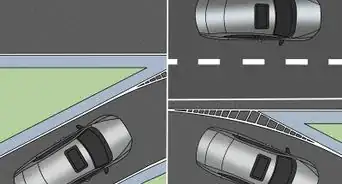
5When turning right, you must give way to all oncoming traffic at all times. At large intersections, a 'right turn arrow' may appear giving you right of way. At intersections without an arrow, it is permissible to creep into the middle (so long as you don't obstruct anyone ... just slowly move into a 'ready to turn' position). It's not uncommon to just 'sit' for up to a minute in this spot. A break in traffic will come, but you are also allowed to 'turn on the red' if you are already in the intersection. That is, as oncoming traffic (and the flow-through behind you) stops to observe the new red light, you can hurry on through with your right turn before the intersecting traffic begins to move.


Community Q&A
-
QuestionI have a California driver's license. Can I drive in Australia?
 Community AnswerYes, you can.
 -
QuestionDo Indian immigrants require an Australian driver's license?Community AnswerYes, if you become a long term or permanent citizen of Australia.
Warnings
- There are a lot of red light cameras in Australia so be sure to stop at a red light.Thanks!
- Driving in the eastern seaboard is easy in terms of finding fuel. If driving in the west, once you're out of suburbia you should buy petrol whenever you see it. Keep that tank topped up.Thanks!
- Also be cautious with speeds in Australia. Speed limits are strictly enforced, so be sure to stick to the speed limit in all suburbia areas and towns.Thanks!