This article was co-authored by Jennifer Butt, MD and by wikiHow staff writer, Janice Tieperman. Jennifer Butt, MD, is a board certified Obstetrician and Gynecologist operating her private practice, Upper East Side OB/GYN, in New York City, New York. She is affiliated with Lenox Hill Hospital. She earned a BA in Biological Studies from Rutgers University and an MD from Rutgers – Robert Wood Johnson Medical School. She then completed her residency in obstetrics and gynecology at Robert Wood Johnson University Hospital. Dr. Butt is board certified by the American Board of Obstetrics and Gynecology. She is a Fellow of the American College of Obstetricians and Gynecologists and a member of the American Medical Association.
There are 13 references cited in this article, which can be found at the bottom of the page.
Post-birth control syndrome is an umbrella term for a lot of icky side effects you may experience when you stop using the birth control pill.[1] Unfortunately, this syndrome isn’t widely accepted by most medical professionals—but it doesn’t make your symptoms any less real or valid.[2] With all the conflicting information out there, it can be tough to figure out a safe, healthy way to deal with your symptoms as you adjust to life without birth control. Don’t worry! It only takes a few minutes to learn a little more about your symptoms so you can develop a plan of action.
Steps
Question 1
Question 1 of 8:What is post-birth control syndrome?

Question 2
Question 2 of 8:Is post-birth control syndrome real?
-
1Some medical professionals don’t think post-birth control syndrome is real. These doctors don’t think that there’s enough evidence to support the actual diagnosis, but they agree that getting off birth control can lead to a lot of unpleasant symptoms.[5]
- There are several different opinions when it comes to post-birth control syndrome, but that doesn’t mean your symptoms and experiences aren’t valid! If you think you might have this condition, it’s definitely worth looking into some possible solutions.

Question 3
Question 3 of 8:What are some symptoms you experience when you get off birth control?
-
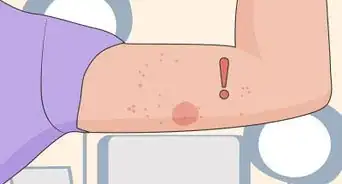
1Your skin might break out a little more. Certain types of birth control pills include a type of progesterone, which helps reduce acne. Once you stop taking birth control, the acne may come back—this is known as “rebound acne.”[6]
-
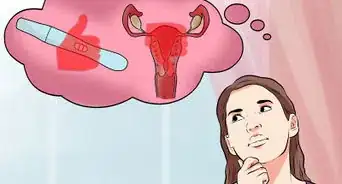
2Your period can be irregular. Birth control pills regulate your menstrual cycle. Unfortunately, when you stop taking your birth control pills, it can take several cycles before your body relearns to regulate your hormones.[7]
- No matter how long you took it, birth control won't affect your fertility once you stop taking it. You'll still need to use some type of contraception if you don't want to get pregnant.[8]
-
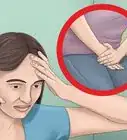
3You might have some PMS symptoms. Birth control pills are great at getting rid of the usual PMS grievances, like bloating, mood swings, or cramps. Unfortunately, once you stop taking birth control, these symptoms may come back on their own.[9]




Question 4
Question 4 of 8:How do I treat my acne?
-
1Use a topical acne serum. Pick up an over-the-counter serum with niacinamide as the main ingredient. Massage the serum into your skin twice a day to help treat any acne flare-ups.[10]
- Talk to your doctor or dermatologist to see if a prescription acne treatment is right for you.
- Niacinamide is a type of vitamin B3 with some anti-inflammatory effects, which makes it helpful for treating acne.[11]
-
2Eat healthy foods to better manage your acne. Ditch processed foods, along with dairy products—these are common triggers for acne. Sugary foods that raise your insulin levels may also lead to acne breakouts.[12]
- For instance, processed, sugary snack foods aren't good for your skin.


Question 5
Question 5 of 8:How do I manage my cramps and bloating?
-
1Take over-the-counter painkillers for your cramps. Pick up a bottle of Advil, Aleve, Tylenol, or another painkiller. Check the recommended dosage on the side of the bottle, and take the medicine as needed for 2-3 days, or until your cramps go away.[13]
-
2Relieve your cramps with a hot water bottle or a hot bath. Grab a hot water bottle and place it around your lower abdomen. You can also relax in a hot bath for several minutes, which can ease away the pain.[14]
- Heating patches might also do the trick.
-
3Cut back on salt to reduce your bloating. Look for drinks and foods that are low in sodium, and stay away from really salty snacks. Unfortunately, salt can make bloating a lot worse.[15]
- Talk to your doctor about trying a magnesium supplement or water pill. These medications might help reduce some of the bloating.


Question 6
Question 6 of 8:How do I deal with irregular periods?
-
1Log your periods to get a sense of how often they come around. Jot down the date your period starts and ends, along with any symptoms that come along. Notebooks, calendars, and mobile apps are all great ways to log and track your cycle, so you can get a sense of your situation.[16] Eventually, your body should regulate your cycle on its own.
- If your periods are still irregular after 3 months, see your OB/GYN.[17]

Question 7
Question 7 of 8:How do I cope with my mood swings?
-
1Take time to de-stress. Set aside some time each day to practice yoga, or take a few minutes to meditate.[18] Focus on your breathing, and where you are in this exact moment. Tune into your 5 senses, and really focus on what’s going on around you—this can help distract you from your mood swings.[19]
- For instance, you might think about the wind blowing through a window, or the sounds of chatter or conversation nearby.
-
2Track your moods. Log how you’re feeling in a calendar, journal, or another type of chart. On your mood chart, note when your period starts and ends—connecting your moods with your cycle can give you a lot of peace of mind.[20]
- Mood swings can be a normal part of going off birth control. Try to take them with a grain of salt![21]


Question 8
Question 8 of 8:When should I see a doctor?
-
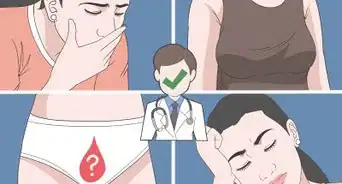
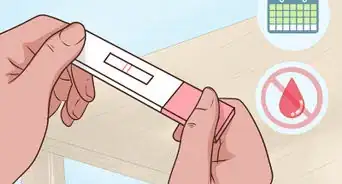
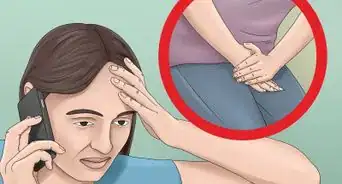
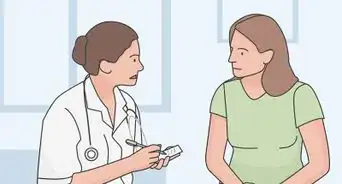
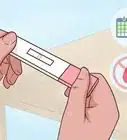
1Call your doctor if your period doesn’t go back to normal after 3 months. Post-birth control syndrome is officially recognized or diagnosed by most doctors, but that doesn’t make your symptoms any less valid.[22] If you haven’t had your period in at least 3 months, call your doctor and see what they suggest.[23]

Expert Q&A
Did you know you can get expert answers for this article?
Unlock expert answers by supporting wikiHow
-
QuestionCan I get pregnant if I have post-birth control syndrome?
 Jennifer Butt, MDJennifer Butt, MD, is a board certified Obstetrician and Gynecologist operating her private practice, Upper East Side OB/GYN, in New York City, New York. She is affiliated with Lenox Hill Hospital. She earned a BA in Biological Studies from Rutgers University and an MD from Rutgers – Robert Wood Johnson Medical School. She then completed her residency in obstetrics and gynecology at Robert Wood Johnson University Hospital. Dr. Butt is board certified by the American Board of Obstetrics and Gynecology. She is a Fellow of the American College of Obstetricians and Gynecologists and a member of the American Medical Association.
Board Certified Obstetrician & GynecologistBeing on birth control does not affect your long-term fertility—once you stop, you have the same chance of getting pregnant that you had before you started taking it.
Support wikiHow by unlocking this expert answer.
Warnings
References
- ↑ https://naturalwomanhood.org/getting-off-the-pilll-hormonal-birth-control-side-effects/
- ↑ https://nationalpost.com/health/health-and-wellness/no-post-birth-control-syndrome-isnt-a-real-thing-doctors-say
- ↑ https://naturalwomanhood.org/getting-off-the-pilll-hormonal-birth-control-side-effects/
- ↑ https://health.clevelandclinic.org/6-things-that-can-happen-when-you-stop-taking-the-pill/
- ↑ https://nationalpost.com/health/health-and-wellness/no-post-birth-control-syndrome-isnt-a-real-thing-doctors-say
- ↑ https://www.elle.com/beauty/a33969787/off-birth-control-skin-body-effects/
- ↑ https://www.elle.com/beauty/a33969787/off-birth-control-skin-body-effects/
- ↑ Jennifer Butt, MD. Board Certified Obstetrician & Gynecologist. Expert Interview. 13 March 2020.
- ↑ https://health.clevelandclinic.org/6-things-that-can-happen-when-you-stop-taking-the-pill/
- ↑ https://www.elle.com/beauty/a33969787/off-birth-control-skin-body-effects/
- ↑ https://dermnetnz.org/topics/nicotinamide/
- ↑ https://www.elle.com/beauty/a33969787/off-birth-control-skin-body-effects/
- ↑ https://www.mayoclinic.org/diseases-conditions/menstrual-cramps/diagnosis-treatment/drc-20374944
- ↑ https://www.mayoclinic.org/diseases-conditions/menstrual-cramps/diagnosis-treatment/drc-20374944
- ↑ https://www.mayoclinic.org/healthy-lifestyle/womens-health/in-depth/water-retention/art-20044983
- ↑ https://kidshealth.org/en/teens/menstrual-problems.html
- ↑ https://www.mayoclinic.org/healthy-lifestyle/birth-control/in-depth/birth-control-pill/art-20045136
- ↑ https://www.nhs.uk/conditions/pre-menstrual-syndrome/
- ↑ https://centerstone.org/our-resources/health-wellness/mood-swings/
- ↑ https://womensmentalhealth.org/specialty-clinics/pms-and-pmdd/
- ↑ https://health.clevelandclinic.org/6-things-that-can-happen-when-you-stop-taking-the-pill/
- ↑ https://nationalpost.com/health/health-and-wellness/no-post-birth-control-syndrome-isnt-a-real-thing-doctors-say
- ↑ https://www.mayoclinic.org/healthy-lifestyle/birth-control/in-depth/birth-control-pill/art-20045136
- ↑ https://www.mayoclinic.org/healthy-lifestyle/birth-control/in-depth/birth-control-pill/art-20045136
- ↑ https://womensmentalhealth.org/specialty-clinics/pms-and-pmdd/










































Medical Disclaimer
The content of this article is not intended to be a substitute for professional medical advice, examination, diagnosis, or treatment. You should always contact your doctor or other qualified healthcare professional before starting, changing, or stopping any kind of health treatment.
Read More...