This article was co-authored by R. Sonia Batra, MD, MSc, MPH. Dr. R. Sonia Batra is a board certified Dermatologist and the Founder of Batra Dermatology based in Los Angeles, California. With over 15 years of experience, Dr. Batra specializes in lasers, medical devices, patient and public medical education, and skin cancer research. She received her Bachelor’s degree, Master’s degree in Public Health, and her Doctor of Medicine (MD) degrees from Harvard University. As a Rhodes Scholar, she earned a Master’s degree in Molecular Genetics at the University of Oxford. She completed her residency training in Dermatology at Stanford University. Dr. Batra has contributed and reviewed for the Journal of Dermatologic Surgery, the Journal of the American Academy of Dermatology, and JAMA Dermatology. She is also a co-host of CBS’ Emmy award-winning television show, The Doctors.
This article has been viewed 306,686 times.
Even though scars fade over time, they might never look completely invisible. If you can still see a scar on a noticeable part of your body, there are a few ways you can keep it hidden. We’ll cover several options from minor cover-ups to more permanent treatments so you can reduce the appearance of your scars.
Steps
Method 1
Method 1 of 11:Try a different hairstyle.
-
1Cover any scars on your forehead, ears, or neck with a new do. Look for a new hairstyle you can try that conceals your scar. Keep an eye out for styles on fashion blogs, or you can also consult your stylist who will likely have suggestions on a style that suits you as well as covers the scar.Advertisement

Method 2
Method 2 of 11:Hide scars under clothing.

Method 3
Method 3 of 11:Wear jewelry.

Method 4
Method 4 of 11:Rub in a scar-reducing cream.
-
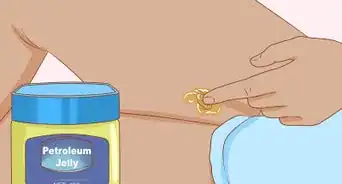
1Creams work best on flat scars that are less than 2 years old. For recent and especially light scars, you should begin with creams proven to reduce the appearance of scars.[1] Pick a product containing healing ingredients such as quercetin, petrolatum, and vitamin C.[2]
- Equally as important is minimizing a scar’s exposure to sunlight. Scar tissue does not react to sunlight the same way as normal tissue, so exposing a fresh scar to sunlight can permanently darken a scar, making it more apparent.[3]

Method 5
Method 5 of 11:Apply concealing makeup.
-
1Match your skin tone so your scar blends in. There are various makeups available on the market that can temporarily hide a scar. Test the makeup or cream on your skin to see if you need to blend any colors for the desired effect.
- Matching your skin tone can be a challenge for someone who isn’t familiar with the process. Try asking a consultant at a department or specialty store’s beauty counter for tips.
- Learning how to apply concealer can also take some practice. Follow the steps outlined at Apply Concealer to learn how.
Advertisement

Method 6
Method 6 of 11:Use a scar-camouflaging kit.
-
1These kits form a paste to cover up deeper scars. For deeper scars or instances when you need longer-lasting concealment than regular makeup may provide, you can look into specialty scar-camouflaging kits that contain a mixture of adhesive creams and powders. These tend to last much longer than regular makeup.
- You can often find these kits sold at any beauty supply shop, drugstore, or salon.

Method 7
Method 7 of 11:Try concealing or micropore tape.

Method 8
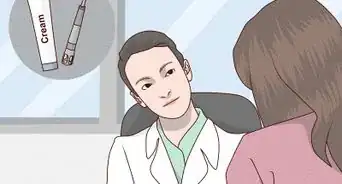
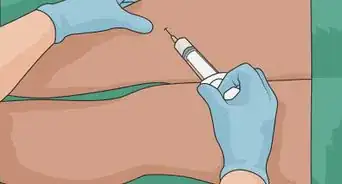
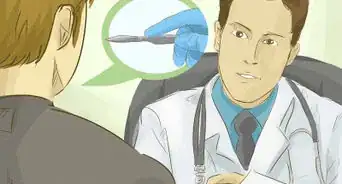
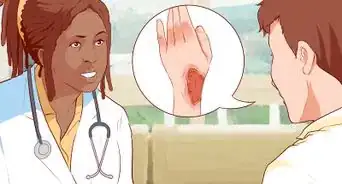
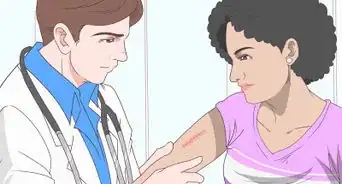
Method 8 of 11:Consult a dermatologist or cosmetic surgeon.

Method 9
Method 9 of 11:Consider a chemical peel.
-
1Peels are especially effective for reducing acne scars.[4] A chemical peel is a basic procedure wherein a chemical mixture is applied to the affected area, causing several of the top layers of skin to dry up and peel off.[5] The skin peels over several days, and it is considered a minor procedure.[6]Advertisement

Method 10
Method 10 of 11:Try camouflage tattooing.
-
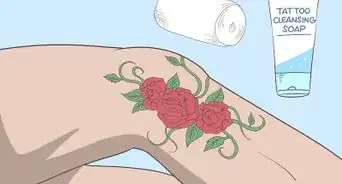
1Surgeons tattoo older scars with your skin tone to match the colors. With advances in technique over the last several years, camouflage tattooing is a solid way to reduce the appearance of scars. The process is highly similar to that of getting a normal tattoo, often with imperceptible results.
- Scars should be at least two years old before undergoing camouflage tattooing to ensure they are fully healed.
- If conventional tattoos are more your style, you can cover scars with those as well. Consult your tattoo artist for the best type of design to cover your specific scar size, location, and color.

Method 11
Method 11 of 11:Get microdermabrasion.
-
1This works best on acne and hyperpigmented scars.[7] Like a chemical peel, this method removes the outermost layer of dead skin from the abraded area; however, instead of a chemical mixture, the process is completed with a flow of fine, medical-grade crystals.[8] The finished product is a subtle difference, but it is effective.Advertisement

How Can I Reduce The Appearance Of Injury Scars?
Expert Q&A
-
QuestionWhat causes scars to turn dark?
 R. Sonia Batra, MD, MSc, MPHDr. R. Sonia Batra is a board certified Dermatologist and the Founder of Batra Dermatology based in Los Angeles, California. With over 15 years of experience, Dr. Batra specializes in lasers, medical devices, patient and public medical education, and skin cancer research. She received her Bachelor’s degree, Master’s degree in Public Health, and her Doctor of Medicine (MD) degrees from Harvard University. As a Rhodes Scholar, she earned a Master’s degree in Molecular Genetics at the University of Oxford. She completed her residency training in Dermatology at Stanford University. Dr. Batra has contributed and reviewed for the Journal of Dermatologic Surgery, the Journal of the American Academy of Dermatology, and JAMA Dermatology. She is also a co-host of CBS’ Emmy award-winning television show, The Doctors.
Board Certified DermatologistExposing your scar to sunlight could make it darker so it stands out from your regular skin.
Warnings
- Do not allow any hair or clothes to rub against the cream or makeup. This may smudge and ruin the effect.Thanks!
- Do not apply any cosmetics without testing them first for any allergic reactions.Thanks!

References
- ↑ http://www.dailymakeover.com/trends/makeup/how-to-cover-scars/
- ↑ http://www.dailymakeover.com/trends/makeup/how-to-cover-scars/
- ↑ R. Sonia Batra, MD, MSc, MPH. Board Certified Dermatologist. Expert Interview. 19 February 2021
- ↑ http://www.cosmeticsurgerydallas.com/med-spa-services-dallas/chemical-peel/
- ↑ http://www.cosmeticsurgerydallas.com/med-spa-services-dallas/chemical-peel/
- ↑ http://www.cosmeticsurgerydallas.com/med-spa-services-dallas/chemical-peel/
- ↑ http://www.cosmeticsurgerydallas.com/med-spa-services-dallas/microdermabrasion/
- ↑ http://www.cosmeticsurgerydallas.com/med-spa-services-dallas/microdermabrasion/
- Videos provided by Zabrena
About This Article

To cover up a scar, try applying makeup containing healing products like quericin or vitamin C if the scar is less than 2 years old. You could also try purchasing a concealer from a department store that matches your skin tone to cover up the scar. When you're at the store, you can talk with a consultant at a beauty counter for tips on how best to apply a concealer. If your scar is deep or you want a longer-lasting solution, try purchasing a scar camouflaging kit from a drug store. Then, combine the powder and cream to make a paste, which you can apply to your scar. To learn how to get cosmetic surgery for a scar, keep reading!