This article was co-authored by Adarsh Vijay Mudgil, MD and by wikiHow staff writer, Hannah Madden. Dr. Adarsh Vijay Mudgil is a board certified Dermatologist, Dermatopathologist, and the Owner of Mudgil Dermatology, a state-of-the-art dermatology practice based in New York, New York. As one of the few dermatologists in the area to achieve board certification in both dermatology and dermatopathology, Dr. Mudgil specializes in all aspects of medical, surgical, and cosmetic dermatology. He received his Bachelor's degree with Phi Beta Kappa honors from Emory University and earned his Doctor of Medicine (MD) with Alpha Omega Alpha honors from the Stony Brook University School of Medicine. In medical school, Dr. Mudgil was among a handful of students nationwide to receive a coveted Howard Hughes Medical Institute Fellowship and Scholarship. He then completed his residency in dermatology at the Mount Sinai Medical Center in Manhattan, where he served as chief resident. Additionally, Dr. Mudgil went on to complete a fellowship at the prestigious Ackerman Academy of Dermatopathology. He is a fellow of the American Academy of Dermatology, the American Society for Dermatologic Surgery, and the American Society of Dermatopathology. Dr. Mudgil is also a member of the Mount Sinai School of Medicine teaching faculty.
There are 9 references cited in this article, which can be found at the bottom of the page.
This article has been viewed 806,028 times.
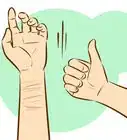
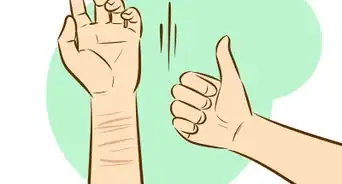
If you have scars from self-harming, there may come a time when you want to cover them up before heading out for the day. Fortunately, there are a few ways you can camouflage your scars to keep them hidden. If you are still self-harming, consider reaching out to a mental health professional to learn healthy coping mechanisms.
Steps
Method 1
Method 1 of 10:Try foundation or concealer for everyday wear.
-
1Makeup can temporarily cover up your scars while you’re out. Dab a color corrector, like a green concealer, over your scars, then pat it in with your finger. Use a blending sponge or your fingers to pat on your full coverage foundation or concealer, then blend it into your skin in small, circular motions.[1]
- Makeup works best on small, flat scars that aren’t raised.

Method 2
Method 2 of 10:Apply Dermaflage on uneven scars.
-
1If you have raised scars, Dermaflage can smooth out your skin. Gently squeeze out the product and pick it up with the applicator brush. Smooth the product onto your scar, then blend it into the skin around it. Press the texture pad that came with the product over the Dermaflage to give it the impression of real skin.[2]
- You can find Dermaflage at most drug stores for around $40.
- Dermaflage is flesh-colored, but you can apply makeup on top of it if you want to.
- Dermaflage is flexible, so it will move with your skin as you walk around.

Method 3
Method 3 of 10:Wear clothing to cover your scars.
-
1It’s the most obvious solution, but it can get a little tricky sometimes. If you’re going to the beach, try wearing board shorts or men’s swim trunks to conceal scars on your legs. If it’s warm out and you can’t wear long sleeves, put on a mesh or silk long sleeve shirt instead. If you have scars on your chest, consider accessorizing with a scarf or a statement necklace.[3]
- Wearing tights is a good way to cover scars on your legs while you’re wearing a short skirt.
- Long skirts and maxi dresses can cover you from head to toe in the summer while keeping you fairly cool.

Method 4
Method 4 of 10:Try bracelets to conceal scars on your arms.
-
1Long sleeves aren’t always an option. If you have scars on your wrists, put on a group of bracelets or bangles to cover them up. No one will question why you’re wearing them, and you can even mix and match with fun colors.[4]
- Look for cuff style bracelets for the most coverage. There are lots of styles available, from men's leather cuff bracelets to women's engraved silver or gold cuffs.
- Even if the bracelets don't hide all of the scars, the presence of a brightly-colored bracelet might distract people from the smaller, less bright scars.

Method 5
Method 5 of 10:Use a flesh-colored bandage on small scars.
-
1Look for waterproof ones that stay on all day. If you have a small patch of scars that you need to cover, pick out a bandage that matches your skin tone. People probably won’t question a bandage, so even if they notice it, it won’t be a huge deal.[5]
- Waterproof bandages are a great way to cover scars while you’re swimming or at the beach.

Method 6
Method 6 of 10:Get a medical tattoo.
-
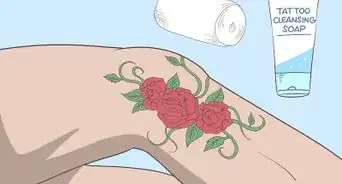
1It will blend your scars into the surrounding skin. Find a licensed dermatologist to do the procedure, then make an appointment to talk about what you’d like to have done. Your doctor will use a medical tattoo machine to color correct your scars and blend them into the skin. Medical tattoos need to be refreshed every 3 to 5 years, so you may have to get it touched up every now and then.[6]
- Medical tattoos are meant to look like your normal, natural skin. If the tattoo is successful, it won’t look like you have a tattoo at all.
- Most medical tattoos aren’t covered by insurance. You may have to pay up to $350 an hour for a medical tattoo.

Method 7
Method 7 of 10:Cover scars with an actual tattoo.
-
1It’s a permanent way to cover your scars for good. Find a licensed tattoo artist and let them know that you have some scars you want to cover up. Make an appointment with them to pick out your design and cover up your scars.[7]
- While it’s usually possible to cover scars with a tattoo, it depends a lot on the size and the placement of the scar itself. Your tattoo artist will let you know if it’s possible or not.

Method 8
Method 8 of 10:Visit a dermatologist for a permanent solution.
-
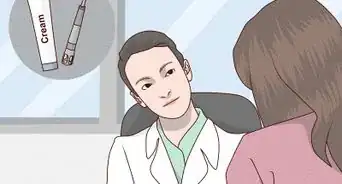
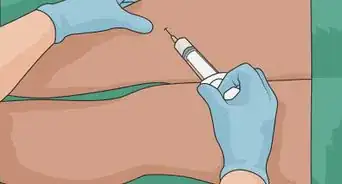
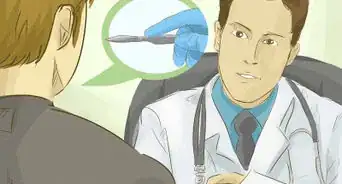
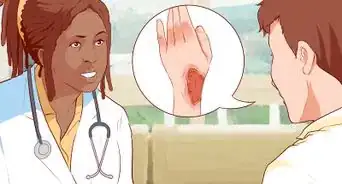
1Dermatologists can give you a medical treatment for your scars. Depending on the amount of scars you have and where they’re located, you might be able to use lasers, needling, or even scar surgery to reduce their appearance. If you want your scars gone permanently, this is your best bet.[8]
- Needling involves punctuation the skin with small, sterile needles to make small wounds. As your skin heals, the scars will lessen in appearance.
- Laser therapy is the most common treatment option for scars since it works on almost every type. It involves treating the scars with lasers to reduce their appearance over time.[9]
- Scar surgery involves cutting the scar out with a scalpel and closing the wound with small stitches. The end goal is a smaller scar that heals better and doesn’t leave as large of a mark.

Method 9
Method 9 of 10:Don’t hide your scars at all.
-
1They can be a sign of strength and willpower. If you no longer struggle with self-harming, consider not worrying about covering them up. You might get a few comments or questions here or there, but for the most part, people probably won’t notice.[10]
- If someone close to you does ask about them, you can tell them the truth if you’d like to.
- If a random stranger asks you about your scars, don’t feel obligated to tell them what really happened. You can just say they’re an old injury and that you don’t really want to talk about it.

Method 10
Method 10 of 10:Practice other coping strategies.
-
1Self-harm isn’t the best way to make yourself feel better. If you’re working through strong emotions or trauma, a mental health professional can help you work through your feelings in a healthy way. If you feel the need to self-harm, try taking a walk, doing exercise, eating something with a strong flavor, or taking a cold shower instead.[11]
- It can take a while to overcome the urge to self-harm, but it can be done. If you have the help of a mental health professional, you can overcome it even faster.

Warnings
- If you’re having suicidal thoughts, tell a trusted adult or call emergency services. If you're in the United States, call the 24-hour National Suicide Prevention Lifeline at 1-800-273-TALK.Thanks!

References
- ↑ https://lasersurgeryusa.com/wp-content/uploads/2016/04/Scars-Made-Simple-E-Book.pdf
- ↑ https://lasersurgeryusa.com/wp-content/uploads/2016/04/Scars-Made-Simple-E-Book.pdf
- ↑ https://www.youtube.com/watch?t=587&v=dg_axfjbx8k&feature=youtu.be
- ↑ http://myhoneybeetherapy.com/how-to-hide-self-harm-scars/
- ↑ http://myhoneybeetherapy.com/how-to-hide-self-harm-scars/
- ↑ https://www.britishskinfoundation.org.uk/blog/self-harm-scars
- ↑ https://authoritytattoo.com/tattoos-over-scars/
- ↑ https://www.aad.org/public/diseases/a-z/scars-treatment
- ↑ Adarsh Vijay Mudgil, MD. Board Certified Dermatologist & Dermatopathologist. Expert Interview. 8 October 2020.
About This Article

To hide self harm scars, use a thick makeup that claims to cover tattoos or scars and matches the color of your skin. When you apply the makeup, use a small, rounded brush for the smoothest look. Another method is to hide scars with clothing or accessories. For example, wear bracelets to hide scars on your wrist. Additionally, wear long sleeved shirts to hide scars on your arms, or opt for swimsuit shorts to conceal scars on your thighs. If you’re the creative or tattooing type, use henna designs to temporarily cover up scars. To learn how to make the decision to show your scars, keep reading!