This article was co-authored by wikiHow Staff. Our trained team of editors and researchers validate articles for accuracy and comprehensiveness. wikiHow's Content Management Team carefully monitors the work from our editorial staff to ensure that each article is backed by trusted research and meets our high quality standards.
There are 12 references cited in this article, which can be found at the bottom of the page.
This article has been viewed 7,070 times.
Learn more...
Waste plastic can be extremely harmful to the environment. Wouldn't it be nice if you could convert that plastic into fertilizer for the plants in your garden? Unfortunately, you can't really break down the vast majority of plastics at home. However, if you have plastic that's formulated to be home-compostable, you can add it to your compost and use it as fertilizer for your garden.[1] Here, we've compiled answers to some of your most pressing questions about converting this harmful waste product into nutrition for your plants.
Steps
Question 1
Question 1 of 11:Can plastic be used as fertilizer?
-
1Yes, but it depends on the type of plastic. Compostable plastics, which are actually made from plants, can be converted to fertilizer.[2] Other biodegradable plastic does break down, but micro-beads of plastic remain that aren't safe for use in fertilizers.[3]
- For petroleum-based plastics, the process is more difficult. Although an experimental treatment system was invented in 2017 to be used at wastewater treatment plants, there's no effective way to convert petroleum-based plastic into fertilizer at home.[4]

Question 2
Question 2 of 11:What types of plastic can I convert to fertilizer at home?
-
1Plastics labeled as "home compostable" can be converted into fertilizer. Look directly on the plastic for a stamp or sticker that will tell you how the material can be recycled. If the plastic is compostable, it will say so.[5]
- Other biodegradable plastics might partially break down in compost, but micro-plastic particles would still be in your compost, making it unsafe to use as fertilizer.
- There aren't specific standards a plastic has to meet to be safe for compost in a home environment—so essentially, you're taking the plastic manufacturer at their word. Standards that govern the compostability of biodegradable plastic apply to commercial or industrial composting.

Question 3
Question 3 of 11:Can I put any biodegradable plastic in compost?
-
1No, only plastic labeled specifically as "home compostable." There are many different varieties of biodegradable plastic, and some are safe for home compost while others are not. If the label states that it's safe for industrial compost, don't put it in your home compost pile.[6]
- If the label simply says that it's compostable, assume that this refers to industrial composting. Industrial compost facilities use higher temperatures and compost under different conditions than those present in your home compost bin.[7]

Question 4
Question 4 of 11:How can I set up a compost bin?
-
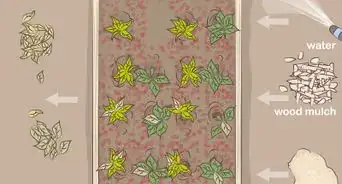
1Buy a bin online or at a hardware store or make your own. There are plenty of commercial compost bins available, as well as "starter kits" that you can use to get the compost process going. Commercial starters aren't really necessary, though, as long as you have a good mix of roughly equal parts green and brown material that you spray with water to keep moist. If you're more of the DIY sort, you can use any plastic bin or build a container with wood outside.[8]
- Green material is typically wet and includes garden clippings and scraps, vegetable cuttings, and kitchen scraps (with the exception of meat, dairy, or large amounts of baked goods).
- Brown material is dry and includes dry leaves, twigs, hay, and shredded paper.

Question 5
Question 5 of 11:How do I get the plastic ready for compost?
-
1Break the plastic into small pieces to increase the surface area. Even compostable plastic is harder to break down than softer materials, so you want to give it a head start. Break it apart, then bury the pieces deep in the middle of the compost pile so the entire surface is surrounded by organic material.[9]
- If you're adding a good amount of plastic to your compost, you might want to add more brown and green material to balance it out. There's no specific formula, so just eyeball it. Err on the side of caution and go ahead and add more organic material if there's any doubt.

Question 6
Question 6 of 11:What do I need to do to maintain my compost?
-
1Keep the pile moist and turn it with a rake or shovel every 2 weeks. Grab a handful of material from your pile and squeeze it—if no water drips out, it needs to be watered. If your pile is deeper, stick the hose down in the middle so you're watering the hole pile, not just the top. Turn the pile inside-out and outside in, so that the material on the edges of the pile ends up in the middle.[10]
- If you add material to the pile, check the balance. If there's more brown material, your pile will be dryer and take longer to compost. You can add green material to balance it back out.
- Break down everything in the compost pile—not just your plastic—before you dump it in there to speed up the process.

Question 7
Question 7 of 11:How can I make my own fertilizer?
-
1Set up a compost bin at home and use the compost as fertilizer. Backyard composting is typically the easiest solution, but you can also buy a special bin online or at your local hardware store for indoor composting. Remember to regularly moisten and turn your compost pile so that it won't smell bad or attract pests.[11]
- If you don't want to compost at home, find out if the city or town where you live has a composting program. If so, you can collect kitchen and garden scraps and take them to the local composting facility.

Question 8
Question 8 of 11:When will my compost be ready to use?
-
1Casual composting requires at least a year for material to decompose. If you're keeping a compost bin or pile at home and adding to it periodically (a process known as "slow" or "casual" composting), it takes a while for everything to break down properly.[12]
- If you use hot compost techniques, your compost might be ready in 2-3 months. However, this composting technique requires you to turn and moisten the pile frequently and maintain specific temperatures—a maintenance level most people don't have the time or energy to manage at home.
- Home-compostable plastic typically takes around 6 months to decompose fully, so it's best to wait that long even if you're hot composting.[13]

Question 9
Question 9 of 11:What other materials can be used as fertilizer?
-
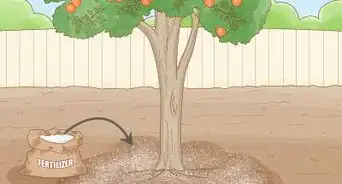
1Use food scraps, manure, or used coffee grounds as fertilizer. Some materials, such as used coffee grounds, can be sprinkled directly onto the soil around your plants. Food scraps are best blended into compost, then spread over the soil to provide nutrient-rich food for your garden. The compost also helps your soil retain moisture, so your plants will get plenty of water even if it's hot and dry.[14]
- Since you need to know what nutrients your soil is lacking before you fertilize, soil tests are a must! Then, choose the organic ingredients that contain the nutrients your plants need.
- For example, if you're trying to grow plants that require acidic soil, such as tomatoes or blueberries, you can sprinkle used coffee grounds directly over the surface to make your soil more acidic.

Question 10
Question 10 of 11:What enzyme breaks down plastic?
-
1An enzyme called "PETase" can break down plastic in less than a day. The enzyme, discovered in 2019, breaks down plastic at a much faster rate than other enzymes used in the process. The company responsible for the breakthrough plans to partner with major producers of waste plastic, including Nestlé and PepsiCo.[15]
- The process breaks down plastic into its primary chemical building blocks, which can then be used to make other products and produce energy.
- There's another super-enzyme that breaks down plastic similarly to PETase, but works at room temperature (PETase requires heat). The developers hope to link the enzymes together to produce even stronger enzymes capable of completely recycling plastic.[16]

Question 11
Question 11 of 11:Is it possible to turn plastic back into oil?
-
1Yes, petroleum-based plastic can be converted back into liquid fuel. Chemical engineers at Purdue University developed a hydrothermal processing technique that uses water at extremely high temperatures and pressures to break down plastic and convert it to oil. While this technique couldn't be used at home, it has potential commercial uses.[17]
- The oil produced through hydrothermal processing is actually a mix of different hydrocarbon compounds. However, it can be converted into gas and other fuels with further processing.
- Preliminary results show that the conversion process uses less energy and produces fewer emissions than either melting down or mechanically recycling plastic.

Warnings
- Do not put plastic in your compost unless it is specifically labeled as home-compostable. Although plastic will break down into micro-plastic pieces that might be invisible to the naked eye, those pieces remain plastic—they don't biodegrade further. If spread on the ground in fertilizer, they will contaminate the soil and water.[18]Thanks!
- Never put biodegradable plastic in with petroleum-based plastics for recycling. It will contaminate the other plastics and disrupt the recycling process.[19]Thanks!

-Step-10.webp)
References
- ↑ http://www.lesswaste.org.uk/recycle/compostable-degradable-biodegradable-and-oxodegradable-plastics/
- ↑ http://www.lesswaste.org.uk/recycle/compostable-degradable-biodegradable-and-oxodegradable-plastics/
- ↑ https://phys.org/news/2017-12-truth-bioplastics.html
- ↑ https://www.plasticsnews.com/article/20170913/NEWS/170919960/inventor-converts-waste-plastics-to-fertilizer-fuel
- ↑ https://www.epa.gov/trash-free-waters/frequently-asked-questions-about-plastic-recycling-and-composting
- ↑ http://www.lesswaste.org.uk/recycle/compostable-degradable-biodegradable-and-oxodegradable-plastics/
- ↑ https://www.epa.gov/trash-free-waters/frequently-asked-questions-about-plastic-recycling-and-composting
- ↑ https://www.calrecycle.ca.gov/Organics/HomeCompost
- ↑ https://web.extension.illinois.edu/compost/process.cfm
- ↑ https://web.extension.illinois.edu/compost/process.cfm
- ↑ https://www.epa.gov/recycle/composting-home
- ↑ https://www.calrecycle.ca.gov/Organics/HomeCompost
- ↑ https://www.epa.gov/trash-free-waters/frequently-asked-questions-about-plastic-recycling-and-composting
- ↑ https://www.farmersalmanac.com/8-homemade-garden-fertilizers-24258
- ↑ https://industryeurope.com/sectors/chemicals-biochemicals/a-mutant-enzyme-that-breaks-down-plastic-in-hours/
- ↑ https://e360.yale.edu/digest/new-super-enzyme-can-break-down-plastic-at-rapid-pace
- ↑ https://www.anthropocenemagazine.org/2019/02/new-technique-converts-plastic-waste-to-fuel/
- ↑ https://www.npr.org/sections/thesalt/2018/04/06/600174922/another-place-plastics-are-turning-up-organic-fertilizer-from-food-waste
- ↑ https://www.epa.gov/trash-free-waters/frequently-asked-questions-about-plastic-recycling-and-composting
About This Article