wikiHow is a “wiki,” similar to Wikipedia, which means that many of our articles are co-written by multiple authors. To create this article, 9 people, some anonymous, worked to edit and improve it over time.
wikiHow marks an article as reader-approved once it receives enough positive feedback. In this case, 91% of readers who voted found the article helpful, earning it our reader-approved status.
This article has been viewed 130,569 times.
Learn more...
Organic gardening is really fun because you can produce delicious veggies naturally right from your garden. The most common source of organic matter is compost. But there are times that you can't make your own compost and there are times when you don't have enough organic matter to fertilize your garden. There are liquid fertilizers available in garden stores. These can be a substitute to regular application of compost, but organic liquid fertilizer is quite expensive, especially if you have plenty of plants to fertilize.
Steps
-
1Combine the raw materials (see Things You'll Need below) in a 1:1:1 ratio. Example: 1 kg. plant materials, 1 kg. brown sugar, 1 gallon (3.8 L) water. This can be reduced, just remember the ratio.
-
2Place the materials in a large water-proof container. Mix the materials together until the sugar is dissolved in water.Advertisement
-
3Cover the container with a piece of cloth and secure with a rubber band.[1]
-
4Place the container in a quiet, cool and shaded location (such as a garage). Make sure the container won't be disturbed.[2]
-
5Leave the container for about a week. Do not disturb or move it as much as possible.[3]
- A week later, you will notice molds growing on the surface. The liquid will have a sweet-sour smell. It may be disturbing but its worth it. It is a sign that beneficial bacteria has inhabited the liquid.
-
6Mix the liquid thoroughly with a stick.
-
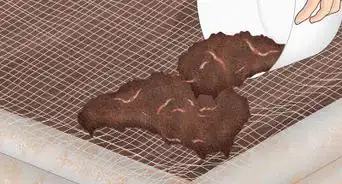
7Strain the liquid into a large plastic bottle, using a strainer. Leave enough space for the bacteria to breath. The solid materials can be placed into the compost pile, if you have. Otherwise, throw it in the trash.[4]
-
8Put the bottle cap loosely on to allow air to enter.[5]
-
9Place the bottle in a dark, protected area such as a garage.
-
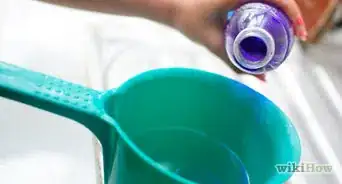
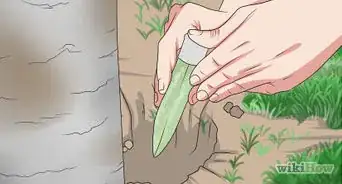
10Application: Mix 1 cup of the liquid to 1 gallon (3.8 L) of chemical-free water. It is best applied early in the morning or late afternoon. Use the diluted liquid to water the plants at their bases.
- For most plants, apply the diluted FPJ at least once a week.
Advertisement
-Step-1.jpg)
-Step-2.jpg)
-Step-3.jpg)
-Step-4.jpg)
-Step-5Bullet1.jpg)
-Step-6.jpg)
-Step-7.jpg)
-Step-8.jpg)
-Step-9.jpg)
-Step-10.jpg)
Community Q&A
-
QuestionCan I use white sugar? And what are plant materials?
 NinoxTop AnswererYou can use white sugar, but brown or crude sugar is better because it gives elements to bacteria that help them to grow. Concerning the plants, you must use Nitrogen-rich parts like stems and leaves of pea, bean, lentil, soya or peanuts.
 -
QuestionWhat difference does it make if the plant juice is stored in a light vs. dark area?
 Community AnswerLight, air, and heat are the enemy of nutrients. Store your juice in a cold dark area in an airtight container.
 -
QuestionCan I add sugar cane juice instead of water and sugar?
 Community AnswerYou can, but it won't give you the same osmotic pressure as granular sugar.
 -
QuestionWhat are the references used for this project?
 Community AnswerMiller, S. A., David, M., Ikedal, E. W. E., & Kim, C. S. (2013). Natural Farming: fermented plant juice. Tropical Agriculture and Human Resouces, 2, 1-7.
 -
QuestionHow can I make it smell better?
 Zac RamageCommunity AnswerMolasses (pure sugar cane) can be used to help the preservation of FPJ. The sugar keeps the bacteria alive, and it should improve the smell.
 -
QuestionWhat are plant materials?Community AnswerPlant materials are bits of the plant like leaves and stems. Basically, anything that is green. Fruits can also be used to make a tea high in PK.
-
QuestionHow long will fermented plant juice remain effective if I store it?Community AnswerIt can be stored between 6 - 12 months in a cool dark place. Avoid heat and light to keep it as long as possible. If it starts smelling bad, it is spoiled, so chuck it down the toilet at that point.
-
QuestionShould I put my fermented plant juice in an air tight container?Community AnswerAbsolutely not. The bacteria needs oxygen and the gasses released need to escape.
Warnings
- The smell of the liquid is quite disturbing, especially when straining the solids.Thanks!
Things You'll Need
-
Raw Materials:
- Plant parts of fast growing plants (legumes have plenty of Nitrogen)
- Brown Sugar/ Crude Sugar/ Molasses
- Chlorine-free water
-
Other Materials:
- A large plastic container, large enough to contain 1 gallon (3.8 L) water(e.g. bucket)
- A piece of cloth
- Rubber Band
- Plastic Bottles w/ cap (1L soda bottles, gallon bottles, etc.)
- Strainer
- Funnel
- Measuring Cup (optional)