This article was co-authored by wikiHow Staff. Our trained team of editors and researchers validate articles for accuracy and comprehensiveness. wikiHow's Content Management Team carefully monitors the work from our editorial staff to ensure that each article is backed by trusted research and meets our high quality standards.
This article has been viewed 3,540 times.
Learn more...
Contacting your member of parliament (MP) is an excellent way to get involved in the democratic process. Usually, mailing a well-crafted, properly formatted letter is the best method. Calling their office is a great option for time-sensitive issues, such as an impending parliamentary vote. Email and social media are fast and direct, but other forms of engagement usually make more of an impact. With so many options available, it's easier than ever to make your voice heard and hold your elected officials accountable.
Steps
Method 1
Method 1 of 3:Writing a Letter to Your MP
-
1Find your MP and their contact info on your parliament's website. If you're not sure who your MP is, look up your constituency. Enter your town or postal code into the search bar, then click on the link to your MP's directory listing.
- If you live in Australia, find your constituency and MP here: https://www.aph.gov.au/Senators_and_Members/Members.
- If you live in Canada, search here: https://www.ourcommons.ca/Parliamentarians/en/constituencies.
- Look up your MP here if you live in New Zealand: http://www.elections.org.nz/voters/find-my-electorate.
- Use this tool if you live in the UK: http://www.parliament.uk/mps-lords-and-offices/mps.
- For other locations, search online for “parliament” and your nation's name.
-
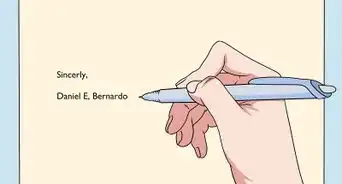
2Compose a properly formatted letter. Include the date at the top left corner, skip a line and write your MP's name and address, then skip another line and write the salutation (“Dear Mr. Doe,”). Skip a line after the salutation, then start the body. Write 3 to 4 short paragraphs (around 2 to 3 sentences each), and skip a line between each paragraph.[1]
- Skip a line after the last paragraph, write “Sincerely,” or “Yours truly,” and sign your name. Under your signature, include your name and full address.
- Proper formatting will lend your letter credibility, and a personalized letter is always better than a form letter.
- If you need help, look online for sample letters to elected officials.[2]
Advertisement -
3Use the proper forms of address. Check your MP's parliamentary directory listing to learn the right way to address them on the envelope and salutation. The right forms of address depend on your nation and the MP's formal title.[3]
- In general, you'd write “Mr. John Smith, MP” on the envelope and “Dear Mr. Smith,” on the salutation. Don't add a period after “Mr” if your nation doesn't use them after abbreviated titles.
- Your MP's parliament page will let you know if they prefer to be called “Dr.,” “Mr.,” “Mrs.,” or “Ms.”
- In some cases, you might also need to include “Right Honorable” or “Rt. Hon.” before their name on the envelope address.
- In the UK, address a knighted MP as “Sir David Amess, MP” on the envelope and use “Dear Sir David,” for the salutation. If your MP is a dame, address her as “Dame Angela Watkinson, MP” on the envelope and use “Dear Dame Angela,” or “Madame,” for the salutation.
-
4Keep your letter brief, direct, and factual. Address 1 topic only, and try to stick to 1 page. Mention the specific bill or issue that concerns you, and provide a clear request or call to action. It's helpful to provide personal examples to show how the issue impacts you and your community.[4]
- A clear, direct letter might state, “I am writing in support of the Space Industry Bill (HC Bill 137) and implore you to vote in its favor. The UK is a leading builder of satellites, but is absent from the emerging commercial launch sector. As a supervising telecommunications engineer, I can attest that the bill could allow us to enter this market without sacrificing public safety.”
-
5Be courteous, cordial, and constructive. Don't make demands or threats, and keep your tone friendly and professional. When appropriate, include pleasantries and say thank you.[5]
- For instance, if they've recently won an election, you could open the letter with, “Congratulations on your reelection, and thank you for your years of public service.”
-
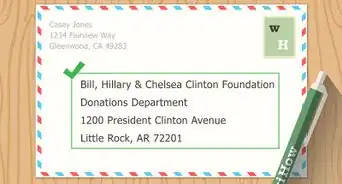
6Find out if postage is required to mail your letter. Place your letter in an envelope, address it, and include your name and address at the top left corner. Some nations, such as Canada, do not require postage to send a letter to parliament. In other nations, such as the UK, you'll need a postage stamp.[6]
- Check your parliament's website for information about postage.
Advertisement


Method 2
Method 2 of 3:Calling Their Office
-
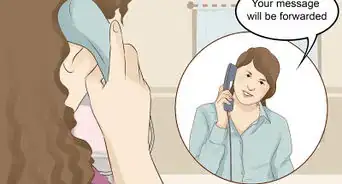
1Track down their telephone number on their parliament listing. Head to your parliament's website and find your MP's listing. You'll find either their office number or a general parliament number.[7]
- In some cases, you'll call the parliament number, say your MP's name, and an operator will patch you through to their line.
- Your MP's listing will also include their local office number (as opposed to their parliament office). Call this number if parliament is in recess and your MP is back in your constituency.
-
2Write down your main points so you'll know what to say. You'll only have a few minutes to make your case, so planning ahead is crucial. Write bullet points that summarize your statement and include bill numbers or other relevant details. For instance, outline your points like this:[8]
- I'm calling to urge your support for the Space Industry Bill (HC Bill 137).
- As a telecommunications developer, I can attest to the bill's economic benefits.
- Regulations included in the bill would allow us to become a leader in the commercial launch sector without sacrificing public safety.
-
3Ask to speak to your MP or an assistant. When you call their office, first ask to speak to your MP. If they're unavailable, ask to speak to a relevant staff member, such as a policy analyst who's researched the issue that concerns you.[9]
- Don't be disappointed if your MP is unavailable. Speaking to a relevant assistant can be just as effective.
-
4Leave a message if your MP or a relevant staff member are unavailable. If you're only able to reach a recorded message, make your case in a brief voicemail and call again in a few hours or the next day. If you speak with an actual person, ask them when the MP or a relevant assistant might be available, or ask for a return call.[10]Advertisement


Method 3
Method 3 of 3:Contacting Your MP Electronically
-
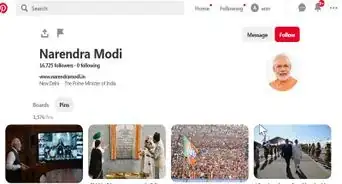
1Find their email address and social media profiles on their website. Your MP's parliamentary listing will most likely list their email and provide a link to their website. If the listing doesn't provide links to their social media profiles, head to their website to find their Twitter, Facebook, and other social media accounts.[11]
-
2Follow the guidelines for a mailed letter if you're sending an email. Compose a professional, well-crafted email according to the same standards you'd use for a printed letter. Be brief and focused, use the proper forms of address, and include your mailing address below your signature line to verify that you're their constituent.[12]
- While emails are faster, a printed, mailed letter is usually the best way to contact an MP. They might receive more emails than they can attend to, and printed letters can make more of an impact.
-
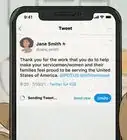
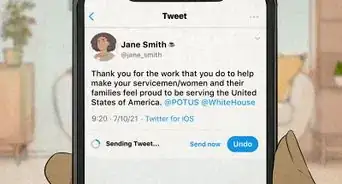
3Share meaningful content on their social media profiles. While it's better to make a complete argument via letters, emails, and phone calls, social media can provide unique forms of direct engagement. Post informative articles, studies, petitions, and other meaningful content to your MP's Instagram, Facebook, and Twitter profiles.[13]
- Informative content and petitions can raise their awareness of issues that impact your community.
- You could also take a picture of an eyesore, hazard, or other problem in your community and post it on their social media pages.
-
4Participate in live chats or virtual town halls. Some elected officials schedule live sessions to field questions and address their constituents' concerns. Check your MP's Facebook and Twitter accounts for more updates about live chats and other forms of social media engagement.[14]
- Live chats can allow you to bring up a problem in your community or ask your MP about their stance on an issue.
Advertisement








References
- ↑ https://www.cpj.ca/writing-letter-your-mp
- ↑ https://www.cpj.ca/sites/default/files/docs/files/Sample%20Letter.pdf
- ↑ https://www.aph.gov.au/Senators_and_Members/Guidelines_for_Contacting_Senators_and_Members/How_to_address_Senators_and_Members
- ↑ https://www.cpa.ca/documents/advocacy_p5.htm
- ↑ https://www.cpa.ca/documents/advocacy_p5.htm
- ↑ https://www.cpa.ca/documents/advocacy_p5.htm
- ↑ http://www.parliament.uk/get-involved/contact-your-mp/
- ↑ https://www.cpa.ca/documents/advocacy_p5.htm
- ↑ https://www.cpa.ca/documents/advocacy_p5.htm
- ↑ https://www.cpa.ca/documents/advocacy_p5.htm
- ↑ http://www.parliament.uk/get-involved/contact-your-mp/
- ↑ https://www.cpj.ca/writing-letter-your-mp
- ↑ https://rethinkmedia.org/blog/how-effectively-engage-your-elected-officials
- ↑ https://rethinkmedia.org/blog/how-effectively-engage-your-elected-officials
About This Article