This article was co-authored by wikiHow Staff. Our trained team of editors and researchers validate articles for accuracy and comprehensiveness. wikiHow's Content Management Team carefully monitors the work from our editorial staff to ensure that each article is backed by trusted research and meets our high quality standards.
There are 11 references cited in this article, which can be found at the bottom of the page.
wikiHow marks an article as reader-approved once it receives enough positive feedback. In this case, 96% of readers who voted found the article helpful, earning it our reader-approved status.
This article has been viewed 31,747 times.
Learn more...
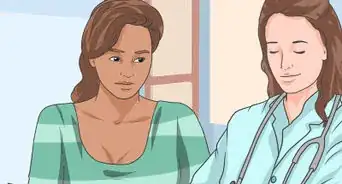
If you're being treated for hyperthyroidism or thyroid cancer, you may be given radioactive iodine or radioiodine.[1] With this treatment, it's possible to contaminate others with radiation, even though the amount of radiation you're given is fairly small. For that reason, take precautions to clean up after yourself, particularly in the bathroom and the kitchen, and to isolate items you use from other household items. Talk to your doctor about how long to maintain this precaution period; typically, it's 3 to 7 days from your treatment.
Steps
Method 1
Method 1 of 16:Spit and dispose of used tissues in the toilet.
-
1Your bodily fluids will shed radioactive material. When you use a tissue, put it in the toilet to flush. Similarly, when you brush your teeth, spit into the toilet bowl. On both occasions, flush the toilet twice after use.[2]
- Disposing of them this way helps keep others safe.
Advertisement

Method 2
Method 2 of 16:Flush the toilet twice when you use the bathroom.

Method 3
Method 3 of 16:Wipe down the toilet after using it.

Method 4
Method 4 of 16:Clean your hands every time you use the bathroom.

Method 5
Method 5 of 16:Shower once a day.
-
1Showering helps wash away the radioiodine your body's shedding each day. However, skip baths, as you'd just be soaking in radioiodine. Plus, you're more likely to leave radioiodine behind in the bathtub.[5]Advertisement

Method 6
Method 6 of 16:Rinse the bathtub and sink after using them.

Method 7
Method 7 of 16:Wash your linens and clothes separately from the rest of the household.
-
1Your clothes may spread radioactive particles to other items in the house. Always wash your towels, sheets, and clothes in a different load from other household items.[6]Advertisement

Method 8
Method 8 of 16:Wash your dishes separately.
-
1Reserve dishes and utensils for yourself that only you use. Keep your dishes away from other dishes and utensils. Also, wash these items separately from other household dishes so you don't spread radioactive particles to other items. You can use the dishwasher, as long as you're washing separate loads for your dishes.[7]
- Alternatively, use disposable utensils.

Method 9
Method 9 of 16:Wipe down the phone after using it.
-
1If you're using a shared phone, use a disinfectant wipe to clean it after each time you use it. Use a new one each time so you're not rubbing radioiodine back onto the phone.[8]
- Wipe down any other shared items, such as the television remote.
Advertisement

Method 10
Method 10 of 16:Keep a towel, hand towel, and washcloth for your use only.
-
1Don't share with anyone else, as you can spread radioactive particles to them. In fact, it's best to designate a separate bathroom for yourself during this time, if at all possible.[9]
- Don't share hand towels in the kitchen, either.

Method 11
Method 11 of 16:Sleep by yourself.
-
1Even being near a person can transfer radiation from you to them. Avoid contact with other people as much as possible. Sleep in a bedroom by yourself, and don't let anyone else use the bed even when you're not in it.[10]Advertisement

Method 12
Method 12 of 16:Maintain distance from other people.
-
1Stay at least 3 feet (0.91 m) away from other people at all times. They should only come closer for very short periods, such as a minute or two if it's absolutely necessary. Staying 6 feet (1.8 m) or farther away is even better, particularly with children and pregnant women.[11]
- It's best to be in a different house away from children and pregnant women if at all possible. In fact, avoiding contact with pregnant women for 20 days is best, while you shouldn't get closer than 6 feet (1.8 m) to a child in the first 3 days.
- Limit car rides with other people. If you need a driver, sit in the back seat in the opposite corner from the driver.[12]

Method 13
Method 13 of 16:Avoid staying in a hotel.
-
1You could put other guests at risk when the staff cleans your room. Staying in a hotel puts others, such as the cleaning staff, at risk since they do not know they are handling radioactive material. They will also wash the linens with the other guest linens, potentially putting other guests at risk, too.[13]
- If you need to separate yourself, have other household members stay in a hotel instead.
Advertisement

Method 14
Method 14 of 16:Wash your linens and clothes twice by themselves.
-
1Once your precaution time is over, put your linens through 2 complete wash cycles. After that, anyone can use them again. Also, wash your clothes twice before wearing them again.[14]
- The process of washing your clothes twice helps remove the radioactive particles.

Method 15
Method 15 of 16:Clean the bathroom thoroughly.
-
1After your precaution period is up, wipe down the bathroom with disinfecting wipes. Wear gloves for the process, and then place the wipes and gloves in a designated trash bag.[15]Advertisement

Method 16
Method 16 of 16:Place all contaminated disposable items in a separate trash bag.
-
1The facility where you have your treatment may give you a special bag for trash. Anything you use that's disposable, such as food plates, utensils, non-flushable cleaning wipes, and gloves, should be placed in that bag.[16]
- The bag should be leak-proof. You should be able to close it tightly.
- Keep the bag out of reach of any pets or children. Also, separate it from the other trash bags in the house.
- Often, you will be asked to return your trash bag with the trash in it back to the facility. In some cases, though, you may be asked to wait 3 months and then throw it away normally.
- The bag you were given should have a tight seal to keep it from smelling. If it starts to smell, call your local hazardous waste disposal to see if they will take it.




References
- ↑ https://www.mayoclinic.org/drugs-supplements/sodium-iodide-i-131-oral-route/description/drg-20066049
- ↑ https://www.stjoes.ca/patients-visitors/patient-education/f-j/PD%206177%20I131RadioactiveIodineTherapySJH-trh.pdf
- ↑ http://www.thyca.org/pap-fol/rai/
- ↑ https://www.stjoes.ca/patients-visitors/patient-education/f-j/PD%206177%20I131RadioactiveIodineTherapySJH-trh.pdf
- ↑ https://www.stjoes.ca/patients-visitors/patient-education/f-j/PD%206177%20I131RadioactiveIodineTherapySJH-trh.pdf
- ↑ https://www.stjoes.ca/patients-visitors/patient-education/f-j/PD%206177%20I131RadioactiveIodineTherapySJH-trh.pdf
- ↑ https://www.mayoclinic.org/drugs-supplements/sodium-iodide-i-131-oral-route/precautions/drg-20066049
- ↑ https://www.thyrogen.com/-/media/EMS/Conditions/RareDiseases/Brands/Thyrogen/Site_PDF/post%20treatment%20information%20for%20radioiodine_SAUS,-d-,THYR,-d-,18,-d-,09,-d-,5699_V2.pdf
- ↑ https://www.mayoclinic.org/drugs-supplements/sodium-iodide-i-131-oral-route/precautions/drg-20066049
- ↑ https://www.mayoclinic.org/drugs-supplements/sodium-iodide-i-131-oral-route/precautions/drg-20066049
- ↑ https://www.thyrogen.com/-/media/EMS/Conditions/RareDiseases/Brands/Thyrogen/Site_PDF/post%20treatment%20information%20for%20radioiodine_SAUS,-d-,THYR,-d-,18,-d-,09,-d-,5699_V2.pdf
- ↑ http://www.thyca.org/download/document/184/ataradiation.pdf
- ↑ http://www.thyca.org/download/document/184/ataradiation.pdf
- ↑ https://www.stjoes.ca/patients-visitors/patient-education/f-j/PD%206177%20I131RadioactiveIodineTherapySJH-trh.pdf
- ↑ https://rosemed.com/service/thyroid-parathyroid-patient-education-radioactive-iodine-for-thyroid-cancer
- ↑ http://www.thyca.org/download/document/184/ataradiation.pdf













































Medical Disclaimer
The content of this article is not intended to be a substitute for professional medical advice, examination, diagnosis, or treatment. You should always contact your doctor or other qualified healthcare professional before starting, changing, or stopping any kind of health treatment.
Read More...