This article was co-authored by Theresa Fitzpatrick, LMSW. Theresa Fitzpatrick is a Certified Holistic Health Coach and the Owner of Mind Your Body Holistic Coaching. She specializes in helping women lose weight and gain confidence. Theresa holds a Master of Social Work from Fordham University and received her Transformational Coach Certification from The Health Coach Institute.
There are 15 references cited in this article, which can be found at the bottom of the page.
This article has been viewed 6,685 times.
Sometimes you don't have enough hours in the day to get everything done, and frozen meals can save precious time.[1] However, the convenience of this food sometimes comes at a cost. Many frozen meals are high in both sodium and fat[2] , which could lead to high cholesterol and other health problems. Nevertheless, not all frozen meals are unhealthy, and some of them are packed with loads of healthy nutrients. Reading the label and making the correct personal choices will enable you to choose a healthy frozen meal so you can save time without it being a detriment to your health.
Steps
Part 1
Part 1 of 2:Determining Nutritional Quality
-
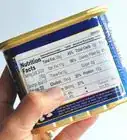
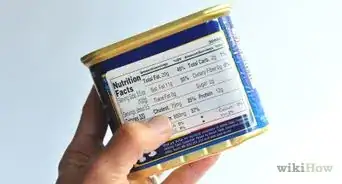
1Read the nutritional facts label. Reading the nutritional facts label will give you information that you need to make an informed decision when selecting your frozen meal.[3] The nutritional facts label contains relevant nutrition information, such as the fat and sodium content, vitamins, and serving size of your meal. Make sure to read recommended daily values and assess if the meal you plan on buying will give you the nutrition and energy you need for the day.
-
2Choose a meal low in sodium and saturated fat. Too much sodium or saturated fat can be tough on your heart and blood vessels and can lead to things like high blood pressure, heart attack, stroke, and heart disease.[6] Avoid frozen meals that have more than 700 mg of sodium or more than 4 grams (0.14 oz) of saturated fat per serving.[7] [8]
- Foods high in potassium promote good cardiovascular health and can combat the effects of sodium and saturated fat.[9]
- Meals that are high in saturated fat and sodium include fried chicken, Hungry Man Frozen Meals, and Stouffer’s Cheese Ravioli.
Advertisement -
3Determine the number of calories in each meal. Companies are required to list the number of calories which make frozen foods good for those that have diets that require them to calculate their daily caloric intake.[10] While it may be tempting to go for the meal with the least amount of calories, it's advisable to stay away from meals that have too little calories. Choose meals between 350 and 500 calories per serving, so that you can get the nutrition you need while maintaining your diet.
-
4Select well-balanced meals. Purchase a frozen meal that has a variety of different foods to maintain a healthy and balanced diet. Things like whole grains, lean proteins, fruits, and vegetables are the healthiest options to go for.[13] Eating a healthy and balanced diet stabilizes your weight and keeps you mentally and physically happy.
- Eat five portions of fruit and vegetables per day to get necessary nutrients into your system.
- Women should have 45 g of protein per day while men should have 55.5 g per day.[14]
- Males should have 38 g of fiber per day and women should have 25 g on average.[15]
- If you are trying to lose weight, having the right amount of protein is vital, as it helps you feel satisfied after a meal.[16]
-
5Read the ingredients list. The ingredients list will key you into how natural the frozen meal is. Choose frozen foods with a short list of ingredients and preservatives.[17] If you see too many artificial ingredients or flavors, consider choosing a different brand or meal.
- Companies who utilize sustainable practices have fresher and healthier foods because they incorporate things like grass-fed beef and freshly caught fish in their meals.[18]
- Some of the unhealthiest artificial ingredients found in many frozen meals include textured soy protein concentrate, carrageenan, maltodextrin, disodium inosinate, modified cornstarch, and disodium guanylate.[19]
- Remember to not rely on what it says on the front of the package. The details of what you need to know are always on the Nutrition Facts panel.[20]
-
6Skip dinners that are fried or have creamy sauces and gravy. Fried meals or meals with a creamy sauce or gravy are typically high in fat and sodium. Replace fried food with grilled or steamed variations. Certain frozen foods, like french fries, can be baked instead of fried to cut down on saturated fat.[21]
- Meals that contain a creamy sauce like chicken pot pie can contain up to 14 grams of fat.[22]
-
7Eat a piece of fruit instead of dessert. Some frozen meals will come with a dessert. Instead of eating the dessert, replace it with a piece of fruit. Frozen meal desserts are often high in sodium and high fructose corn syrup while fruit is higher in fiber and has fewer calories.
- Healthy fruits include cantaloupe, strawberries, apples, and bananas.[23]
Advertisement


Part 2
Part 2 of 2:Basing Meals on Your Preferences
-
1Consider any health and dietary restrictions you have. Consider any health problems that you've had in the past or have currently and try to develop your diet around what is good for you. For instance, if you have heart disease, you need to limit the amount of sodium and fat that you have each day and concentrate on eating a variety of vegetables, fruits, whole grains.[24]
- The American Diabetes Association says that keeping a couple of healthy frozen meals in the freezer is a good idea for people with diabetes.
- Examples of healthy frozen meals for those with diabetes include turkey burgers, butternut squash ravioli, and Weight Watcher’s spaghetti with meat sauce.
-
2Choose foods that you enjoy. There are frozen alternatives for many different kinds of food. Choose the frozen equivalent of some of your favorite types of food. Try to find a meal that's both nutritional and tasty.
- For example, if you enjoy Asian cuisine, consider going for the Chinese or Japanese frozen meals that are available, just make sure that you choose low sodium options.
- If you hate a certain ingredient, make sure that it's not in the frozen meal that you want to buy.
-
3Ensure that you're shopping within your budget. Even though some frozen foods can be cheaper per pound than their fresh counterparts, you still need to ensure that the frozen meals that you're getting are within your budget. Compare the different brands of frozen meals and calculate how much it will cost on a weekly and monthly basis. Choose the healthy choices that you can afford.
-
4Compare different brands. Even though two frozen meals may be the same food, it doesn't mean that they taste the same. Try a variety of different types of frozen meals and different brands to see which ones you like the best. Make sure to stay within the proper nutritional value so that you can maintain healthy while eating something that you can enjoy.
- Some of the healthiest frozen meal brands include, Earth’s Best, Plum Organics, and Kidfresh.[25]
Advertisement


Community Q&A
-
QuestionAre frozen meals bad for you?
 Theresa Fitzpatrick, LMSWTheresa Fitzpatrick is a Certified Holistic Health Coach and the Owner of Mind Your Body Holistic Coaching. She specializes in helping women lose weight and gain confidence. Theresa holds a Master of Social Work from Fordham University and received her Transformational Coach Certification from The Health Coach Institute.
Certified Holistic Health CoachNot necessarily! Not all frozen meals are the same, and today's frozen food section offers way more options than your typical "TV dinner." Look for frozen meals with healthy swaps, such as cauliflower rice instead of white rice, or frozen pizza made with cauliflower crust instead of traditional crust. -
QuestionHow much sodium is too much for a frozen meal?Theresa Fitzpatrick, LMSWTheresa Fitzpatrick is a Certified Holistic Health Coach and the Owner of Mind Your Body Holistic Coaching. She specializes in helping women lose weight and gain confidence. Theresa holds a Master of Social Work from Fordham University and received her Transformational Coach Certification from The Health Coach Institute.
Certified Holistic Health CoachAny frozen meal with more than 700 mg of sodium is too much, especially if your daily recommendation is 2300 mg.


References
- ↑ Theresa Fitzpatrick, LMSW. Certified Holistic Health Coach. Expert Interview. 23 August 2021.
- ↑ Theresa Fitzpatrick, LMSW. Certified Holistic Health Coach. Expert Interview. 23 August 2021.
- ↑ Theresa Fitzpatrick, LMSW. Certified Holistic Health Coach. Expert Interview. 23 August 2021.
- ↑ http://www.corporatewellnessmagazine.com/others/ready-steady-go-the-pros-and-cons-of-prepackaged-meals/
- ↑ http://www.fda.gov/Food/IngredientsPackagingLabeling/LabelingNutrition/ucm274593.htm
- ↑ https://www.hsph.harvard.edu/nutritionsource/salt-and-sodium/sodium-health-risks-and-disease/
- ↑ http://hsc.usf.edu/NR/rdonlyres/D5168BE9-98A7-4809-97E8-3EAA23A7006A/42725/HowtoChooseFrozenDinners.pdf
- ↑ Theresa Fitzpatrick, LMSW. Certified Holistic Health Coach. Expert Interview. 23 August 2021.
- ↑ http://www.health.com/health/gallery/0,,20721159,00.html
- ↑ http://edis.ifas.ufl.edu/pdffiles/fs/fs18600.pdf
- ↑ http://www.todaysdietitian.com/newarchives/100112p36.shtml
- ↑ http://www.webmd.com/diet/features/best-frozen-dinners#2
- ↑ http://edis.ifas.ufl.edu/pdffiles/fs/fs18600.pdf
- ↑ Theresa Fitzpatrick, LMSW. Certified Holistic Health Coach. Expert Interview. 23 August 2021.
- ↑ http://www.newhealthguide.org/Why-Is-It-Important-To-Have-A-Balanced-Diet.html
- ↑ Theresa Fitzpatrick, LMSW. Certified Holistic Health Coach. Expert Interview. 23 August 2021.
- ↑ http://www.todaysdietitian.com/newarchives/100112p36.shtml
- ↑ http://www.todaysdietitian.com/newarchives/100112p36.shtml
- ↑ https://saveourbones.com/12-dangerous-ingredients/
- ↑ Theresa Fitzpatrick, LMSW. Certified Holistic Health Coach. Expert Interview. 23 August 2021.
- ↑ https://www.joslin.org/info/8_replacements_for_high_fat_foods.html
- ↑ http://www.thedailybeast.com/galleries/2011/09/26/unhealthiest-frozen-meals-from-stouffer-s-to-marie-callender-s.html
- ↑ http://www.heart.org/HEARTORG/HealthyLiving/HealthyEating/Nutrition/Eat-More-Fruits-and-Vegetables_UCM_320237_Article.jsp#.WBYchfkrLcc
- ↑ http://www.webmd.com/heart-disease/guide/heart-disease-eat-right
- ↑ http://www.todaysdietitian.com/newarchives/100112p36.shtml
About This Article