This article was written by Darlene Antonelli, MA. Darlene Antonelli is a Technology Writer and Editor for wikiHow. Darlene has experience teaching college courses, writing technology-related articles, and working hands-on in the technology field. She earned an MA in Writing from Rowan University in 2012 and wrote her thesis on online communities and the personalities curated in such communities.
This article has been viewed 1,576 times.
Sometimes, the default boot order for your computer prioritizes removable drives before your hard drive, but that's not always a setting you'll want to keep. This wikiHow will teach you how to change the boot order in Windows using your BIOS (Basic Input/Output Subsystem).
Steps
-
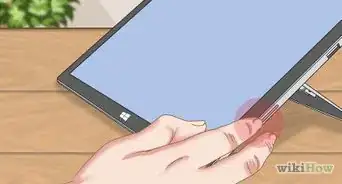
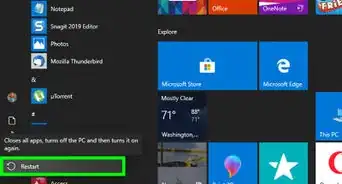
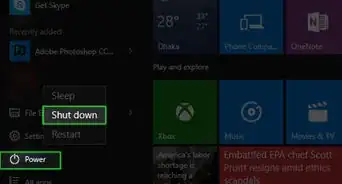
1Restart your computer. Press the Windows key on your keyboard, click the power icon, and press Restart.
- Make sure all your running programs are closed so the computer can shut down.
-
2Press the startup key when you see the startup screen. Most commonly, you'll need to press the F1 or F2 key, but that may vary depending on your computer's manufacturer, like Dell, Asus, or HP.
- You'll see the F1 - F12 keys at the top of your keyboard.
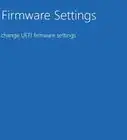
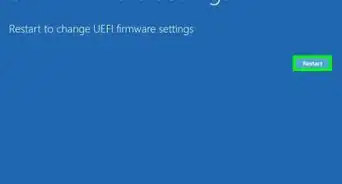
- If your computer starts up too quickly for you to press the key, you can access the BIOS boot menu by going to Settings > Update & security > Recovery > Restart Now (Advanced startup) > Troubleshoot > Advanced options > UEFI Firmware Settings (or Startup Settings) > Restart. [1]
-
3Select Enter Setup (if prompted). Some computers, based on manufacturers, will get a screen prompt after the startup key is pressed.
- Many of these systems don't use mouse input, so you'll need to use your keyboard arrows and the Enter key to navigate through the menus.
-
4Navigate to the Boot tab. Use the arrow keys on your keyboard to navigate to the right.
- You'll see a legend at the bottom of the screen that tells you which keys do what.
-
5Press + or - to move items on the boot screen. You'll see a list of what is given priority when you're booting. For instance, if CD-ROM Drive is listed first, it is used first when booting; so if you have a CD inserted, your computer will attempt to boot from the CD.
- You can reorder the entire menu as much as you'd like.
- Use F9 if you want to set these back to default settings.
-
6Press F10. This is the keypress to save and exit the BIOS menu. You'll need to select Yes once before this process is finished.[2]




References
About This Article

1. Restart your computer.
2. Press the startup key when you see the startup screen.
3. Select Enter Setup (if prompted).
4. Navigate to the Boot tab.
5. Press + or - to move items on the boot screen.
6. Press F10.