This article was co-authored by wikiHow staff writer, Hannah Madden. Hannah Madden is a writer, editor, and artist currently living in Portland, Oregon. In 2018, she graduated from Portland State University with a B.S. in Environmental Studies. Hannah enjoys writing articles about conservation, sustainability, and eco-friendly products. When she isn’t writing, you can find Hannah working on hand embroidery projects and listening to music.
This article has been viewed 1,479 times.
Learn more...
Being constantly dependent on your partner could be described as "clingy." While relying on your partner isn't a bad thing, being overly needy tends to alienate people eventually. It's good to know that being clingy isn't a relationship death sentence; by taking a step back and assessing what it has already done, you are able to make your relationship healthy and happy.
Steps
Question 1
Question 1 of 6:Why are clingy relationships bad?
-
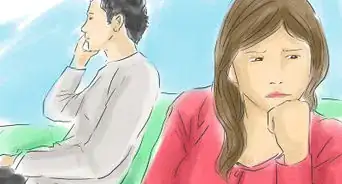
1They can make your partner feel stifled. Wanting to be around your partner all the time can make them feel like they don’t have enough personal or alone time. It’s totally okay to want to spend time with your partner, but it’s also important to make sure you both spend time on your own. If you don’t, your partner could start resenting you over time.[1]
- This is why communication is so important. If your partner is feeling stifled, they can tell you about it, and you can both come up with a plan to improve your relationship.

Question 2
Question 2 of 6:Why is being clingy unattractive?
-
1Generally, people are attracted to independent people. Clingy people are usually seen as too dependent on their partners, which can sometimes make people feel like they’re being a caretaker instead of in an equal relationship. Thankfully, being clingy is something you can work on so that your partner feels more like a significant other.[2]

Question 3
Question 3 of 6:How do you know if you’re too clingy?
-
1You feel anxious or jealous when you’re not around your partner. Usually, this comes from a place of low self-esteem. We all feel a little jealous or anxious sometimes, but in clingy relationships, you might feel like your partner could leave you at any moment if you’re not right by their side. This can cause a lot of stress on your relationship, and it might make your partner feel like you don’t trust them.[3]
- You might text or call your partner repeatedly when you’re not with them, just to make sure you know where they are and who they’re with.
- You might also stalk their social media accounts to figure out what they’re doing.
-
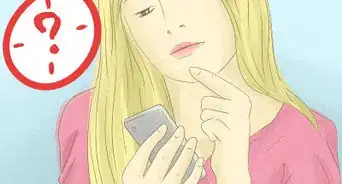
2You need constant reassurance and attention. People who are clingy often ask their partners if they still love (or like) them. You might notice yourself doing this often, especially if you’re feeling anxious or stressed. It’s normal to ask your partner for reassurance every once in a while, but in clingy relationships, it might happen more often than usual.[4]
- You might also need constant physical touch, like hugs, kisses, or hand holding.


Question 4
Question 4 of 6:How do you stop being clingy?
-
1Boost your self-esteem and your confidence. Anytime you catch yourself thinking a negative thought, challenge it! Ask yourself, “Is that really true? Or is my brain just telling me that?” Then, counter it with a positive one. Over time, you’ll improve your self-esteem and gain the confidence to be your own person.[5]
- For instance, if you think, “I’m not good enough for my partner,” ask yourself: “Is that true? Didn’t my partner just tell me they loved me this morning?” Then, counter it with: “My partner loves me for who I am.”
-
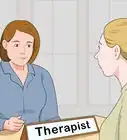
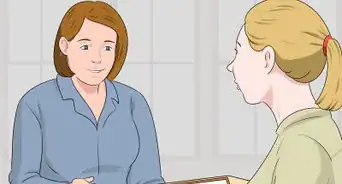
2Consider getting help from a mental health professional. You can either make an appointment with an individual therapist for yourself or a couple’s counselor for you and your partner. A mental health professional can help you figure out coping strategies and work on improving your confidence. And, if you’re still not sure why you tend to be clingy in relationships, they can dig down deep and uncover the underlying problem so that you can address it.[6]
- Experts note that working through your past trauma is the best way to stop being clingy and improve your relationship.


Question 5
Question 5 of 6:How do you fix a relationship after being too clingy?
-
1Talk to your partner about your feelings. Let your partner know that you sometimes feel stressed or anxious when they’re not around. Try to explain the reasons why (maybe you feel self-conscious or you had a bad past relationship). Open up this line of communication so that you and your partner can talk freely about your clinginess and where it comes from.[7]
- Sit your partner down and say something like, “I wanted to explain why I sometimes seem a little needy. I think it comes from when I was cheated on in the past—I know you’re not my ex, but I sometimes get scared that you’re going to find someone better than me.”
-
2Spell out your expectations of the relationship. Maybe you want your partner to text you all day, but they only want to text you in the mornings and the evenings. Or, maybe you want to spend 7 days a week with them, while they’d like to dedicate 4 to you and 3 for alone time. Compromising about what you both want will help keep your relationship on track and foster a better and smoother understanding.[8]


Question 6
Question 6 of 6:What causes clinginess in a relationship?
-
1Clinginess can sometimes stem from a lack of self-esteem or confidence. If you feel like you aren’t “enough” for your partner, you might cling to them so that you don’t lose them. This doesn’t mean you’re a bad person, it just means that you might have a bit of work to do on your own self-image before you can make your relationship really healthy.[9]
-
2It can also come from bad past relationships. If you were dating someone in the past who pushed you away or cheated on you, it’s normal to cling to your next partner. Past relationships can color the way we see our current partners, even if they’re nothing alike.[10]
-
3Clinginess could stem from an unstable childhood. Experts note that people who had unstable or dysfunctional families are more likely to cling to their partners. This is because you probably crave stability—if younger you couldn’t have it, then older you might be worried that it could be ripped away at any moment. Fortunately, this is something you can work through on your own or in therapy.[11]












References
- ↑ https://www.psychologytoday.com/us/blog/fulfillment-any-age/201209/why-clingy-partners-cling
- ↑ https://www.psychologytoday.com/us/blog/fulfillment-any-age/201209/why-clingy-partners-cling
- ↑ https://www.helpguide.org/articles/relationships-communication/attachment-and-adult-relationships.htm
- ↑ https://www.helpguide.org/articles/relationships-communication/attachment-and-adult-relationships.htm
- ↑ https://www.psychologytoday.com/us/blog/beauty-sick/201903/four-ways-turn-negative-body-thoughts-around
- ↑ https://www.helpguide.org/articles/relationships-communication/attachment-and-adult-relationships.htm
- ↑ https://www.psychologytoday.com/us/blog/fulfillment-any-age/201209/why-clingy-partners-cling
- ↑ https://www.relate.org.uk/relationship-help/help-relationships/arguing-and-conflict/my-partner-too-clingy
- ↑ https://www.helpguide.org/articles/relationships-communication/attachment-and-adult-relationships.htm
About This Article