This article was co-authored by wikiHow Staff. Our trained team of editors and researchers validate articles for accuracy and comprehensiveness. wikiHow's Content Management Team carefully monitors the work from our editorial staff to ensure that each article is backed by trusted research and meets our high quality standards.
There are 14 references cited in this article, which can be found at the bottom of the page.
Learn more...
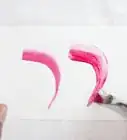
If you’ve ever seen a painting of a beautiful sunset or a gorgeous landscape with a richly colored sky, you may have wondered just how in the world the artist was able to do it. The truth is, it isn’t a secret—it’s blending! It’s also not as difficult as you may think. With the right supplies and techniques, you can easily blend your paints. To help you out, we’ve answered a few of the most common questions that folks have about how to do it.
Steps
Question 1
Question 1 of 8:What is the best paint for blending?
-
1Acrylic paint with a slow drying medium is the best to use on a canvas. Acrylic paint is commonly used for blending on canvas, but it can dry quickly. Choose either a specially formulated slow-drying acrylic paint or mix your acrylic paint with a 25% ratio of a slow drying medium such as fluid retarder or an open medium.[1]
- You can find slow-drying acrylic paint as well as slow drying mediums at your local paint or art supply store. They’re also available for purchase online.
- Blending oil paint is a much more difficult and time-consuming process because of how long it takes for the paint to dry.

Question 2
Question 2 of 8:How do you fade paint from one color to another?
-
1Use blending to create smooth transitions. Blending is a painting technique that involves slightly mixing 2 different paint colors to create the effect of one color fading into another. You can blend paints on a canvas, on a wall, or even on a car.[2]
- Color matching is when you try to match 2 colors as closely as you can, which is different than blending, which uses 2 different colors.

Question 3
Question 3 of 8:How do you blend acrylic paint smoothly?
-
1Use a soft-bristled brush to create a seamless blend. Stiff paint brushes can create lines and streaks in your brush stroke. Go with a paintbrush that uses softer bristles but is firm enough to still hold your paint without bending or flopping over so you can create smooth and even strokes when you blend.[3]
- Filbert brushes, which are flat and oval-shaped, and fan brushes, which are flat and spread out, are great for blending.[4]
-
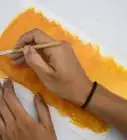
2Apply 1 color quickly before it dries. If you’re painting a canvas, work from one edge to the other. Use consistent back and forth strokes to evenly distribute the paint and remove streaks and lines. Add more paint as needed and keep moving the brush from left to right when you apply it.[5]
- You can move the brush up and down if you like, just choose a direction and stay consistent so the paint goes on evenly.
-
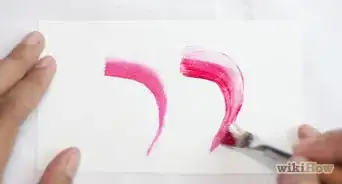
3Apply another color along the edges while the paint is still wet. Add the new paint to the edge of the paint you already applied. Keep moving your brush back and forth in the same direction you applied the other paint to create a smooth transition from one color to another. Use the same technique for any additional colors you want to add and blend. Create a gradual transition by applying lighter and lighter colors or darker and darker colors.[6]
- Try to work quickly so the paint doesn’t dry. Dry acrylic paint can’t be reworked or blended.


Question 4
Question 4 of 8:Can you blend acrylic paint with water?
-
1No, using water can create streaks and make the paint transparent. It can be tempting to try to add more moisture by wetting the canvas or surface and dipping your brush into water, but it’s better to use wet paint with the right consistency. Using water can thin out your paint and make it look clear and soaking your brush could lead to drips, which can quickly ruin a painting or paint job.[7]

Question 5
Question 5 of 8:How do you blend acrylic paint after it’s dried?
-
1Use an unlocking formula on specially designed acrylic paints. Once standard acrylic paint is dry, you can’t rework it and blend it. However, if you have an acrylic paint that’s specially formulated to work with an unlocking formula medium, spray the medium over the surface of the dried paint and then use a soft-bristled brush to blend the reactivated paint using long brush strokes.[8]

Question 6
Question 6 of 8:How do you blend watercolor paint?
-
1Choose 225 gsm watercolor paper. The most important part of blending watercolor paint is using thick paper designed for watercolors. Go with paper that’s at least 225 gsm (also known as grams per square meter) so the paint won’t soak up before you’ve had a chance to blend it with other colors.[9]
- You can find a pad of thick watercolor paper at your local art supply store. You can also order a pad online.
-
2Spread clear water over the paper and diffuse your watercolor paint into it. Take your watercolor paintbrush, dip it into clear water, and apply a thin layer over the area of the paper you want to paint. Then, dip your brush into watercolor paint and add it to the wet area. Quickly dip your brush into another watercolor paint color and add it to the wet area to diffuse the 2 colors and blend them together before the paint dries.[10]


Question 7
Question 7 of 8:How do you blend touch-up paint on walls?
-
1Feather out the paint with strokes that extend beyond the touch-up area. Choose a paint color that matches the color of your walls. Apply it to the area you want to touch-up with a paintbrush, but instead of just filling in the area, extend your brush strokes slightly past the area to create a smooth transition. If you’re using a roller, sweep out from the center of the touch-up area and slowly lift away from the wall so the paint looks uniform and consistent.[11]

Question 8
Question 8 of 8:How do you blend touch-up paint on a car?
-
1Wet sand the touch-up paint with 2000-grit sandpaper. Apply your touch-up paint using a paint pen that matches the color of your car. Once it’s dry, take a sheet of ultra-fine sandpaper and gently sand the touch-up area using circular motions that go in 1 direction. Continue sanding until you can no longer feel the paint on the surface of your car.[12]
- The touch-up paint will still be there, it just needs to be sanded smooth. You’ll be able to see the spot where you added the paint.
- Avoid using rougher sandpaper or you could damage your car’s finish.
-
2Apply rubbing compound into the area without letting it dry. Rubbing compound is an abrasive paste that’s designed to restore the paint on cars. Apply a tiny amount to a damp cloth and rub it into the touch-up area using circular motions. After you apply the compound, use a dry cloth to immediately wipe it away.[13]
- Don’t let the compound dry or sit on your car too long or it’ll damage the paint.
-
3Use a cloth pad to apply 2-3 coats of car polish. Take a soft cloth pad and add a dime-sized amount of car polish to the center. Spread the polish over the touch-up area and rub it in using circular motions. Then, wipe away the excess with a clean cloth and apply another coat. Add up to 4 coats to fully blend the paint until it’s shiny and no longer noticeable.[14]







References
- ↑ https://finearttutorials.com/guide/how-to-blend-acrylic-paint/
- ↑ https://drawpaintacademy.com/blending/
- ↑ https://youtu.be/ZONVHAftzFg?t=166
- ↑ https://www.art-is-fun.com/artist-paint-brushes
- ↑ https://youtu.be/DwEgbzslecs?t=36
- ↑ https://www.artistsnetwork.com/art-mediums/acrylic/how-to-blend-acrylic-like-a-boss/
- ↑ https://youtu.be/ZONVHAftzFg?t=37
- ↑ https://youtu.be/N0RFSXApNiw?t=297
- ↑ https://youtu.be/ZR-8P8FrP0U?t=39
About This Article