Hand Rotary Edger
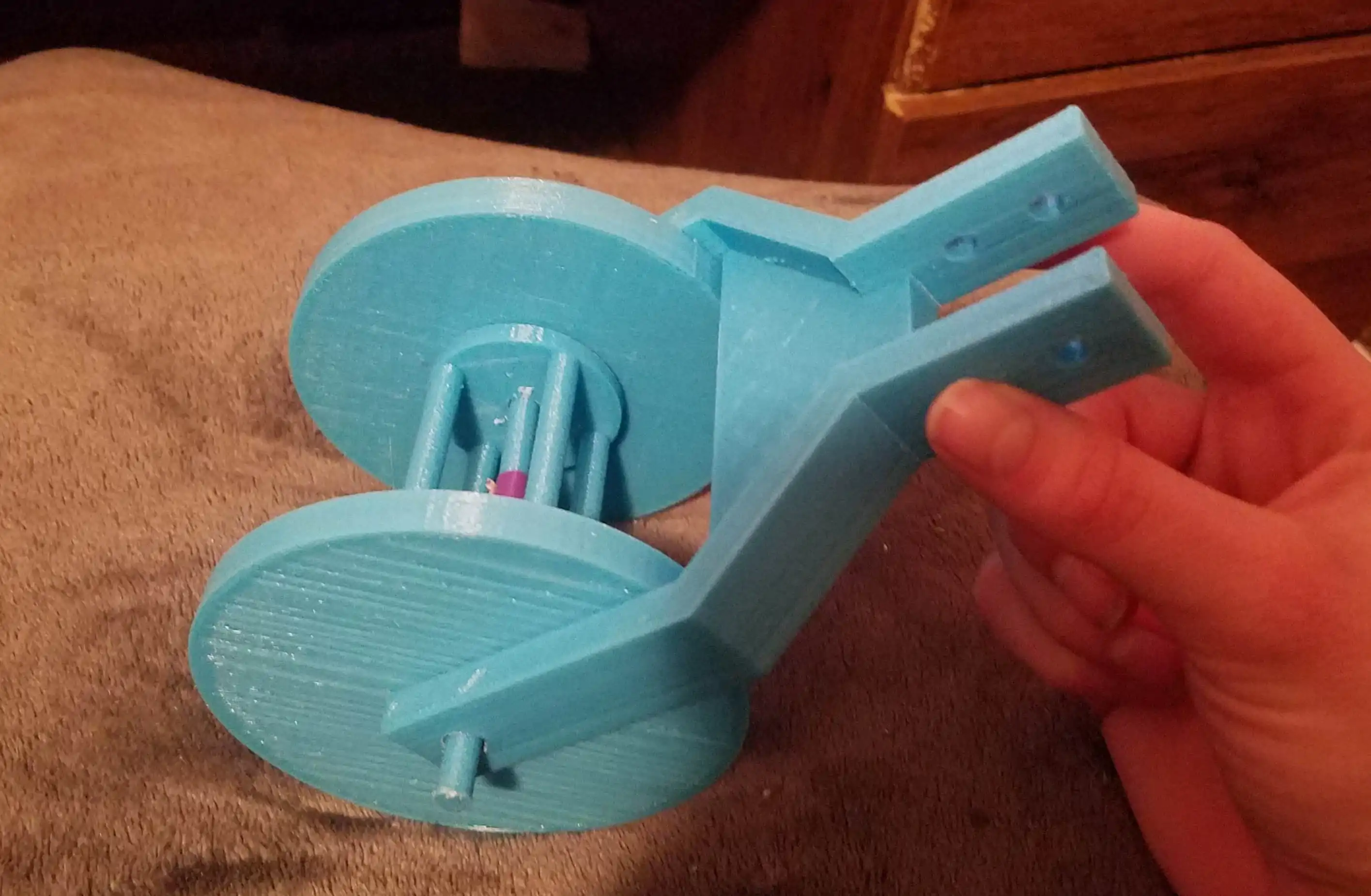
About this device
| Keywords | 3D printing, rotary edger, hand tools, gardening, weeding |
|---|---|
| Uses | agriculture, industry, hobbyism |
| Authors | Kennedy Oparka |
| Status | prototype |
| Made? | Yes |
| Replicated? | No |
| Designed in | United States |
| Affiliations |
MTU MOST |
| Materials | Plastic |
| Cost | USD $ 16.21 |
| SDGs | SDG08 Decent work and economic growth |
| Instructions data | |
| Manufacturing files | https://www.youmagine.com/designs/rotary-edger |
| Manifest data | |
| Language | English |
| Updated | 2020-06-04 |
| Author | Kathy Nativi |
| Author affiliation | Appropedia |
| Author email | info@appropedia.org |
Title of the device or system
Project developed by Kennedy Oparka
 |
This Open Source Appropriate Technology has been designed but not yet tested — use at your own risk. |
|
This Open Source Appropriate Technology has been prototyped. |
Abstract
- This OSAT project was a request and I was unable to find any attempts of a rotary edger in the current database. This model requires additional bolts and a handle of the user's choosing.
Printed Assembly
Bill of Materials
| Quantity | Material | Source | Cost ($) | Total ($) |
|---|---|---|---|---|
| 1 | Rotary Blade | Lowes | 10.00 | 10.00 |
| 1 | 5/8" bolt L. 4 1/2" | Mcmaster | 2.82 | 2.82 |
| 1 | 5/8" Nut | Mcmaster | 0.32 | 0.32 |
| 2 | 1/4" bolt L. 1 3/4" | Mcmaster | 0.23 | 0.46 |
| 2 | 1/4" Nut | Mcmaster | 0.05 | 0.10 |
| Total Cost | $13.70 | |||
Print Parts List
- Handle x1
- Wheel x2
- Spacer x1
- Spacer Top x1
Tools needed for fabrication of the OSAT
- MOST Delta RepRap or similar RepRap 3-D printer
- Adjustable Wrench
- OSAT option Pocket Wrench by Austin Ballou
Skills and Knowledge Necessary to Make the OSAT
- Printing and slicing setting
- Temp: 200deg
- Infill: 20%
- Grid
Technical Specifications and Assembly Instructions
- Provide directions for print/assembly - be detailed enough in your “how to” to ensure that someone could construct the device from your description. Consider the elegance of IKEA like instructions.
- Print Time Estimate: 4 hours
- Assembly Time: 15 min
- Assembly Instructions
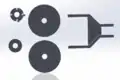 Printed parts for assembly
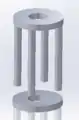 Assembly of the spacer is requires, glue the stakes to the spacer_top part
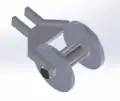 line the holes of each part up and feed the 5/8" bolt through, securing a nut on the other side
Common Problems and Solutions
- When assembling the spacer, be sure to line the holes up, using the bolt as a fixture makes the step hassle free
Cost savings
- Estimated Cost: $13.70+$2.51 = 16.21
- Equivlent Item: Dual Wheel Rotary Edger $45.95
- $29.74 savings --> 65% savings
Benefited Internet Communities
References
- The sources of information (e.g. engineering handbooks, journal articles, government documents, webpages, books, magazine articles etc.). References should use the <ref> </ref> and <references/> tags and can be in any format but should include all the information necessary for someone else to find the same information you did. For example: [1]
- ↑ web page: Department of Energy (DOE) Landscaping and Energy Efficiency, DOE/GO-10095 (1995) Available: http://www.eren.doe.gov/erec/factsheets/landscape.html
Based on the developmental needs addressed (e.g. food, heat, electricity, clean water, health care, etc.) be sure to label your device in the proper categories e.g. use [[Category:Water]]. Be sure to categorize your device so that it will be easy to find – for example “Low voltage connection basics” is categorized in [[Category:How tos]] [[Category:Electricity]] [[Category:Electric lighting]].
This article is issued from Appropedia. The text is licensed under Creative Commons - Attribution - Sharealike. Additional terms may apply for the media files.