This article was co-authored by Elvina Lui, MFT and by wikiHow staff writer, Amy Bobinger. Elvina Lui is a Licensed Marriage and Family Therapist specializing in relationship counseling based in the San Francisco Bay Area. Elvina received her Masters in Counseling from Western Seminary in 2007 and trained under the Asian Family Institute in San Francisco and the New Life Community Services in Santa Cruz. She has over 13 years of counseling experience and is trained in the harm reduction model.
There are 10 references cited in this article, which can be found at the bottom of the page.
This article has been viewed 11,248 times.
When you're in love with someone, it's normal to want everyone around you to love that person, too—especially the people closest to you. Unfortunately, if it turns out that your parents don't like your partner, it can leave you feeling frustrated and like you're stuck in the middle. Dealing with the situation won't necessarily be easy, but if you can keep a clear head and talk openly with everyone involved, it will be easier to figure out the right thing to do.
Steps
Method 1
Method 1 of 11:Be honest about your relationship.
-
1Let go of the temptation to try to keep things a secret. If you're serious about being with this person, eventually it's going to come out. If you've been lying about being together, it's going to cause a lot more drama and upset when that happens. Ultimately, that could make it a lot harder to smooth things over between your partner and your parents.[1] [2]
- Being secretive about your relationship could also make your partner feel like you're ashamed of them, which could cause problems between the two of you.
Advertisement

Method 2
Method 2 of 11:Have a conversation with your parents about their concerns.
-
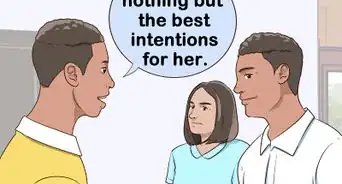
1Ask them to explain what it is they don't like. It's best to have this conversation without your partner around, so find a time where it's just you and your parents. Then, ask them to give you a few examples of why they don't like your partner.[3]
- Keep an open mind about what they say. You might be surprised at some of the insight they have to offer.
- Even if you don't agree with what they're saying, listen without interrupting. Your parents will be more likely to hear what you have to say if you let them express what they're feeling.

Method 3
Method 3 of 11:Avoid criticizing your parents for their beliefs.
-
1Try to keep your composure, no matter what they say. It can be really hard to listen to your parents if they say something you disagree with, especially if they're sharing old-fashioned biases that affect you directly. However, attacking them isn't likely to help them come around. Instead, reassure them that you still love them, but that you believe differently than they do.[4]Advertisement

Method 4
Method 4 of 11:Explain what you like about your partner.
-
1Give specific examples of why they're a good match for you. In some cases, your parents might disapprove of your partner because they just haven't had a chance to get to know them very well. Tell them how your partner makes you feel. It's helpful to include a few examples of why you think you're a good fit for each other, or you could tell them about some times you felt especially cared for. This might help your parents feel more at ease about the relationship.[5]
- For example, you might tell the story of a time your partner cheered you up when you were down, talk about a cute date you went on, or share some values the two of you have in common.
- Try to keep your tone upbeat and positive, even if you feel upset about some of the things they said. If you're coming across as defensive or angry, they might not be able to really appreciate the good things about your partner.
- During this part of the conversation, let your parents know you're happy to answer any questions they have about your partner, as well. Don't be afraid to draw the line if you don't want to share personal details about your relationship, though!

Method 5
Method 5 of 11:Find out what would make them feel better.
-
1Ask your parents what your partner can do to earn their trust. Encourage your parents to share whether there's anything your partner could do to change how they feel. Chances are, they'll say that they just want to know that you'll be happy. If that's the case, assure them that your partner truly loves you, and let them know you'll be honest with them about how your relationship is going.[6]
- If your parents share something specific your partner might do, like coming with you to more family functions, talk to your partner about it later and ask if it's something they'd be willing to do. Just be sure it's reasonable—it's not fair for your parents to ask your partner to do anything drastic, like convert their faith or change careers.
Advertisement

Method 6
-
1Think back on their reasoning after the conversation has ended. When you're in love, it can sometimes be hard to see the faults in the person you care about. Give some real thought to whether your parents are picking up on some negative traits in your partner that you haven't noticed yet.[7] [8]
- If the issues that your parents bring up are mostly about how you're treated—like they feel that your partner puts you down, ignores your opinion, or tries to control you—it's worth giving some serious thought to whether they might be right.
- If your parents' issues are mostly rooted in bias, like they disapprove of interracial, multi-faith, or same-sex relationships in general, they may never approve of who you date. In that case, just focus on choosing the person who's right for you.

Method 7
Method 7 of 11:Set boundaries that help everyone feel respected.
-
1Be clear about what is and isn't acceptable. Talk to your partner about whether there's anything your parents do that really bothers them. Ask your parents the same thing about your partner. Then, have a series of conversations where you ask everyone to agree to certain ground rules so you can all get along when you're together.[9]
- For instance, you might ask your parents to speak respectfully about your partner, whether they're around or not.
- You might also ask your partner not to bring up touchy subjects that will upset your parents, like politics or religion.
- If someone starts to cross one of the boundaries you've all agreed to, take a break to clear the air. For instance, you might ask your partner to join you in another room or go outside for a walk.
Advertisement

Method 8
Method 8 of 11:Avoid taking a side in arguments.
-
1Let your parents and partner know you don't want to be in the middle. It can be really hard to stay out of it when things get heated. However, it's not fair to you to constantly have to calm down disagreements. Instead, focus on helping everyone compromise with each other—or at least agree to disagree.[10]
- If someone pushes you to take a side, gently remind them that both your parents and your partner are really important to you, and you're doing your best to create a family where everyone can be satisfied.[11]

Method 9
Method 9 of 11:Give your parents some time
-
1Let them come around on their own. In some cases, it can take a long time for parents to adjust their expectations for their children. In the case of parents whose children have recently come out, for instance, it sometimes takes years for them to come to terms with the idea. However, many parents do eventually adjust, so try to be patient. [12]
- If you need to, it's okay to take some space until your parents are more accepting of your partner.
Advertisement

Method 10
Method 10 of 11:Consider seeing your parents alone.
-
1Keep everyone separate if they can't get along together. If you're able to be around your parents just fine as long as your partner isn't there, it might be worth skipping the family gatherings to keep the peace. Talk to your partner about what a fair amount of time is for you to see your family—try to arrange it for times your partner is doing something else, if possible, so they aren't just sitting at home alone.[13]
- For instance, if your partner meets up with friends on Thursdays for trivia, that might be a good night for you to plan dinner with your mom.
- Remember, it's not fair for your partner to ask that you never see your family—the decision of whether to have a relationship with them should be solely up to you.

Method 11
Method 11 of 11:Follow your heart if your parents don't come around.
-
1Be willing to make a hard choice between your parents and your partner. Unfortunately, in some cases, there's nothing you can do to help your parents and your partner get along. There's no single right answer for what to do in that situation—it really comes down to how you feel about your partner, how you feel about your parents, and what their specific concerns are. Take some time to weigh your decision carefully, and don't let anyone else make the choice for you.[14]Advertisement

Expert Q&A
-
QuestionWhat if my mom hate my boyfriend?
 Elvina Lui, MFTElvina Lui is a Licensed Marriage and Family Therapist specializing in relationship counseling based in the San Francisco Bay Area. Elvina received her Masters in Counseling from Western Seminary in 2007 and trained under the Asian Family Institute in San Francisco and the New Life Community Services in Santa Cruz. She has over 13 years of counseling experience and is trained in the harm reduction model.
Marriage & Family TherapistIf your parents say that they'll never accept your partner, let them know that you're sad they feel that way. Express that you still love them and you hope they'll change their minds, then end the conversation. As hard as it is, try to remember that your parents probably just want what's best for you. However, that doesn't mean that you have to live your life according to their beliefs. -
QuestionWhat if my parents say they won't accept my boyfriend?Elvina Lui, MFTElvina Lui is a Licensed Marriage and Family Therapist specializing in relationship counseling based in the San Francisco Bay Area. Elvina received her Masters in Counseling from Western Seminary in 2007 and trained under the Asian Family Institute in San Francisco and the New Life Community Services in Santa Cruz. She has over 13 years of counseling experience and is trained in the harm reduction model.
Marriage & Family TherapistTell them that you know that they disapprove because they care and they want you to protect you. Ask them to trust you, and tell them that you'll keep their warning in mind. Don't debate them or end the relationship—show them that you're calm and rational, and chances are they'll come around.




-Step-3-Version-2.webp)








References
- ↑ https://psychcentral.com/lib/when-your-parents-disapprove-of-your-partner#1
- ↑ https://www.thehopeline.com/my-parents-dont-approve-of-who-im-dating/
- ↑ https://verilymag.com/2017/03/my-parents-hate-my-fiance
- ↑ https://psychcentral.com/lib/when-your-parents-disapprove-of-your-partner#1
- ↑ https://lovemattersafrica.com/marriage/thinking-about-marriage/family-disagreements
- ↑ https://www.thehopeline.com/my-parents-dont-approve-of-who-im-dating/
- ↑ Elvina Lui, MFT. Marriage & Family Therapist. Expert Interview. 15 March 2019.
- ↑ https://www.psychologytoday.com/us/blog/lifetime-connections/201812/how-cope-when-your-parents-and-partner-dont-get-along
- ↑ https://www.psychologytoday.com/us/blog/lifetime-connections/201812/how-cope-when-your-parents-and-partner-dont-get-along
- ↑ https://www.psychologytoday.com/us/blog/in-flux/201902/5-ways-deal-when-your-spouse-and-mother-dont-get-along
- ↑ https://psychcentral.com/lib/when-your-parents-disapprove-of-your-partner#1
- ↑ https://www.sciencedaily.com/releases/2019/06/190618224055.htm
- ↑ https://www.psychologytoday.com/us/blog/lifetime-connections/201812/how-cope-when-your-parents-and-partner-dont-get-along
- ↑ https://psychcentral.com/lib/when-your-parents-disapprove-of-your-partner#1
About This Article