This article was co-authored by wikiHow staff writer, Jessica Gibson. Jessica Gibson is a Writer and Editor who's been with wikiHow since 2014. After completing a year of art studies at the Emily Carr University in Vancouver, she graduated from Columbia College with a BA in History. Jessica also completed an MA in History from The University of Oregon in 2013.
There are 10 references cited in this article, which can be found at the bottom of the page.
Learn more...
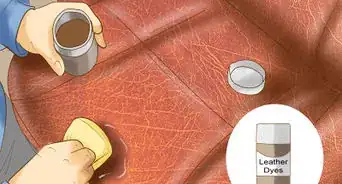
If you're new to leatherworking, you'll be pleased to learn that you have tons of dyeing options! Sure, you've probably seen dyes designed for leather use, but you can experiment with other craft supplies and common household items. Play around to see what kind of effects you get with different materials.
Steps
Method 1
Method 1 of 11:Oil-based leather dye
-
1Choose an oil-based product for a deep, rich color. The oil helps the pigment penetrate the leather, so you get bold colors without drying out the leather. It's also pretty easy to find a wide variety of oil-based dyes in lots of colors.[1]
- If you're concerned about volatile organic compounds (VOCs)—chemicals usually found in leather dyes—shop for low-VOC leather dye. You'll probably still want to ventilate your space when you dye the leather.
- Work in a well-ventilated space since breathing in the dye can be harmful.

Method 2
Method 2 of 11:Alcohol-based leather dye
-
1Work with an alcohol-based product if you want the leather to dry fast. The pigment does penetrate deep into the leather, so you get bold color, but the alcohol means the leather dries quickly. Keep in mind that it does pull moisture from the leather, which can make your item harden.[2]
- If you want to use an alcohol-based dye, apply a leather conditioner to your item before you dye it. This can keep the leather soft and flexible.
- It's a good idea to work in a well-ventilated space so you don't breathe in the hazardous dye.

Method 3
Method 3 of 11:Water-based leather dye
-
1Pick a water-based product if you want to lightly color the leather. The pigment won't go deep into the leather as it would with an alcohol- or oil-based leather dye. Instead, it will sit closer on the surface of the leather so you get a subtle color.[3]
- Water-based leather dyes are usually less toxic than other types of leather dye.
- It's a good idea to coat the leather with a finish after you dye it to prevent color from rubbing off.
- While water-based dye isn't as harsh as alcohol- or oil-based dyes, it can still irritate your lungs so you should work in a ventilated space.

Method 4
Method 4 of 11:Antique leather dye
-
1This is more of a finish since it sits on the leather to give it an aged look. Like true dyes, it comes in a variety of colors, but since it doesn't penetrate the leather, you won't get dark overall coverage. Instead, antique dye highlights the grain pattern of the leather so it looks old.[4]
- Usually, you'll try to match the color of the antique dye with the color of the leather so the item looks like it's realistically aged.
- Use a wool daubing tool to apply the antique leather dye to your item. The dauber tool will push the antique dye deep into nooks and crannies to give the leather an aged appearance.

Method 5
Method 5 of 11:Wood stain
-
1Try wood stain if you want a subtle color. It's completely fine to use a wood stain that you already have lying around. You will get very light coverage, but this is nice if you want to add just a touch of color to the leather.[5]
- You can apply more than 1 layer of wood stain if you're trying to get a dark color.

Method 6
Method 6 of 11:Fabric dye
-
1Use a bottle of fabric dye for an inexpensive way to dye leather. If you don't feel like buying specialty leather products, you can use a bottle of fabric dye like Rit. You'll have lots of color options and the dye goes on easily. It may not work as deeply into the leather as an oil-based leather dye, but it's handy if you've got fabric dye around your home.[6]
- If you want a bolder color, apply extra coats of the fabric dye to your leather.
- To use fabric dye, just dip a rag or piece of cloth into the dye without diluting it. Then, rub it directly on your leather item.

Method 7
Method 7 of 11:Acrylic paint
-
1Use acrylic paint if you want complete coverage that hides the grain. Acrylic paint also comes in a lot of colors and it's really easy to find. You don't need special equipment to paint your leather either—just use a paintbrush! The paint totally covers the leather so you don't see the natural grain.[7]
- You can use a small paintbrush if you want to paint tiny details on the leather.
- Acrylic paint also acts as a protectant that can prevent the leather from wearing out.

Method 8
Method 8 of 11:Shoe polish
-
1Reach for shoe polish if you want a somewhat temporary dye job. Shoe polish is great at dyeing leather in a pinch since it puts bold pigment directly on the leather and it has moisturizing ingredients that keep the leather soft. However, since the pigment doesn't penetrate the leather, it will wear off.[8]
- To use the polish, simply dab a thick layer of polish onto a cloth and rub it directly onto the leather.
- This is a great item to use if you're not sure what color you want to dye your leather. If you don't like it, rub off the shoe polish and try another shade.

Method 9
Method 9 of 11:Suede dye
-
1Work with suede dye if you can't find leather dye. There isn't much difference between suede dye and leather dye—leather dye usually has more pigment so you get a bolder color and it can damage softer suede material. However, it's completely fine to use suede dye on leather products if you're going for a subtle or light dye job.[9]
- Suede dye won't damage leather since it's designed for suede which is smoother and softer than leather.

Method 10
Method 10 of 11:Coffee or tea
-
1Soak unfinished leather in strong coffee or tea for a light, natural color. You won't be able to replicate the dark, bold colors of other dyes, but coffee or tea adds a subtle brown to unfinished, vegetable-tanned leather. The longer you soak the leather, the darker it will be.[10]
- Since soaking the leather actually pulls moisture out of it, you'll have to condition it once it's dry. This way you can fold or work with the leather.
- Discard the coffee or tea once you've finished soaking the leather.
- If you want to soak the leather for more than 2 days, stick it in the fridge so the coffee or tea doesn't start to mold.

Method 11
Method 11 of 11:Sunlight
-
1Use the power of UV rays to darken your natural leather. If you've got unfinished, vegetable-tanned leather, it will tan if you leave it in the sunlight. You'll probably notice a slight color change after a few days, but if you leave it for several weeks, the leather should be a couple of shades darker.[11]
- Don't have sunshine in the forecast? Don't worry—you can still set the leather outside since it will still get the UV rays even on cloudy days.




References
- ↑ https://youtu.be/zokhe6oxhjc?t=159
- ↑ https://youtu.be/SB9ww863pdU?t=78
- ↑ https://youtu.be/SB9ww863pdU?t=78
- ↑ https://youtu.be/JNpd8jDfC68?t=346
- ↑ https://youtu.be/RmW3dGeAox8?t=405
- ↑ https://youtu.be/D92VnD2I8aE?t=40
- ↑ https://youtu.be/d3vxFS9pMs8?t=262
- ↑ https://youtu.be/IyzMENriy0k?t=153
- ↑ https://www.researchgate.net/publication/272448728_Exploring_the_use_of_suede_dye_on_leather
About This Article