This article was co-authored by Sasha Blue. Sasha Blue is a Professional Body Piercer and the Owner of 13 Bats Tattoo and Piercing Studio in the San Francisco Bay Area. Sasha has over 20 years of professional body piercing experience, starting with her apprenticeship in 1997. She is licensed with the County of San Francisco in California.
There are 7 references cited in this article, which can be found at the bottom of the page.
This article has been viewed 1,217 times.
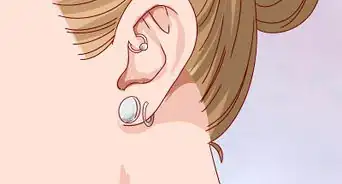
So you just got a cool new ear piercing—now what? Well, in order to help it heal properly and to prevent possible infections, you’ve got to keep it clean! But don’t worry. It’s actually super simple to do. To make it even easier for you, we’ve answered some of the most common questions that you might have about what you can use to clean your ear piercing.
Steps
Method 1
Method 1 of 6:What is the best piercing cleaning solution?
-
1Plain old soap and water is the best way to clean your piercings. When it comes to ear piercings, one of the best ways to prevent infections is to keep them clean and allow your body to heal. Mild soap and warm water is effective, simple, and will help keep germs and bacteria from getting a chance to cause an infection.[1]
- It’s also important that you wash your hands with soap and water before you touch or clean your piercing to help prevent infection.[2]
- You can use really any kind of soap as long as it doesn’t contain hydrogen peroxide or iodine, which can irritate your piercing.[3]
- Pro tip: a simple way to remember to clean your piercing is to do it whenever you wash your face in the morning or evening, or whenever you shower.
Advertisement

Method 2
Method 2 of 6:Is saline or a saltwater solution good for ear piercings?
-
1Yes, you can soak the piercing in saline or saltwater to clean it. Fill a bowl with warm saline designed for wounds or saltwater and submerge your ear piercing for 5-10 minutes. You can also soak a clean cloth in the solution and hold it over your piercing for 5-10 minutes. When you’re finished, dry the area with a cotton cloth or pad or a piece of clean gauze.[4]
- You can find saline wound cleaning solutions at your local department store, pharmacy, or the shop where you got your piercing done. You can also order it online. Steer clear of saline solutions for other purposes such as for contacts.
- To make your own saltwater cleaning solution, mix ¼ teaspoon (1.15 grams) of sea salt or 1 tablespoon (17 grams) of table salt with 8 fluid ounces (240 mL) of warm water.[5]

Method 3
Method 3 of 6:Can you use hydrogen peroxide to clean ear piercings?
-
1No, you shouldn’t because it can delay the healing process. Hydrogen peroxide kills germs and bacteria, but it can also dry out and kill new healthy cells that are forming as your piercing heals. Don’t use it to clean your ear piercing unless your doctor tells you to.[6]
- The same thing goes for antibiotic or antibacterial ointments. They can slow down oxygen getting to the tissue, which can make it take longer for your piercing to heal, so steer clear of them unless your doctor tells you otherwise.
Advertisement

Method 4
Method 4 of 6:What else can you use to clean a piercing?
-
1You can use rubbing alcohol to clean the skin around your piercing. While you shouldn’t use rubbing alcohol to clean your actual piercing, use it to sanitize the surrounding skin, which can help prevent infection. Dip a cotton ball or pad into some rubbing alcohol and gently wipe the skin around your piercing to kill any germs and bacteria present there.[7]
- Use rubbing alcohol to clean the skin around your piercing only if you don’t have access to mild soap and water. You don’t need to use it to sanitize your skin after you wash it.
- Rubbing alcohol can really sting and slow down the healing process, so make sure don’t get any in your actual piercing.[8]

Method 5
Method 5 of 6:How often should you clean your ear piercing?
-
1You should clean your ear piercing no more than twice a day. While keeping your piercing clean is really important, it’s also important that you don’t overdo it. Over cleaning can cause irritation and actually delay the healing process as well. Stick to 1-2 good cleanings a day to keep your ear piercing healthy and to encourage it to heal on its own.[9]
- Your body is great at healing itself! Just keep the piercing clean and let your body do its thing.
Advertisement

Method 6
Method 6 of 6:How do you know if an ear piercing is infected?
-
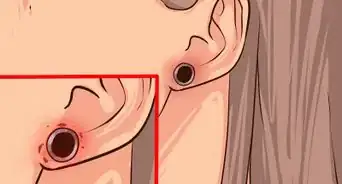
1The area will be swollen, hot, and there may be pus or blood. If you have an infected ear piercing, the skin around it may be really red or dark (depending on your complexion), warm, and painful to the touch. You may also see pus or blood oozing from the piercing site. If you see signs of an infection, contact your doctor.[10]
- Leave your piercing in unless your doctor tells you to take it out.
- Your doctor may prescribe you an antibiotic that will help treat the infection, depending on how severe it is.
- Infections can sometimes affect the rest of your body as well. If you feel hot, shivery, or just generally unwell, it could be because you have an infected ear piercing. See your doctor just to be safe.[11]

Community Q&A
-
QuestionHow can you speed up the healing of a piercing?
 Sasha BlueSasha Blue is a Professional Body Piercer and the Owner of 13 Bats Tattoo and Piercing Studio in the San Francisco Bay Area. Sasha has over 20 years of professional body piercing experience, starting with her apprenticeship in 1997. She is licensed with the County of San Francisco in California.
Professional Body PiercerLess is more! Avoid touching your piercing as much as you can, and take time to clean it on a regular basis. -
QuestionHow long does it take for a pierced ear to heal?Sasha BlueSasha Blue is a Professional Body Piercer and the Owner of 13 Bats Tattoo and Piercing Studio in the San Francisco Bay Area. Sasha has over 20 years of professional body piercing experience, starting with her apprenticeship in 1997. She is licensed with the County of San Francisco in California.
Professional Body PiercerCartilage piercings, like a tragus or daith piercing, take longer to heal than a lobe piercing.
Warnings
- Always, always, always wash your hands before you touch or clean your ear piercing to help prevent infection.[13]Thanks!
- Infections can sometimes lead to more serious complications. If you show signs of one, don’t ignore it. See your doctor to have it checked out.Thanks!









References
- ↑ https://www.mayoclinic.org/healthy-lifestyle/adult-health/in-depth/piercings/art-20047317
- ↑ Sasha Blue. Professional Body Piercer. Expert Interview. 25 November 2019.
- ↑ https://advancedtissue.com/2018/10/wound-cleaning-101-how-to-clean-wounds-for-proper-healing/
- ↑ https://www.nhs.uk/common-health-questions/lifestyle/can-i-go-swimming-after-a-piercing/
- ↑ https://uhs.berkeley.edu/health-topics/body-piercings
- ↑ https://uhs.berkeley.edu/health-topics/body-piercings
- ↑ https://www.aad.org/public/everyday-care/skin-care-basics/tattoos/caring-for-pierced-ears
- ↑ https://uhs.berkeley.edu/health-topics/body-piercings
- ↑ https://www.nhs.uk/conditions/infected-piercings/
About This Article