This article was co-authored by wikiHow staff writer, Eric McClure. Eric McClure is an editing fellow at wikiHow where he has been editing, researching, and creating content since 2019. A former educator and poet, his work has appeared in Carcinogenic Poetry, Shot Glass Journal, Prairie Margins, and The Rusty Nail. His digital chapbook, The Internet, was also published in TL;DR Magazine. He was the winner of the Paul Carroll award for outstanding achievement in creative writing in 2014, and he was a featured reader at the Poetry Foundation’s Open Door Reading Series in 2015. Eric holds a BA in English from the University of Illinois at Chicago, and an MEd in secondary education from DePaul University.
There are 10 references cited in this article, which can be found at the bottom of the page.
This article has been viewed 1,414 times.
Learn more...
Whether you’re a barber, dog groomer, or just a parent who bought clippers to give their kids a cut every now and then, it’s important to keep your electric clippers clean. Luckily, this is pretty easy to do and you have a ton of options at your disposal. As a note, you must remove the clipper blade with a screwdriver if you’re going to soak it in any kind of cleaning solution. If you’re just doing a quick cleaning, you can dip, wipe, or spray the blade with it still attached to the clippers so long as you don’t get the body of the clippers wet. In addition, all of these solutions will work for blades and blade guards alike—they should both be clean, so don’t skip one for the other!
Steps
Method 1
Method 1 of 10:Brush
-
1Give the blades a quick brushing to remove all of those hairs. Any stiff, clean brush will work for this. Most clipper sets come with a brush, so use that if you’ve still got it. If not, feel free to use whatever kind of clean brush you’ve got lying around. Just drag the bristles back and forth on both sides of the blades to remove clumps of hair.[1]
- You can use a clean toothbrush if that’s all you’ve got on hand.
- There are specialty micro-brushes that you can buy from barber and stylist suppliers. Those are really great if you want the best available!

Method 2
Method 2 of 10:Soap and Water
-
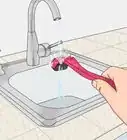
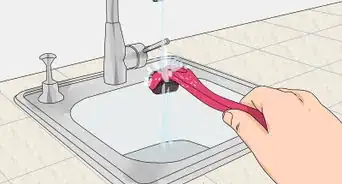
1Rubbing the blade down in soapy water is good for a quick clean. If it’s the first cut of the day or you were just touching something up, soap and water will get the job done fine. Squirt a dollop of grease-fighting dish soap onto the blade and run it under warm water. Rub the body of the blade down with your fingers or a cloth, and scrub the soap into the tips of the blades with a brush.[2]
- Any kind of regular dish soap should work for this.

Method 3
Method 3 of 10:Barbicide
-
1If you’re a professional, Barbicide is your industry standard. You know that little container you see on barber’s counters with blue liquid in it? That’s Barbicide—a sanitizing liquid for hair styling tools. If you want to sanitize and clean your blades, mix 1 fl oz (30 mL) of Barbicide for every 16 fl oz (470 mL) of water in a glass cup or bowl. Let your blades soak for at least 10 minutes. Rinse the clipper blades off under water when you’re done. This will clean and sanitize them thoroughly.[3]
- There are generic versions of Barbicide you can buy if you want something a little cheaper. In the hairstyling industry, Barbicide is the general term for any of these products (kind of like “Kleenex” for “tissue”).

Method 4
Method 4 of 10:Clipper Spray
-
1If you’re in a rush, spritz the blades and wipe them down with clipper cooling spray. There are clipper cleaning sprays that cool the blade during extended usage while cleaning and sanitizing Tun the clippers on, hold the can back a few inches, and spray the blade with a thin layer of the spray. Let the blades run for a few seconds. Then, turn the clippers off and wipe the remaining spray off.[4]
- This is not a super great replacement for a thorough deep cleaning, but if you’ve got multiple clients lined up back-to-back, this will get the job done if you’re in a rush.
- Clipper spray is a general term for any cleaning and cooling product designed for your clippers. They clean excess hair and oil off of the blade, in addition to helping heat dissipate.

Method 5
Method 5 of 10:Alcohol
-
1At home, soaking your blades in 70% isopropyl alcohol will do it. Grab a cup, fill it up enough to submerge your blades, and drop them in for a minute or so. Pull them out when you’re done and rinse them off to remove any excess hair or alcohol residue.[5]
- You can even pour some alcohol into a cap, turn the clippers on and drop the tip of the blades into the alcohol. The hair will slide off immediately into the liquid.

Method 6
Method 6 of 10:Vinegar
-
1You can also use distilled white vinegar to sanitize and disinfect at home. Fill a cup with a small amount of distilled white vinegar and submerge your blade for 30 seconds or so. Then, pull it out and rinse that puppy off under water. Dry it with a towel and voila! You’ve got a clean and sanitary clipper blade.[6]
- You can also run the clipper in a shallow bowl of vinegar to remove any hair sticking to your blades.

Method 7
Method 7 of 10:All-in-One Cleaner
-
1There are professional “all-in-one” cleaners that sanitize and disinfect. If you want to clean, cool, sanitize, and disinfect all at the same time, pick up a professional clipper cleaner. There are a ton of these on the market, and they’re all a little different. Generally, you either soak the blade for a few minutes or give it a quick wipe down and you’re done![7]

Method 8
Method 8 of 10:Bleach
-
1A 1:10 mixture of bleach and water will disinfect clippers. Fill a small cup or bowl with at least 1 tsp (4.9 mL) of bleach and 2 cups (475 mL) of water. Remove your clipper blades and submerge them for at least 10 minutes. When you’re done, remove the blades and rinse them thoroughly under cool water before wiping them dry with a clean cloth.[8]

Method 9
Method 9 of 10:Lubrication
-
1This technically won’t clean the blades, but it’s mandatory to keep them working! Whenever you finish cleaning your blades with any kind of liquid (outside of a cleaning cooling spray or all-in-one), you must lubricate the blades. After you’re done cleaning, pour 2-3 drops of clipper oil along the rim of the blades, wipe the excess off, and run your blade for a few seconds to spread the oil out.[9]
- Clipper cooling spray refers to the spray products you use to quickly clean blades and remove heat in between haircuts.
- This will protect your clippers and keep the friction from damaging the motor over time. It will also minimize the odds that you snag a client’s hair or scratch their skin. Do not skip this step!

Method 10
Method 10 of 10:Compressed Air
-
1If your blades are sanitized but collecting dust, hit them with canned air. If you don’t need to sanitize the blades or anything but you’ve got hair clogging up your blades, grab some compressed air. Hold the blade over a trash can and spray it with the air in short bursts to blow the excess hair away.[10]
- This is a good way to go if your clippers start acting up a bit when you’re in the middle of a cut.

Warnings
- It really cannot be overstated how important it is to clean disinfect clipper blades if you’re a professional stylist, barber, or groomer. All kinds of nasty bacteria can build up on the blades if you don’t clean them thoroughly.[11] You should perform a quick cleaning in between haircuts, and a deep cleaning at least once a day.Thanks!

References
- ↑ https://www.sheareaseltd.com/how-to-look-after-clipper-blades/
- ↑ https://youtu.be/Vn-I7wsOwGg?t=168
- ↑ https://barbicide.com/wp-content/uploads/2020/03/barbicide_label.pdf
- ↑ https://dailymed.nlm.nih.gov/dailymed/fda/fdaDrugXsl.cfm?setid=b1cc7dea-6155-4b82-e053-2995a90a62a7&type=display
- ↑ https://getarazor.com/how-to-clean-hair-clippers/
- ↑ https://getarazor.com/how-to-clean-hair-clippers/
- ↑ https://youtu.be/GV8EjY-nGns?t=68
- ↑ https://www.processcleaningsolutions.com/pdf/wellingtonhealthunit.pdf
- ↑ http://wahlglobal.com/imgs_up/new_free_pages/Oiling%20and%20Tuning.pdf
About This Article