This article was co-authored by wikiHow staff writer, Hannah Madden. Hannah Madden is a writer, editor, and artist currently living in Portland, Oregon. In 2018, she graduated from Portland State University with a B.S. in Environmental Studies. Hannah enjoys writing articles about conservation, sustainability, and eco-friendly products. When she isn’t writing, you can find Hannah working on hand embroidery projects and listening to music.
There are 8 references cited in this article, which can be found at the bottom of the page.
wikiHow marks an article as reader-approved once it receives enough positive feedback. This article received 41 testimonials and 100% of readers who voted found it helpful, earning it our reader-approved status.
This article has been viewed 4,199,248 times.
Learn more...
If you’re looking for a way to lighten your skin naturally, you’ve probably stumbled upon the lemon juice lightening method. While lemons do contain some key vitamins, putting lemon juice on your skin isn’t the best (or safest) way to lighten dark marks. We’ve answered some of your common questions about skin lightening so you can keep your skin healthy while doing it.
Steps
Question 1
Question 1 of 8:Can you lighten your skin with lemon juice?
-
1Some people believe you can! While there are some natural health sites that recommend using lemon juice for skin lightening, scientists recommend using actual skin products. If you’d like to try using lemon juice, however, you can squeeze the juice from a lemon into a bowl and add equal parts water to it. Dip a cotton ball into the mixture and gently dab lemon juice onto any dark spots on your face. Let the lemon juice sit for 20 minutes, then rinse your face with cool water.[1]
- You can do this a few times per week to fade dark spots on your skin.
- If you’re trying to fade dark marks on your chest or back, pour your mixture into a spray bottle and spritz it all over your dark spots. Let it sit for 20 minutes, then wipe the solution off with a wet washcloth.
- It’s incredibly important to rinse the lemon juice off your skin before going outside. Leaving lemon juice on your skin when you go out into the sun can lead to blisters and burns.[2]

Question 2
Question 2 of 8:Is lemon juice safe for my skin?
-
1Yes, as long as you make sure not to go out into the sun. Lemon peels often contain chemicals called furanocoumarins and psoralens. While these chemicals are fine on your skin when you’re in the shade, if you go outside into the sun, they can cause redness, irritation, swelling, and huge blisters. Most products that use lemon juice filter these chemicals out, which is why it’s okay to use lotions or fragrances with citrus in them. However, straight lemon juice isn’t filtered, and it can be dangerous to leave on your skin, even if you dilute it with water.[3]
- If you’re worried about your reaction to lemon juice, try doing a patch test first. Rub a bit of undiluted lemon juice onto the inside of your elbow. If your skin is okay after 24 hours, it’s probably fine to use lemon juice on your face. If your elbow starts stinging or burning, rinse the lemon juice off immediately and don’t put it anywhere else on your body.

Question 3
Question 3 of 8:What are some other things you can do with lemon juice?
-
1You can treat oily skin with lemon juice and oatmeal. If you deal with oily skin, grind 2 tbsp (28 g) of old-fashioned oats into a fine powder. Mix the oat flour with 1 US tbsp (15 mL) of fresh lemon juice and 2 teaspoons (9.9 mL) of honey. Dab it on your skin with clean fingers, then let it sit for 15 minutes. Wipe the mask off with a warm, wet washcloth when you’re done.[4]
-
2You can treat dry skin with honey, avocado, and oatmeal. If you’d like to hydrate your skin while fading dark marks, mix together 1/4 of a mashed avocado, 1 tsp (4.9 mL) of fresh lemon juice, 1⁄2 US tbsp (7.4 mL) of olive oil, and 1 US tbsp (15 mL) of honey. Apply the mask to clean skin and leave it on for about 20 minutes, then rinse it off with warm water.[5]


Question 4
Question 4 of 8:Why do so many sites recommend using lemon juice?
-
1Because citric acid is a natural lightener. There are lots of skin products that use citric acid in them, including ones with lemon juice. However, these products use filtered lemon juice, so they aren’t dangerous to put on your skin, and they won’t cause you to blister in the sun. Unfiltered lemon juice may lighten your skin, but it can also seriously harm you, so it isn’t worth the risk. There is no way to filter or dilute lemon juice at home to make it safe for your skin.[6]

Question 5
Question 5 of 8:Are skin products containing lemon juice safe?
-
1Yes, because they’re filtered. Lemon juice in lotions and creams is safe to put on your skin, and they probably won’t cause irritation. Products with citric acid in them can help fade dark marks and discoloration, and they aren’t dangerous like unfiltered lemon juice is.[7]
- Most lemon juice products are used to tighten the skin and reduce the appearance of wrinkles.

Question 6
Question 6 of 8:How do you lighten your skin naturally?
-
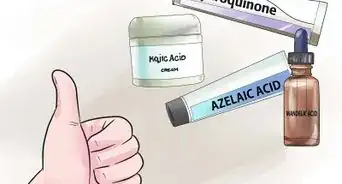
1Try a skin lightening product. Skin lightening products infiltrate your skin and reduce the melanin that creates dark spots. Look for a product with 2% hydroquinone, azelaic acid, glycolic acid, kojic acid, retinoid, or vitamin C to make sure it’s effective. If you aren’t sure which product to buy, get a recommendation from a licensed dermatologist.[8]
-
2Use sunscreen every day. Sunscreen protects your skin from UV rays and stops the dark patches on your skin from getting worse. Make it a part of your routine to put on SPF 30 or higher every day to avoid dark spots and wrinkles.[9]


Question 7
Question 7 of 8:How long does it take to fade dark spots?
-
1It can take anywhere from 6 to 12 months. If you’re using sunscreen and a dermatologist-approved lightening cream, you can expect to see results within a year or so. However, if your dark spots are really dark, it could take a couple of years.[10]
- Everyone’s skin is different, and yours might need more or less time to even out. If you have any questions, make an appointment with a dermatologist.

Question 8
Question 8 of 8:Are skin lightening products dangerous?
-
1Yes, if they contain mercury. A lot of skin lightening products are unregulated, and some even contain mercury. Mercury can damage your kidneys and your nerves, and you can even spread mercury poisoning to others through skin-to-skin contact. If your product contains calomel, cinnabaris, quicksilver, or Hydrargyri oxydum rubrum, that means it contains mercury, and you should stop using it right away.[11]
- You can avoid unsafe skin lighteners by getting one from a licensed dermatologist. Studies show that about 12% of skin lighteners sold in beauty stores in the United States contain mercury.

Community Q&A
-
QuestionI've just purchased a lemon oil with coconut oil carrier. Do I need to be worried about going out under the sun after applying it?
 wikiHow Staff EditorThis answer was written by one of our trained team of researchers who validated it for accuracy and comprehensiveness.
Staff AnswerwikiHow Staff EditorStaff AnswerLemon oils are usually filtered, meaning they take the dangerous chemicals out. You should be fine to go out into the sun after applying the product. If you notice any redness or irritation, head back inside right away and wash the product off. -
QuestionCan you keep lemon juice on your face overnight?wikiHow Staff EditorThis answer was written by one of our trained team of researchers who validated it for accuracy and comprehensiveness.
Staff AnswerwikiHow Staff EditorStaff AnswerWhile this is something you can do (as it's generally not going to cause harm other than potentially drying the skin), it has no benefits, so it's really not a worthwhile activity. It can leave your skin feeling sticky, and the juice will end up on your pillowcase and sheets. Since it doesn't have a benefit, and can increase skin dryness, this seems like a lot of effort (putting it on and cleaning the bed linen) for no real returns. If you do leave it on, be sure it is thoroughly washed off before you head outside, to lessen any risk of reaction with sunlight on your skin. -
QuestionI'm black. If I do this process, can I become little white?
 Community AnswerThe lightening effect of natural substances like lemon is very mild. It will lighten your skin a little bit, but you will still be black. Drastically altering your skin tone requires harsh chemicals. And it is generally not worth it. It's best to try to accept yourself as you are and embrace your own natural beauty.
 -
QuestionCan I leave the lemon on over night?
 Community AnswerYes, but be sure to wash it off in the morning. Also, consider applying some moisturizer, such as cocoa butter, so that your skin won't dry up.
 -
QuestionAre there any side effects I should be aware of when rubbing lemon directly on my skin?Community AnswerYes. Many citrus fruit, including lemon, make skin sensitive to sunlight. Going out into the sun after rubbing lemon onto your skin may result in a very bad sunburn. Also, if you have any cuts or sores on your skin, the acidic nature of the lemon juice may cause some stinging.
-
QuestionWill drinking lemon juice have the same benefits?Community AnswerNo. You have to apply the lightening agent (whether you're using lemon or something else) directly to your skin.
-
QuestionCan I mix honey in lemon juice as a face mask/pack?Community AnswerYes, but it will not make your skin lighter. Honey has other benefits, however, and is great for your skin. It is naturally moisturizing and antibacterial.
-
QuestionIs drinking lemon water daily as effective as applying it?Community AnswerNo, drinking lemon water will not have an effect on the color of your skin.
-
QuestionIs it advisable to mix lemon juice with my body cream?
 Community AnswerNo, it is not advisable because it may have a chemical reaction with the ingredients in the body cream.
 -
QuestionCan I use lemon juice in my armpits?Community AnswerYes, it will help to whiten your armpit and keep the skin moisturized. It will also help eliminate odor.
Warnings
- Going out in the sun with lemon juice on your skin can cause severe burns.[12]Thanks!













References
- ↑ https://www.aarp.org/entertainment/style-trends/info-2018/natural-remedies-age-spots-fd.html
- ↑ https://www.tandfonline.com/doi/full/10.3402/jchimp.v4.25090
- ↑ https://www.tandfonline.com/doi/full/10.3402/jchimp.v4.25090
- ↑ https://www.epicurious.com/archive/healthy/news/homemade-beauty-products-lemon-oatmeal-face-mask
- ↑ https://www.bostonmagazine.com/health/2018/08/30/natural-face-masks-recipes/
- ↑ https://cosmeticsinfo.org/ingredient/citric-acid
- ↑ https://cosmeticsinfo.org/ingredient/citric-acid
- ↑ https://www.aad.org/public/everyday-care/skin-care-secrets/routine/fade-dark-spots
- ↑ https://www.aad.org/public/everyday-care/skin-care-secrets/routine/fade-dark-spots
About This Article

To lighten your body with lemon juice, cut a lemon in half and rub the rind all over your skin. Leave the juice on for a few minutes and then rinse it off in the shower. If you want to lighten your face with lemon juice, start by cutting a lemon in half and squeezing the juice onto a cotton ball. Then, carefully rub the cotton ball over your face so you don't get it in your eyes. Leave the lemon juice on for a few minutes and then rinse your face off. Repeat on your body and face 3-4 times a week until you've achieved your desired results! Keep reading the article if you want to learn more, such as how to make a lemon wash or cream!