This article was co-authored by wikiHow staff writer, Janice Tieperman. Janice is a professional and creative writer who has worked at wikiHow since 2019. With both a B.A. and M.A. in English from East Stroudsburg University, she has a passion for writing a wide variety of content for anyone and everyone. In her free time, you can find her working on a new crochet pattern, listening to true crime podcasts, or tackling a new creative writing project.
There are 13 references cited in this article, which can be found at the bottom of the page.
This article has been viewed 1,363 times.
Learn more...
Getting tested for COVID-19 can be really nerve-wracking, especially when your lab results come back. If you took a viral or diagnostic test, otherwise known as a nasal swab, you just need to look for a “positive” or “negative” on your form.[1] Once you’ve confirmed your test results, you’ll be better equipped to share the news with your friends and family members, if necessary. Don’t panic if you test positive—many, many people have been in your shoes, and have easily survived the illness with some rest and recuperation at home.[2]
Steps
Method 1
Method 1 of 3:Reading Your Results
-
1See if the results say “negative” or “positive” on a diagnostic test. Scan through the document and look for the words “positive” or “negative.” A positive test result means that you currently have the virus, while a negative test result means that you don’t have it.[3]
- Keep in mind that COVID-19 results only apply to the day you took the test.[4]
-
2Schedule another test if your results are inconclusive. On some test results, you may see the words “unclear,” “borderline,” “void,” or “inconclusive” written on the document. These phrases mean that, for some reason or another, the lab can’t determine if you have the virus or not. In the event that this happens, call your doctor and reschedule a new test as soon as you can.[5]
- You can usually hear back with your results within 3 days.
Advertisement -
3Accept that your results may not be completely accurate. As is the case with any medical test, there’s no guarantee that your results are 100% correct.[6] These tests are generally accurate, and you shouldn’t need to take another one.[7]Advertisement


Method 2
Method 2 of 3:Coping with a Positive Result
-
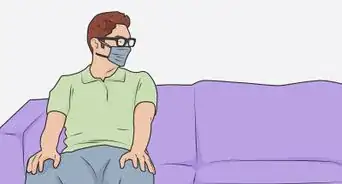
1Stay home and rest until your symptoms are gone. Give yourself plenty of time to rest and recover if you’ve come down with COVID-19. Do your best to quarantine yourself from your friends and family so you don’t risk spreading the virus to them.[8] To be safe, quarantine yourself for 10 extra days once your symptoms disappear.[9]
- If you don’t develop symptoms but have positive test results, you should still quarantine so you don’t risk spreading anything.[10]
-
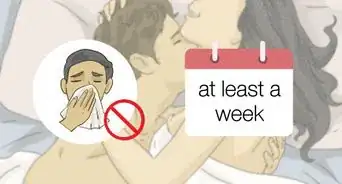
2Distance yourself from friends and family as you recover. Section yourself in a separate room or area of your home, which will help prevent the spread of the virus.[11] Stay in your own personal bubble for at least 10 days as you recover. If you live with a roommate or relative, instruct them to quarantine for 2 weeks as an extra precaution.[12]
- Quarantining can be hard, but there are plenty of ways to stay entertained!
-
3Expect a call from a contact tracer if you test positive. Contact tracers are healthcare employees who aim to figure out where you’ve been and who you’ve been in touch with in the past few weeks. Be prepared to answer a few basic questions about what you’ve been up, so the contact tracer can let others know if they were exposed.[13]
-
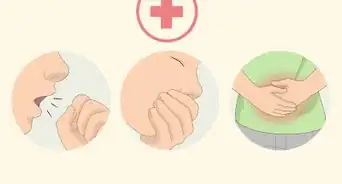
4Seek medical assistance if you experience severe symptoms. Monitor your symptoms carefully as you recover from COVID-19. If you’re having difficulty breathing or experiencing frequent chest pain, call your doctor for advice. If you feel like you’re in immediate danger, dial 911 or an equivalent emergency line to get the help you need.[14]
- Don’t panic if you experience these symptoms. Instead, wait for a medical professional to examine your symptoms.
Advertisement


Method 3
Method 3 of 3:Dealing with Negative Results
-
1Return to your normal schedule if your results are negative. Check with your family members and roommates to see if they tested positive or negative. If your whole household is negative and you’re feeling healthy, you don’t need to worry about quarantining yourself.[15]
- Double-check with your employer to make sure you’re allowed to return to work, even if your results are negative.
-
2Wait several days to see if symptoms develop even if your results are negative. Keep in mind that test results only apply to the day you received the test. As unpleasant as it is to consider, you could’ve been exposed in the following days. With this in mind, keep tabs on your health, and let a healthcare professional know right away if you’re feeling under the weather.[16]
- Fever, chills, headache, body aches, tiredness, difficulty breathing, vomiting, and diarrhea are all common signs of COVID-19.[17]
-
3Go back to work if you’ve been symptom-free for 10 days. Keep tabs on your symptoms as you continue to relax and recuperate at home. Check your temperature on a regular basis—once you’ve gone at least 1 day without a fever and have gone 10 days without symptoms, you can safely return to work without worrying about infecting anyone else.[18]
- Double-check that you can go 1 day fever-free without using any medication.
Advertisement




References
- ↑ https://www.rush.edu/patients-visitors/covid-19-resources/understanding-covid-19-test-results#COVID-19%20(PCR)%20Test
- ↑ https://www.hopkinsmedicine.org/health/conditions-and-diseases/coronavirus/diagnosed-with-covid-19-what-to-expect
- ↑ https://www.rush.edu/patients-visitors/covid-19-resources/understanding-covid-19-test-results#COVID-19%20(PCR)%20Test
- ↑ https://www.healthvermont.gov/sites/default/files/documents/pdf/COVID-19-UnderstandingYourResults.final_.pdf
- ↑ https://www.nhs.uk/conditions/coronavirus-covid-19/testing-and-tracing/what-your-test-result-means/
- ↑ https://www.whitehouse.gov/wp-content/uploads/2020/05/Testing-Guidance.pdf
- ↑ https://www.fda.gov/consumers/consumer-updates/coronavirus-testing-basics
- ↑ https://www.cdc.gov/coronavirus/2019-ncov/if-you-are-sick/steps-when-sick.html
- ↑ https://www.uchealth.com/en/media-room/covid-19/self-quarantine-who-needs-it
- ↑ https://www.cdc.gov/coronavirus/2019-ncov/php/contact-tracing/contact-tracing-plan/contact-tracing.html
- ↑ https://www.health.state.mn.us/diseases/coronavirus/waiting.pdf
- ↑ https://www.nhs.uk/conditions/coronavirus-covid-19/testing-and-tracing/what-your-test-result-means/
- ↑ https://www.cdc.gov/coronavirus/2019-ncov/daily-life-coping/contact-tracing.html
- ↑ https://www.cdc.gov/coronavirus/2019-ncov/if-you-are-sick/steps-when-sick.html
- ↑ https://www.nhs.uk/conditions/coronavirus-covid-19/testing-and-tracing/what-your-test-result-means/
- ↑ https://www.healthvermont.gov/sites/default/files/documents/pdf/COVID-19-UnderstandingYourResults.final_.pdf
- ↑ https://www.cdc.gov/coronavirus/2019-ncov/symptoms-testing/symptoms.html
- ↑ https://www.health.state.mn.us/diseases/coronavirus/returntowork.pdf
- ↑ https://www.rush.edu/patients-visitors/covid-19-resources/understanding-covid-19-test-results#COVID-19%20(PCR)%20Test













































Medical Disclaimer
The content of this article is not intended to be a substitute for professional medical advice, examination, diagnosis, or treatment. You should always contact your doctor or other qualified healthcare professional before starting, changing, or stopping any kind of health treatment.
Read More...