This article was co-authored by Miguel Cunha, DPM and by wikiHow staff writer, Megaera Lorenz, PhD. Dr. Miguel Cunha is the founder of Gotham Footcare and is a podiatrist based in Manhattan, New York. Dr. Cunha is a foot and ankle surgeon with experience treating a wide array of foot and ankle conditions from minor problems to complex reconstructive foot and ankle surgery. Dr. Cunha received his DPM from the Temple University School of Podiatric Medicine and completed his residency as the Chief Resident at the Washington Hospital Center and Georgetown University where he specialized in lower extremity trauma, diabetic limb salvage, and reconstructive surgery of the foot and ankle. Dr. Cunha is a member of the American Podiatric Medical Association, the New York Podiatric Medical Association, the American College of Foot and Ankle Surgeons, and is board certified in Podiatric Medicine.
There are 14 references cited in this article, which can be found at the bottom of the page.
wikiHow marks an article as reader-approved once it receives enough positive feedback. In this case, several readers have written to tell us that this article was helpful to them, earning it our reader-approved status.
This article has been viewed 408,876 times.
Athlete’s foot is a fungal infection that causes a red, scaly rash on your feet, usually starting between the toes. While it can be uncomfortable and embarrassing, it’s usually not serious—and most of the time, you can quickly clear it up with an over-the-counter ointment. Keep reading to learn how to prevent athlete’s foot, and what to do if it’s not going away.
Steps
Method 1
Method 1 of 14:Use an over-the-counter antifungal cream.
-
1Spread the cream or ointment directly on the rash. Look in your drugstore for athlete’s foot treatments containing ingredients like clotrimazole, miconazole, naftifine, or another antifungal medication. Follow the instructions on the package or ask your doctor or pharmacist for advice.[1]
- Most of these creams or ointments are meant to be used twice a day for about 2 weeks. You may need to keep using the medication for 1-2 weeks after the rash clears up to keep it from returning.[2]
- Athlete’s foot is contagious. Always wash your hands carefully after you’re done applying the ointment!
Advertisement

Method 2
Method 2 of 14:Sprinkle antifungal powder in your shoes and socks.
-
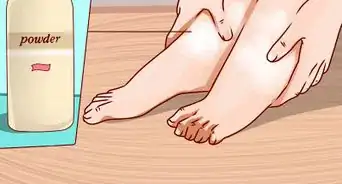
1The athlete’s foot fungus can grow in your footwear. At the same time that you’re using the antifungal ointment, dust your shoes and socks daily with a medicated powder before putting them on. This will keep the infection from coming back while you treat it.[3] Common antifungal powders include Lotrimin AF, Tinactin, and Desenex.[4]
- Some antifungal powders come in an aerosol spray form instead of a loose powder. Always use the spray form in a well-ventilated area, and be careful not to breathe it in.[5]
- You can also spray or dust the powder directly on your foot and between your toes if you prefer it to a cream or ointment.

Method 3
Method 3 of 14:Clean your feet twice a day.
-
1Wash them with soap and water. Proper foot washing helps get rid of the fungus that causes athlete’s foot, and may help keep your infection from spreading or getting worse.[6] Clean your feet even more often if they get sweaty, wet, or dirty. Make sure to wash between your toes.[7]
- Use a mild soap without any harsh ingredients like alcohol, dyes, or perfumes. These additives could irritate your skin and make your symptoms worse, especially while you’re using certain antifungal products.[8]
- Antifungal treatments work best on clean, dry skin, so wash and dry your feet right before applying your medication.
Advertisement

Method 4
Method 4 of 14:Dry your feet thoroughly after cleaning them.
-
1Be extra careful to dry between your toes. Athlete’s foot fungus thrives in warm, damp environments. Keeping your feet dry is vital to healing up your infection.[9] After bathing, showering, or washing your feet, gently dab your feet dry with a clean, dry towel. Avoid rubbing your feet, since this could cause irritation or spread the infection around.[10]
- Use a separate towel for your feet so you don’t spread athlete’s foot to other parts of your body. Wash the towel after each use and don’t share it with anyone else.
- Let your feet air out after washing them until they are completely dry. Don’t put socks and shoes on your feet while they’re still damp!
- Medicated powders will also help soak up moisture and reduce irritation between your toes.[11]

Method 5
Method 5 of 14:Go barefoot as much as possible while you heal.
-
1This will help your feet stay dry. Avoid wearing shoes and socks while you’re at home as much as you can. This is especially important after a shower or bath.[12]
- If you’re concerned about spreading the infection to others at home, wear light sandals or canvas shoes that allow air to circulate around your feet.[13]
Advertisement

Method 6
Method 6 of 14:Change your socks whenever they get damp.
-
1Wear light, breathable socks and change them daily. The athlete’s foot fungus loves warm, damp environments, so sweaty socks are an ideal breeding ground. If you sweat a lot or your socks get wet, change them right away—even if this means going through a few pairs in one day.[14] Cotton socks are ideal for allowing your feet to breathe and preventing moisture buildup.[15]
- When the weather is warm enough, avoid wearing socks at all if you can. Instead, stick to wearing sandals when you need something on your feet.

Method 7
Method 7 of 14:Alternate between pairs of shoes.
-
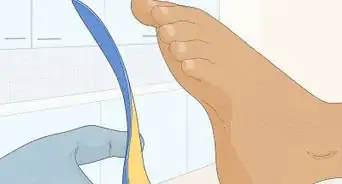
1Give one pair a chance to dry out before wearing it again. Sweat and dampness can build up in your shoes during the day. Switch out between pairs each day, or more often if one pair gets really wet.[16]
- Avoid shoes made of rubber or synthetic materials, which tend to trap moisture and can make your feet overheat. Stick to breathable materials, like canvas.
Advertisement

Method 8
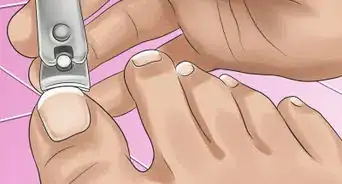
Method 8 of 14:Avoid scratching your rash.

Method 9
Method 9 of 14:See your doctor if it doesn’t clear up in 2 weeks.
-
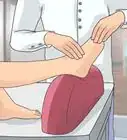
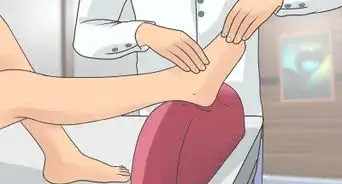
1You might need a prescription-strength treatment. Most athlete’s foot infections clear up after about 2 weeks of treatment with an over-the-counter antifungal medication. If your symptoms don’t go away, call your doctor.[19] They can run tests to rule out other causes and prescribe a stronger medication if necessary.[20]
- Your doctor might prescribe an oral antifungal medication for stubborn athlete’s foot infections.
- If you have diabetes or another condition that affects your immune system, don’t wait—go see your doctor right away. Without treatment, you could develop more serious complications, like a secondary bacterial infection.
- You should also get your athlete’s foot checked out if you notice severe symptoms, such as swelling, worsening redness, fluids draining from the area, or a fever.
Advertisement

Method 10
Method 10 of 14:Wear flip-flops in public showers to prevent infections.
-
1You can pick up athlete’s foot from contaminated surfaces. Don’t go barefoot when you’re walking around in public locker rooms, public showers, or the areas around pools. Put on sandals, flip-flops, or shower shoes—even while you’re taking a shower.[21]

Method 11
Method 11 of 14:Keep your feet dry as much as possible.
-
1Damp feet put you at risk of a new infection. To avoid providing a friendly environment for athlete’s foot fungus, dry your feet thoroughly after baths and showers, especially between your toes. Change your shoes and socks whenever they get damp.[22]
- Use breathable cotton socks or moisture-wicking athletic socks to prevent excess sweating, and wear shoes made of light, breathable materials.
- If you’re prone to sweaty feet, try applying a medicated powder or some cornstarch to your feet after washing and drying them. The powder will soak up moisture throughout the day.
Advertisement

Method 12
-
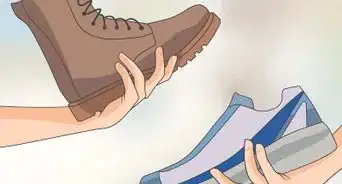
1Athlete’s foot fungus can linger in shoes and socks. To avoid catching athlete’s foot or spreading it to others, keep your footwear to yourself. If you live with someone else who has an infection, or if you’re currently infected, don’t share towels or bed linens either.[23]
- If you were recently infected, clean anything that came into contact with your feet thoroughly before you use it again. This will help you avoid reinfecting yourself or others.

Method 13
Method 13 of 14:Shower right after sports or exercise.
-
1This is especially important after contact sports. If you’re working out in a public gym, you could come into contact with the athlete’s foot fungus. Hit the showers right away and wash with soap and water, paying special attention to your feet and the spaces between your toes.[24]
- Even if you’re not working out in a public area, it’s always a good idea to wash up after breaking a sweat.
Advertisement

Method 14
Method 14 of 14:Disinfect high-contact surfaces.
-
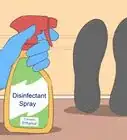
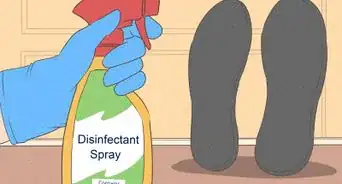
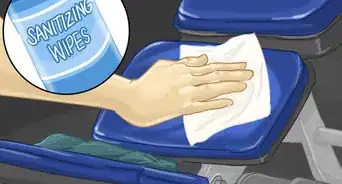
1Use a product that kills fungi, like bleach or Lysol. If you or someone else in your home recently had athlete’s foot or currently has it, wipe down and disinfect areas like bathroom floors and the bottom of your shower or tub. This will prevent people from picking up the fungus while walking barefoot in these areas.[25]
- You can also disinfect surfaces by spraying them with hydrogen peroxide. Simply spray it on, let it stand for a few minutes, then wipe it away with a clean cloth.[26]

Expert Q&A
-
QuestionWill Lysol kill athlete's foot in shoes?
 Miguel Cunha, DPMDr. Miguel Cunha is the founder of Gotham Footcare and is a podiatrist based in Manhattan, New York. Dr. Cunha is a foot and ankle surgeon with experience treating a wide array of foot and ankle conditions from minor problems to complex reconstructive foot and ankle surgery. Dr. Cunha received his DPM from the Temple University School of Podiatric Medicine and completed his residency as the Chief Resident at the Washington Hospital Center and Georgetown University where he specialized in lower extremity trauma, diabetic limb salvage, and reconstructive surgery of the foot and ankle. Dr. Cunha is a member of the American Podiatric Medical Association, the New York Podiatric Medical Association, the American College of Foot and Ankle Surgeons, and is board certified in Podiatric Medicine.
Board Certified PodiatristYes. Just spray the Lysol into the shoes to kill the fungus. If you think you have athlete's foot, go ahead and spray your shoes. -
QuestionWhat's the best way to effectively treat athlete's foot?Miguel Cunha, DPMDr. Miguel Cunha is the founder of Gotham Footcare and is a podiatrist based in Manhattan, New York. Dr. Cunha is a foot and ankle surgeon with experience treating a wide array of foot and ankle conditions from minor problems to complex reconstructive foot and ankle surgery. Dr. Cunha received his DPM from the Temple University School of Podiatric Medicine and completed his residency as the Chief Resident at the Washington Hospital Center and Georgetown University where he specialized in lower extremity trauma, diabetic limb salvage, and reconstructive surgery of the foot and ankle. Dr. Cunha is a member of the American Podiatric Medical Association, the New York Podiatric Medical Association, the American College of Foot and Ankle Surgeons, and is board certified in Podiatric Medicine.
Board Certified PodiatristUse a topical antifungal treatment twice a day for 2 weeks. If the fungus is still present after that, see your doctor—they may prescribe a stronger antifungal cream, or even an oral antifungal medication.
Warnings
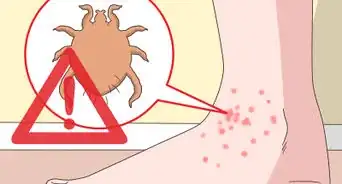
- The fungus that causes athlete’s foot can spread to other parts of your body. This fungus is also known as jock itch (when it affects your groin area) or ringworm. Always wash your hands carefully after touching your rash, and avoid scratching or rubbing it.[29]Thanks!
- If your doctor prescribes an oral medication for athlete’s foot, let them know if you have any other medical conditions or are currently taking other medications. This will help them determine whether you can take antifungals safely.[30]Thanks!
References
- ↑ https://www.health.harvard.edu/staying-healthy/athletes-foot-causes-prevention-and-treatment
- ↑ Miguel Cunha, DPM. Board Certified Podiatrist. Expert Interview. 22 April 2020.
- ↑ Miguel Cunha, DPM. Board Certified Podiatrist. Expert Interview. 22 April 2020.
- ↑ https://www.health.harvard.edu/staying-healthy/athletes-foot-causes-prevention-and-treatment
- ↑ https://www.drugs.com/cons/podactin-topical.html
- ↑ https://www.ncbi.nlm.nih.gov/pmc/articles/PMC4352499/#B8
- ↑ https://www.ipfh.org/foot-care-essentials/how-to-practice-good-foot-hygiene
- ↑ https://www.uofmhealth.org/health-library/d03202a1
- ↑ https://www.aad.org/public/diseases/a-z/athletes-foot-prevent
- ↑ https://www.nhs.uk/conditions/athletes-foot/
- ↑ https://www.health.harvard.edu/staying-healthy/athletes-foot-causes-prevention-and-treatment
- ↑ https://www.mayoclinic.org/diseases-conditions/athletes-foot/diagnosis-treatment/drc-20353847
- ↑ https://www.health.harvard.edu/staying-healthy/athletes-foot-causes-prevention-and-treatment
- ↑ https://www.health.harvard.edu/staying-healthy/athletes-foot-causes-prevention-and-treatment
- ↑ https://www.nhs.uk/conditions/athletes-foot/
- ↑ https://www.mayoclinic.org/diseases-conditions/athletes-foot/diagnosis-treatment/drc-20353847
- ↑ https://www.nhs.uk/conditions/athletes-foot/
- ↑ https://www.mayoclinic.org/diseases-conditions/athletes-foot/diagnosis-treatment/drc-20353847
- ↑ Miguel Cunha, DPM. Board Certified Podiatrist. Expert Interview. 22 April 2020.
- ↑ https://www.mayoclinic.org/diseases-conditions/athletes-foot/symptoms-causes/syc-20353841
- ↑ https://www.aad.org/public/diseases/a-z/athletes-foot-prevent
- ↑ https://www.aad.org/public/diseases/a-z/athletes-foot-prevent
- ↑ https://www.aad.org/public/diseases/a-z/athletes-foot-prevent
- ↑ https://my.clevelandclinic.org/health/articles/4560-athletes-foot-jock-itch-and-ringworm-of-the-scalp
- ↑ https://my.clevelandclinic.org/health/articles/4560-athletes-foot-jock-itch-and-ringworm-of-the-scalp
- ↑ https://extension.purdue.edu/elkhart/article/35678
- ↑ https://www.ncbi.nlm.nih.gov/books/NBK279548/
- ↑ https://www.aafp.org/afp/2014/1115/p702.html
- ↑ https://my.clevelandclinic.org/health/articles/4560-athletes-foot-jock-itch-and-ringworm-of-the-scalp
- ↑ https://www.ncbi.nlm.nih.gov/books/NBK279548/
About This Article

Medical Disclaimer
The content of this article is not intended to be a substitute for professional medical advice, examination, diagnosis, or treatment. You should always contact your doctor or other qualified healthcare professional before starting, changing, or stopping any kind of health treatment.
If you have athlete’s foot, treat the affected area with an anti-fungal cream or spray every day for 3-6 weeks, depending on the severity of the infection. Continue applying the treatment even after the visible symptoms are gone to ensure you get rid of all of the fungus. In the meantime, you can help relieve the symptoms by sprinkling cornstarch on your feet whenever they’re damp. This will help absorb any moisture while suffocating the fungus, and you can continue the practice after you’re healed to keep your athlete’s foot from returning. Read on to learn how wearing sandals can help treat and prevent athlete’s foot!