This article was co-authored by Alan O. Khadavi, MD, FACAAI. Dr. Alan O. Khadavi is a Board Certified Allergist and a Pediatric Allergy Specialist based in Los Angeles, California. He holds a BS in biochemistry from the State University of New York (SUNY) at Stony Brook and an MD from the State University of New York Health Science Center at Brooklyn. Dr. Khadavi completed his pediatric residency at Schneider Children’s Hospital in New York, and then went on to complete his allergy and immunology fellowship and pediatric residency at Long Island College Hospital. He is board certified in adult and pediatric allergy/immunology. Dr. Khadavi is a Diplomate of the American Board of Allergy and Immunology, a Fellow of the American College of Allergy, Asthma & Immunology (ACAAI), and a member of the American Academy of Allergy, Asthma & Immunology (AAAAI). Dr. Khadavi's honors include Castle Connolly’s list of Top Doctors 2013-2020, and Patient Choice Awards "Most Compassionate Doctor" in 2013 & 2014.
There are 11 references cited in this article, which can be found at the bottom of the page.
This article has been viewed 9,200 times.
Vibration hives cause bumps or rashes to break out on your skin after you experience a feeling of vibration. While these hives usually go away in a few hours to a few days, they can still cause a disruption to your life. If you have vibration hives, learn how to treat them so you can ease the condition.
Steps
Method 1
Method 1 of 2:Treating Vibration Hives
-
1Avoid known triggers.[1] One of the easiest ways to treat vibration hives is to avoid things that cause a breakout. Once you determine what causes hives to appear, make a note of it so you can try to stay away from it in the future.[2]
- This might mean changing your routines. If you get vibration hives from playing the drums or trumpet, you may have to stop that activity.
- You may also have to get other people to do certain things for you, like mowing the grass.
-
2Use antihistamines. Antihistamines may be an effective treatment against vibration hives. Over-the-counter medicines like Benadryl, Chlor-Trimeton, Claritin, Allegra, and Zyrtec may be helpful.[3]
- Take an antihistamine 30 minutes before doing an activity that involves vibrations.[4]
- Depending on the severity of your reaction, your doctor may prescribe prescription antihistamines.
- Your doctor may recommend you to take antihistamines regularly to help prevent hives if they are reoccurring. You may also take antihistamines if you know you are going to do an activity that will lead to vibration hives.
- Some antihistamines may not work if the hives are delayed.[5]
-
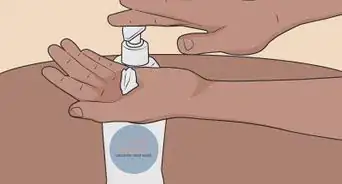
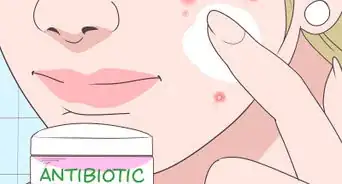
3Treat the hives with creams or cold presses. Depending on the kinds of hives you have, you may be able to apply a topical treatment. These treatments are aimed at stopping itching or painful symptoms.[6]
- Try an anti-itch cream or salve. You may also place a cold compress on the affected area.
-
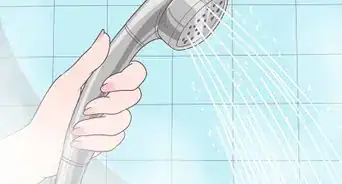
4Be gentle with your skin during a breakout. Since breakouts can be painful, itchy, or uncomfortable, you can learn how to ease some of that while you are facing a breakout. Treat your skin gently when you are experiencing a breakout. Refrain from touching it roughly, aggravating it, or scratching it too much.[7]
- Use warm water instead of hot if you take a shower.
- Wash with mild soaps. If possible, avoid soaps for as long as possible.
- Wear loose clothing over the affected areas.
-
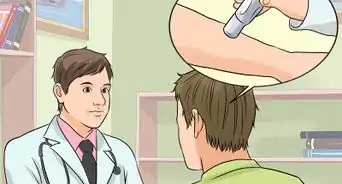
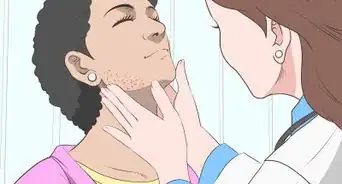
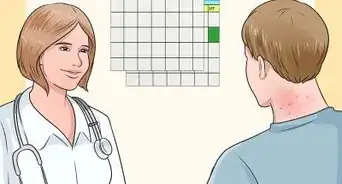
5Diagnose vibration hives. If you believe you have vibration hives, you can see an allergist to diagnose the condition. The doctor will do some tests to the skin to see how it responds to vibration stimuli.[8]
- The doctor may place a vibrating device against your skin to see how it responds. If your skin breaks out in hives, it’s a positive diagnosis.
- Your doctor may advise you to combine treatments or use preventative treatments to manage the hives.
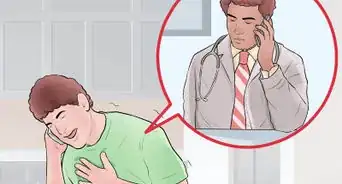
- Talk to your doctor about the severity of your vibration-induced hives. Some urticaria causes severe symptoms, like breathing problems, swollen throats, light-headedness, and even loss of consciousness. If you react this way, talk to your doctor about getting an EpiPen.[9]




Method 2
Method 2 of 2:Understanding Vibration-Induced Hives
-
1Learn what vibration hives are. Vibration hives, also called vibratory urticaria, are a type of physical urticaria, which means they are hives caused by a physical stimulus. The hives occur on the part of the skin that have contact with the vibration.[10]
-
2Learn what causes vibration hives. Vibration hives are caused from some kind of physical vibration to the skin or body. The body confuses the vibrations as an attack, and the immune system reacts by causing welts or other inflammation on the body.
- These vibration hives occur most often from machinery, such as lawn mowers, moving cars, and jackhammers. They can also be caused by drums, loud bass beats, and even hand clapping.[13]
-
3


Expert Q&A
-
QuestionHow is vibratory urticaria treated?
 Alan O. Khadavi, MD, FACAAIDr. Alan O. Khadavi is a Board Certified Allergist and a Pediatric Allergy Specialist based in Los Angeles, California. He holds a BS in biochemistry from the State University of New York (SUNY) at Stony Brook and an MD from the State University of New York Health Science Center at Brooklyn. Dr. Khadavi completed his pediatric residency at Schneider Children’s Hospital in New York, and then went on to complete his allergy and immunology fellowship and pediatric residency at Long Island College Hospital. He is board certified in adult and pediatric allergy/immunology. Dr. Khadavi is a Diplomate of the American Board of Allergy and Immunology, a Fellow of the American College of Allergy, Asthma & Immunology (ACAAI), and a member of the American Academy of Allergy, Asthma & Immunology (AAAAI). Dr. Khadavi's honors include Castle Connolly’s list of Top Doctors 2013-2020, and Patient Choice Awards "Most Compassionate Doctor" in 2013 & 2014.
Board Certified AllergistMost people with this condition will need to take an antihistamine about 30 minutes before being exposed to vibrations.




References
- ↑ Alan O. Khadavi, MD, FACAAI. Board Certified Allergist. Expert Interview. 26 August 2020.
- ↑ http://acaai.org/allergies/types/skin-allergies/hives-urticaria
- ↑ Alan O. Khadavi, MD, FACAAI. Board Certified Allergist. Expert Interview. 26 August 2020.
- ↑ Alan O. Khadavi, MD, FACAAI. Board Certified Allergist. Expert Interview. 26 August 2020.
- ↑ http://patient.info/health/physical-urticarias-hives
- ↑ http://acaai.org/allergies/types/skin-allergies/hives-urticaria#section-1
- ↑ https://www.aad.org/public/diseases/a-z/hives-chronic-relief
- ↑ https://rarediseases.info.nih.gov/diseases/9806/vibratory-urticaria
- ↑ https://angioedemanews.com/hives-urticaria-angioedema/
- ↑ https://medlineplus.gov/genetics/condition/vibratory-urticaria/
- ↑ http://emedicine.medscape.com/article/1050387-overview
- ↑ http://emedicine.medscape.com/article/1050387-overview
- ↑ http://www.newsweek.com/vibration-allergies-are-real-and-appear-be-caused-genetic-mutation-423627
- ↑ http://acaai.org/allergies/types/skin-allergies/hives-urticaria
- ↑ http://www.newsweek.com/vibration-allergies-are-real-and-appear-be-caused-genetic-mutation-423627
- ↑ http://emedicine.medscape.com/article/1050387-overview
- ↑ http://www.aocd.org/?page=Urticaria













































Medical Disclaimer
The content of this article is not intended to be a substitute for professional medical advice, examination, diagnosis, or treatment. You should always contact your doctor or other qualified healthcare professional before starting, changing, or stopping any kind of health treatment.
Read More...